


Complete chloroplast DNA sequence of the moss Physcomitrella patens: evidence for the loss and relocation of rpoA from the chloroplast to the nucleus
- PMID: 12954768
- PMCID: PMC203311
- DOI: 10.1093/nar/gkg726
Complete chloroplast DNA sequence of the moss Physcomitrella patens: evidence for the loss and relocation of rpoA from the chloroplast to the nucleus
Abstract
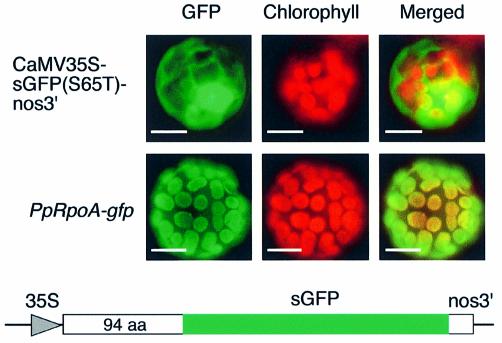
The complete chloroplast DNA sequence (122 890 bp) of the moss Physcomitrella patens has been determined. The genome contains 83 protein, 31 tRNA and four rRNA genes, and a pseudogene. Four protein genes (rpoA, cysA, cysT and ccsA) found in the liverwort Marchantia polymorpha and the hornwort Anthoceros formosae are absent from P.patens. The overall structure of P.patens chloroplast DNA (cpDNA) differs substantially from that of liverwort and hornwort. Compared with its close relatives, a 71 kb region from petD to rpoB of P.patens is inverted. To investigate whether this large inversion and the loss of rpoA usually occur in moss plants, we analyzed amplified cpDNA fragments from four moss species. Our data indicate that the large inversion occurs only in P.patens, whereas the loss of the rpoA gene occurs in all mosses. Moreover, we have isolated and characterized the nuclear rpoA gene encoding the alpha subunit of RNA polymerase (RNAP) from P.patens and examined its subcellular localization. When fused to green fluorescent protein, RpoA was observed in the chloroplasts of live moss protonemata cells. This indicates that chloroplast RNAP is encoded separately by chloroplast and nuclear genomes in the moss. These data provide new insights into the regulation and evolution of chloroplast transcription.
Figures


References
-
- Martin W., Rujan,T., Richly,E., Hansen,A., Cornelsen,S., Lins,T., Leister,D., Stoebe,B., Hasegawa,M. and Penny,D. (2002) Evolutionary analysis of Arabidopsis, cyanobacterial and chloroplast genomes reveals plastid phylogeny and thousands of cyanobacterial genes in the nucleus. Proc. Natl Acad. Sci. USA, 99, 12246–12251. - PMC - PubMed
-
- Wakasugi T., Tsudzuki,T. and Sugiura,M. (2001) The genomics of land plant chloroplasts: gene content and alteration of genomic information by RNA editing. Photosyn. Res., 70, 107–118. - PubMed
-
- Kenrick P. and Crane,P.R. (1997) The origin and early evolution of plants on land. Nature, 389, 33–39.
-
- Qiu Y.L. and Palmer,J.D. (1999) Phylogeny of early land plants: insights from genes and genomes. Trends Plant Sci., 4, 26–30. - PubMed
Publication types
MeSH terms
Substances
Associated data
- Actions
- Actions
- Actions
- Actions
- Actions
- Actions
- Actions
LinkOut - more resources
Full Text Sources
Other Literature Sources
Molecular Biology Databases
