


Exposure of sink drain microcosms to triclosan: population dynamics and antimicrobial susceptibility
- PMID: 12957932
- PMCID: PMC194980
- DOI: 10.1128/AEM.69.9.5433-5442.2003
Exposure of sink drain microcosms to triclosan: population dynamics and antimicrobial susceptibility
Abstract
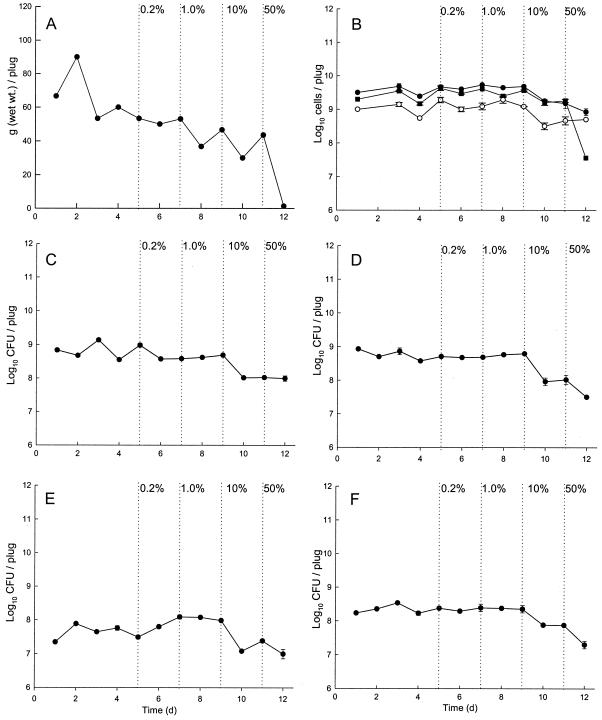
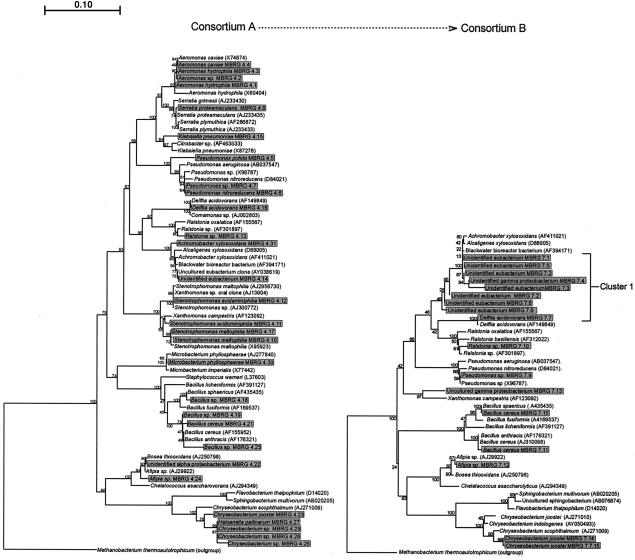
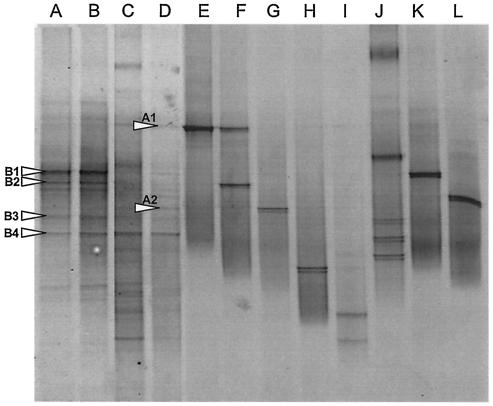
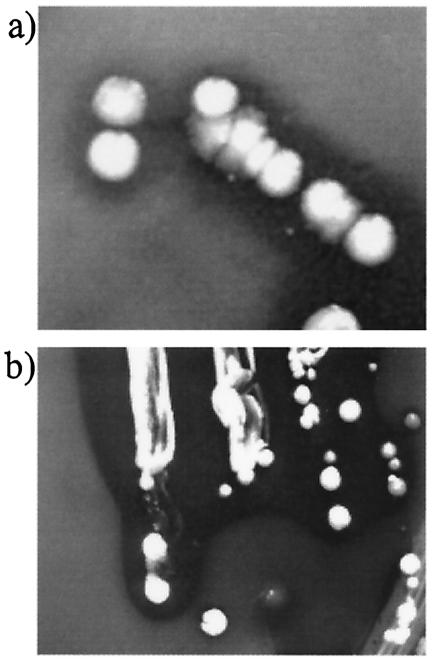
Recent concern that the increased use of triclosan (TCS) in consumer products may contribute to the emergence of antibiotic resistance has led us to examine the effects of TCS dosing on domestic-drain biofilm microcosms. TCS-containing domestic detergent (TCSD) markedly lowered biofouling at 50% (wt/vol) but was poorly effective at use levels. Long-term microcosms were established and stabilized for 6 months before one was subjected to successive 3-month exposures to TCSD at sublethal concentrations (0.2 and 0.4% [wt/vol]). Culturable bacteria were identified by 16S rDNA sequence analysis, and their susceptibilities to four biocides and six antibiotics were determined. Microcosms harbored ca. 10 log(10) CFU/g of biofilm, representing at least 27 species, mainly gamma proteobacteria, and maintained dynamic stability. Viable cell counts were largely unaffected by TCSD exposure, but species diversity was decreased, as corroborated by denaturing gradient gel electrophoresis analysis. TCS susceptibilities ranged widely within bacterial groups, and TCS-tolerant strains (including aeromonads, pseudomonads, stenotrophomonads, and Alcaligenes spp.) were isolated before and after TCSD exposure. Several TCS-tolerant bacteria related to Achromobacter xylosoxidans became clonally expanded during dosing. TCSD addition did not significantly affect the community profiles of susceptibility to the test biocides or antibiotics. Several microcosm isolates, as well as reference bacteria, caused clearing of particulate TCS in solid media. Incubations of consortia and isolates with particulate TCS in liquid led to putative TCS degradation by the consortia and TCS solubilization by the reference strains. Our results support the view that low-level exposure of environmental microcosms to TCS does not affect antimicrobial susceptibility and that TCS is degradable by common domestic biofilms.
Figures
References
-
- Adolfsson-Erici, M., M. Pettersson, J. Parkkonen, and J. Sturve. 2002. Triclosan, a commonly used bactericide found in human milk and in the aquatic environment in Sweden. Chemosphere 46:1485-1489. - PubMed
-
- Allison, D. G., A. J. McBain, and P. Gilbert. 2000. Microbial biofilms: problems of control, p. 310-327. In H. Lappin-Scott, P. Gilbert, M. Wilson, and D. Roberts (ed.), Community structure and cooperation in biofilms. Cambridge University Press, Cambridge, England.
-
- Ayliffe, G. A., J. R. Babb, J. G. Davies, and H. A Lilly. 1988. Hand disinfection: a comparison of various agents in laboratory and ward studies. J. Hosp. Infect. 11:226-243. - PubMed
-
- Bagley, D. M., and Y. J. Lin. 2000. Clinical evidence for the lack of triclosan accumulation from daily use in dentifrices. Am. J. Dent. 13:148-152. - PubMed
Publication types
MeSH terms
Substances
LinkOut - more resources
Full Text Sources
Molecular Biology Databases
Miscellaneous
