


Factors associated with invasive lung aspergillosis and the significance of positive Aspergillus culture after liver transplantation
- PMID: 1431256
- PMCID: PMC3022485
- DOI: 10.1093/infdis/166.6.1379
Factors associated with invasive lung aspergillosis and the significance of positive Aspergillus culture after liver transplantation
Abstract
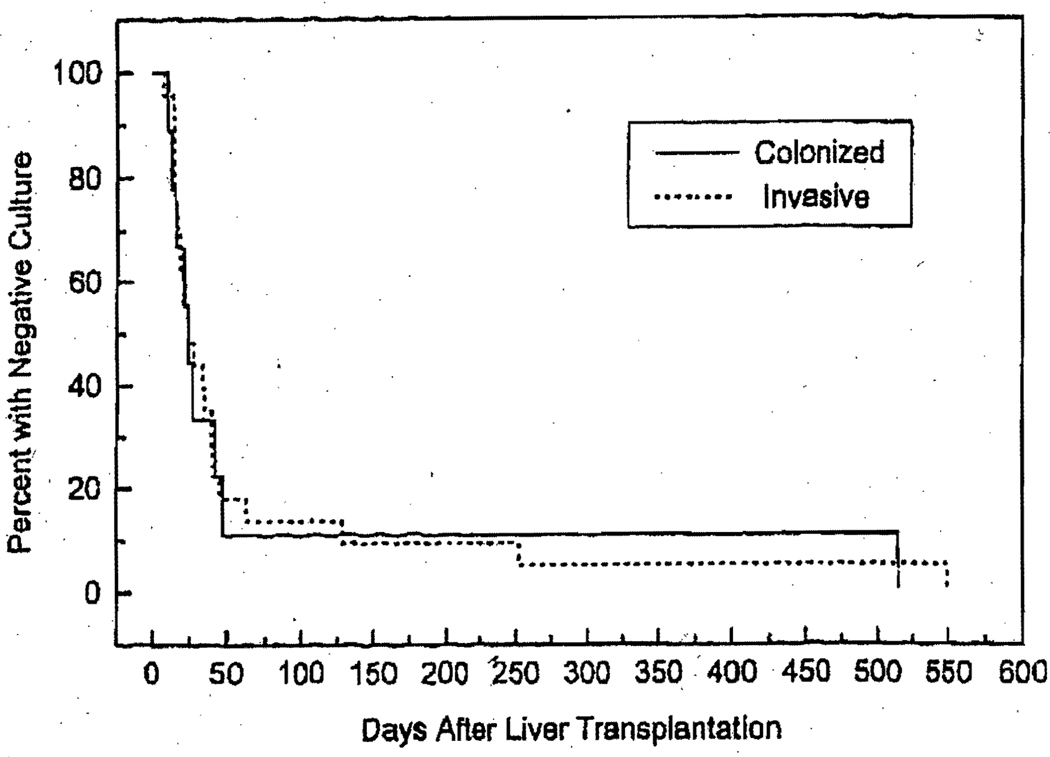
From January 1981 to December 1990, 2180 patients underwent orthotopic liver transplantation at the University of Pittsburgh. Thirty-two patients (1.5%) were identified with invasive aspergillosis (29 lung, 2 intraabdominal, 1 meningitis). Of 29 patients with invasive lung disease, only 23 (79%) had positive culture (Aspergillus fumigatus, 20; Aspergillus flavus, 3). Forty-eight variables were analyzed and compared in 23 patients with invasive disease with positive cultures and 9 patients with colonization only. The variables associated with pulmonary invasive disease, by univariate analysis, were surgical time (P = .03), presence of laparotomies (P = .02), higher creatinine level at time of Aspergillus isolation (P = .01), and use of OKT3 (P = .02). However, in a multivariate analysis, only the last two (creatinine, OKT3) were associated with invasive lung aspergillosis. Of 4 patients with positive abdominal wound culture, 2 had local invasive aspergillosis. Therefore, positive cultures of Aspergillus organisms from respiratory secretions and wound drainage may represent invasive disease and should not be ignored.
Figures
References
-
- Castaldo P, Stratta RJ, Wood RP, et al. Clinical spectrum of fungal infections after orthotopic liver transplantation. Arch Surg. 1991;126:149–156. - PubMed
-
- Denning DW, Follansbee SE, Scolaro M, Norris S, Edelstein H, Stevens DA. Pulmonary aspergillosis in the acquired immunodeficiency syndrome. N Engl J Med. 1991;324:654–662. - PubMed
Publication types
MeSH terms
Grants and funding
LinkOut - more resources
Full Text Sources
Medical
