Association between falls in elderly women and chronic diseases and drug use: cross sectional study
- PMID: 14512478
- PMCID: PMC200802
- DOI: 10.1136/bmj.327.7417.712
Association between falls in elderly women and chronic diseases and drug use: cross sectional study
Abstract
Objective: To assess the associations between having had a fall and chronic diseases and drug use in elderly women.
Design: Cross sectional survey, using data from the British women's heart and health study.
Setting: General practices in 23 towns in Great Britain.
Participants: 4050 women aged 60-79 years.
Main outcome measure: Whether women had had falls in the previous 12 months.
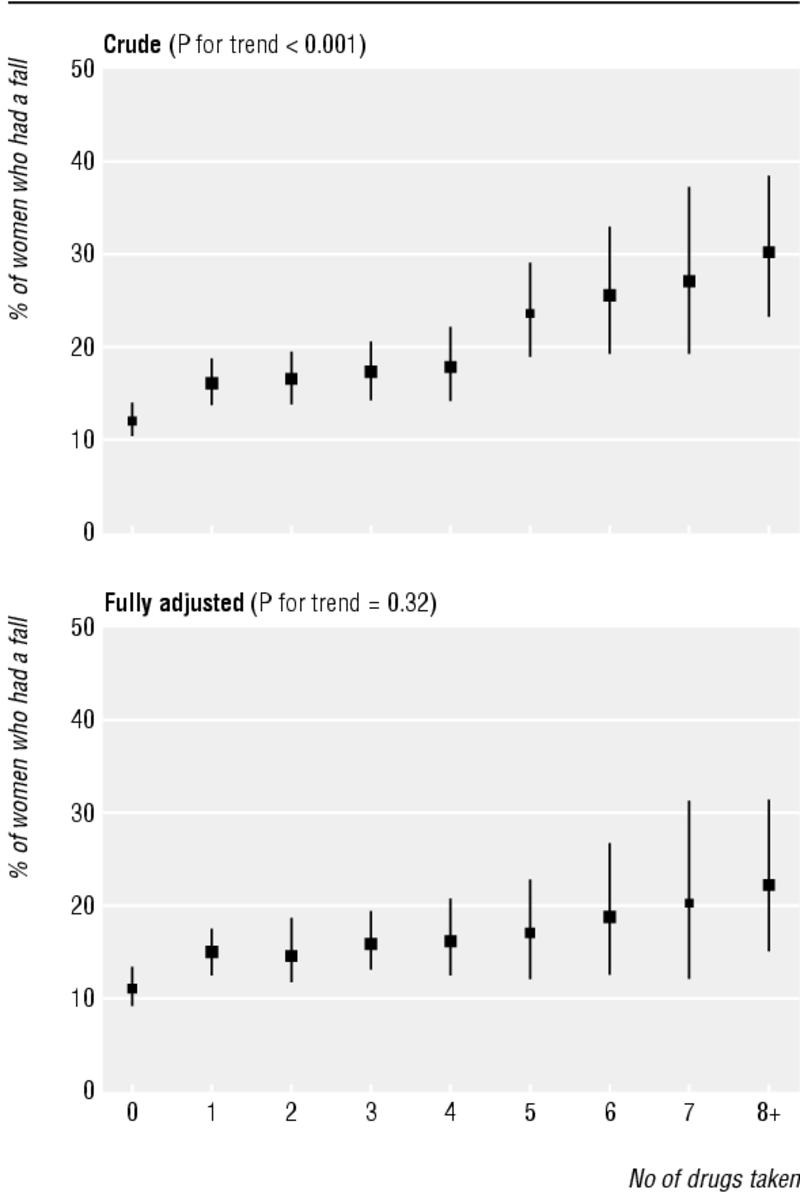
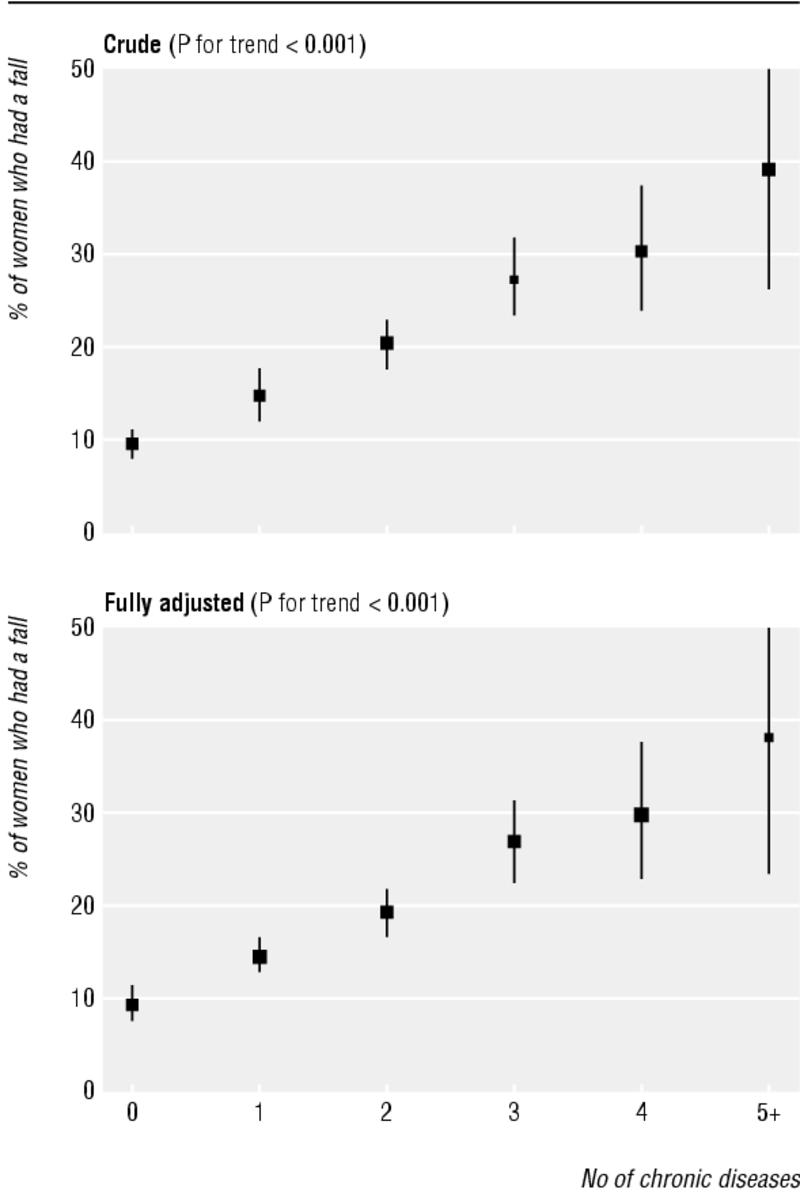
Results: The prevalence of falling increased with increasing numbers of simultaneously occurring chronic diseases. However, no such relation with falling was found in the fully adjusted data for the number of drugs used. Circulatory disease, chronic obstructive pulmonary disease, depression, and arthritis were all associated with an increased odds of falling. The fully adjusted, population attributable risk of falling associated with having at least one chronic disease was 32.2% (95% confidence interval 19.6% to 42.8%). Only two classes of drugs (hypnotics and anxiolytics, and antidepressants) were independently associated with an increased odds of falling. Each class was associated with an increase of about 50% in the odds of falling, and each had a population attributable risk of < 5%.
Conclusion: Chronic diseases and multiple pathology are more important predictors of falling than polypharmacy.
Figures
Comment in
-
Falls, chronic diseases, and drug use in elderly women: lack of association may be explained.BMJ. 2003 Nov 29;327(7426):1288; author replyy 1288. doi: 10.1136/bmj.327.7426.1288. BMJ. 2003. PMID: 14644984 Free PMC article. No abstract available.
References
-
- Tinetti ME. Clinical practice. Preventing falls in elderly persons. N Engl J Med 2003;348: 42-9. - PubMed
-
- Evans JG. Drugs and falls in later life. Lancet 2003;361: 448. - PubMed
-
- Leipzig RM, Cumming RG, Tinetti ME. Drugs and falls in older people: a systematic review and meta-analysis. I. Psychotropic drugs. J Am Geriatr Soc 1999;47: 30-9. - PubMed
Publication types
MeSH terms
LinkOut - more resources
Full Text Sources
Medical