


Role of glucose and ketone bodies in the metabolic control of experimental brain cancer
- PMID: 14520474
- PMCID: PMC2394295
- DOI: 10.1038/sj.bjc.6601269
Role of glucose and ketone bodies in the metabolic control of experimental brain cancer
Abstract
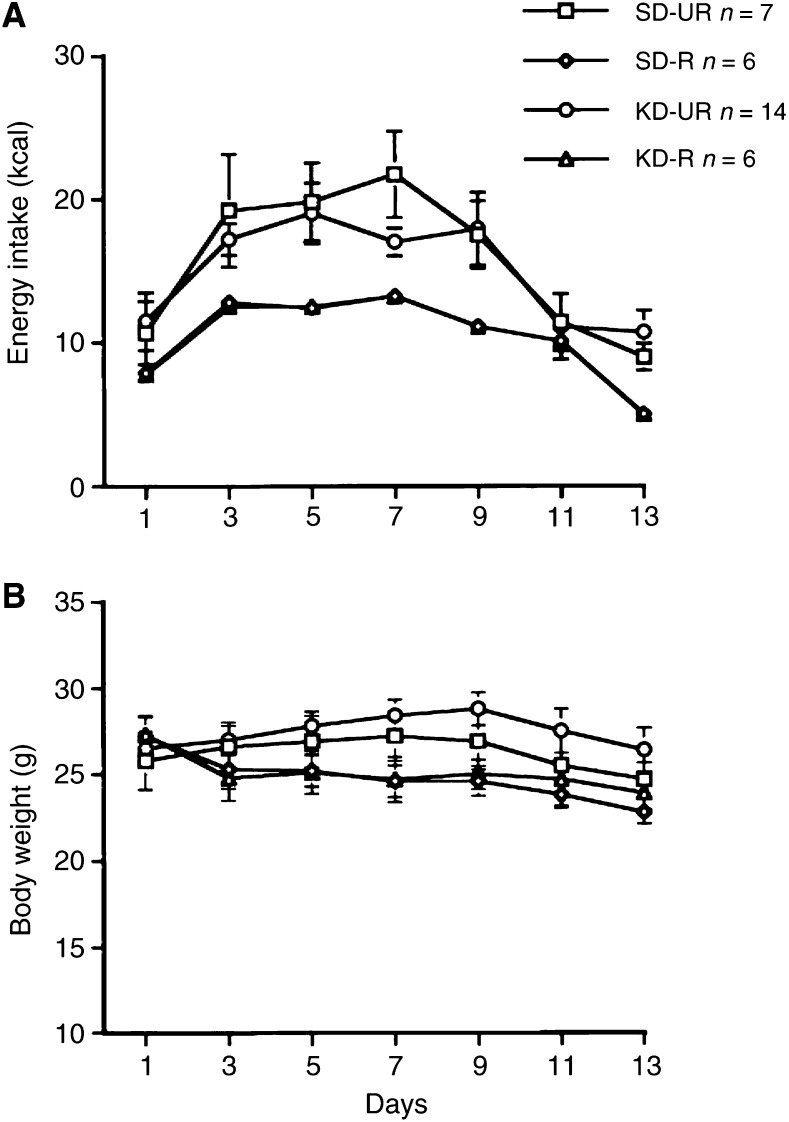
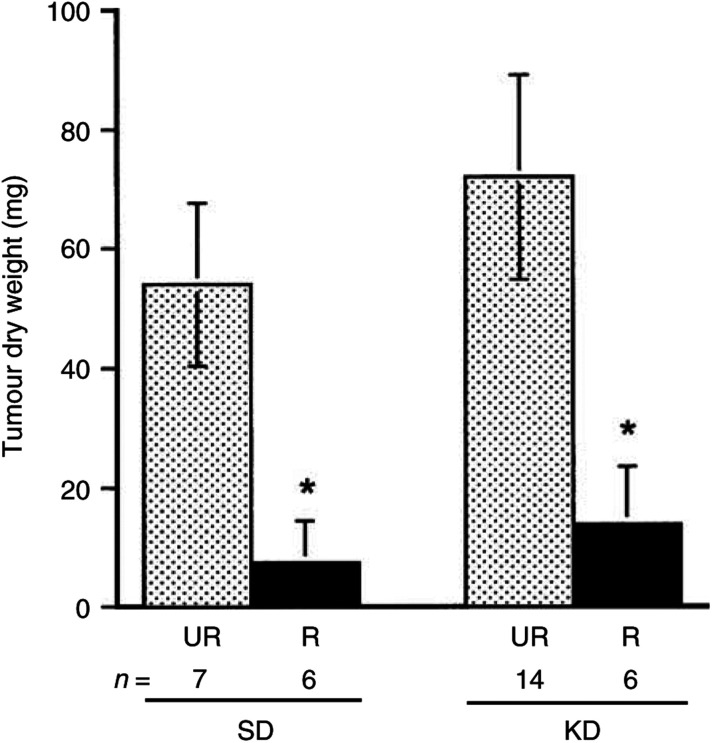
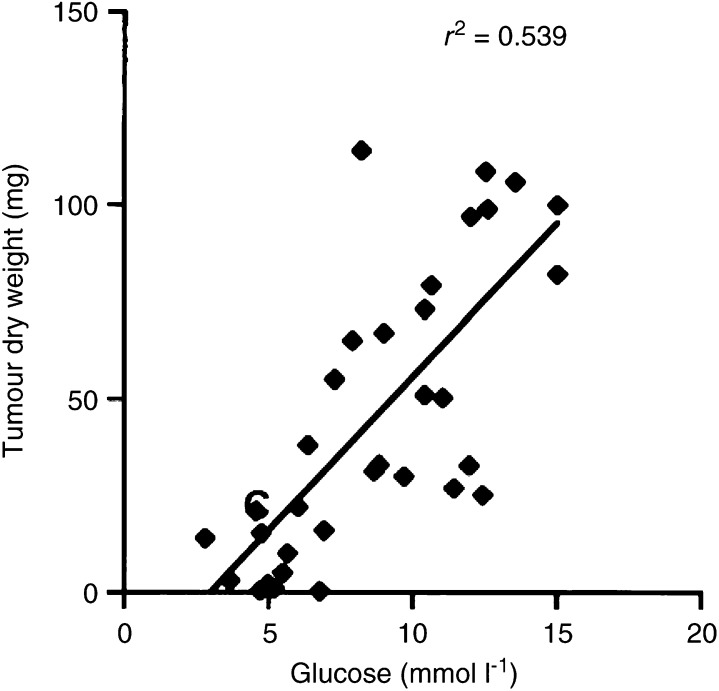
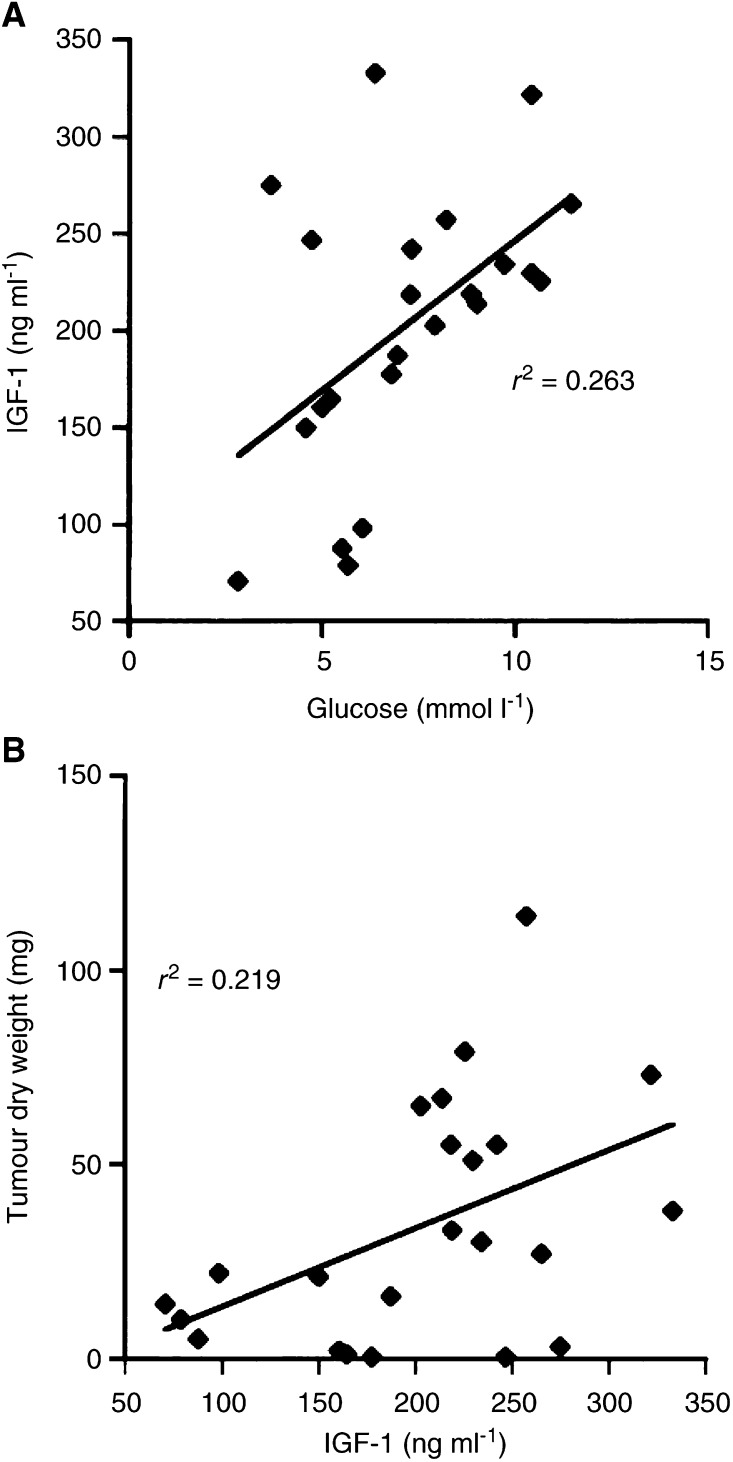
Brain tumours lack metabolic versatility and are dependent largely on glucose for energy. This contrasts with normal brain tissue that can derive energy from both glucose and ketone bodies. We examined for the first time the potential efficacy of dietary therapies that reduce plasma glucose and elevate ketone bodies in the CT-2A syngeneic malignant mouse astrocytoma. C57BL/6J mice were fed either a standard diet unrestricted (SD-UR), a ketogenic diet unrestricted (KD-UR), the SD restricted to 40% (SD-R), or the KD restricted to 40% of the control standard diet (KD-R). Body weights, tumour weights, plasma glucose, beta-hydroxybutyrate (beta-OHB), and insulin-like growth factor 1 (IGF-1) were measured 13 days after tumour implantation. CT-2A growth was rapid in both the SD-UR and KD-UR groups, but was significantly reduced in both the SD-R and KD-R groups by about 80%. The results indicate that plasma glucose predicts CT-2A growth and that growth is dependent more on the amount than on the origin of dietary calories. Also, restriction of either diet significantly reduced the plasma levels of IGF-1, a biomarker for angiogenesis and tumour progression. Owing to a dependence on plasma glucose, IGF-1 was also predictive of CT-2A growth. Ketone bodies are proposed to reduce stromal inflammatory activities, while providing normal brain cells with a nonglycolytic high-energy substrate. Our results in a mouse astrocytoma suggest that malignant brain tumours are potentially manageable with dietary therapies that reduce glucose and elevate ketone bodies.
Figures
References
-
- Aronen HJ, Pardo FS, Kennedy DN, Belliveau JW, Packard SD, Hsu DW, Hochberg FH, Fischman AJ, Rosen BR (2000) High microvascular blood volume is associated with high glucose uptake and tumor angiogenesis in human gliomas. Clin Cancer Res 6: 2189–2200 - PubMed
-
- Bergsneider M, Hovda DA, Shalmon E, Kelly DF, Vespa PM, Martin NA, Phelps ME, McArthur DL, Caron MJ, Kraus JF, Becker DP (1997) Cerebral hyperglycolysis following severe traumatic brain injury in humans: a positron emission tomography study. J Neurosurg 86: 241–251 - PubMed
-
- Bergstein I (2003) A non-Darwinian role for mutagenesis in stem cell-derived cancers. Mol Carcinogen 36: 1–5 - PubMed
-
- Bhagavan NV (2002) Medical Biochemistry. Harcourt: New York
Publication types
MeSH terms
Substances
Grants and funding
LinkOut - more resources
Full Text Sources
Other Literature Sources
Medical
Miscellaneous
