


Molecular mimicry between Helicobacter pylori antigens and H+, K+ --adenosine triphosphatase in human gastric autoimmunity
- PMID: 14568977
- PMCID: PMC2194239
- DOI: 10.1084/jem.20030530
Molecular mimicry between Helicobacter pylori antigens and H+, K+ --adenosine triphosphatase in human gastric autoimmunity
Abstract
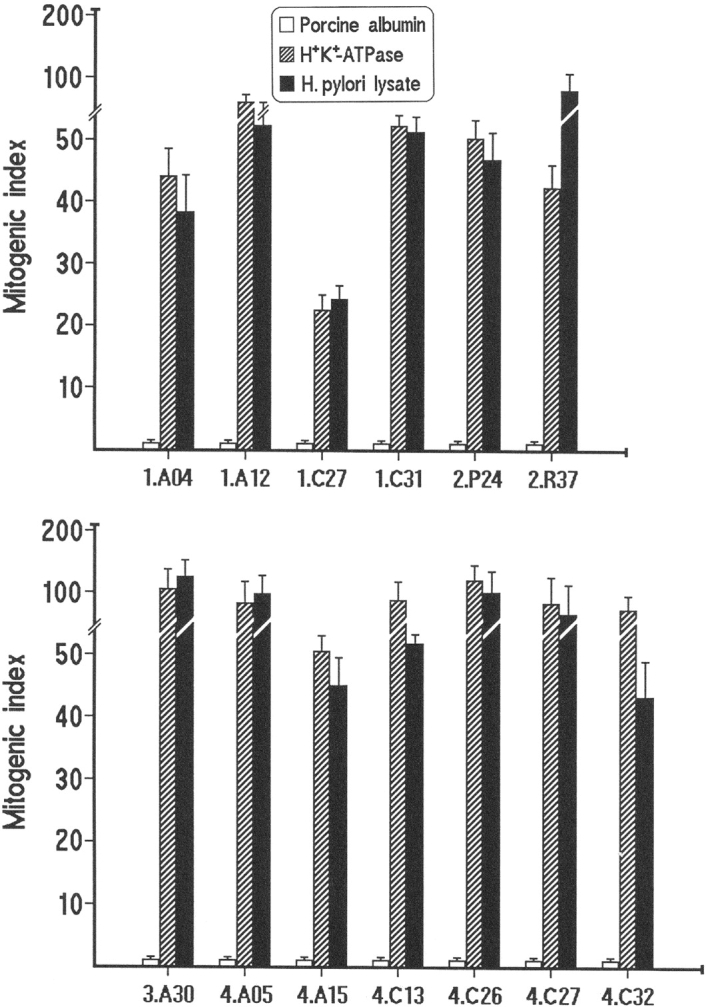
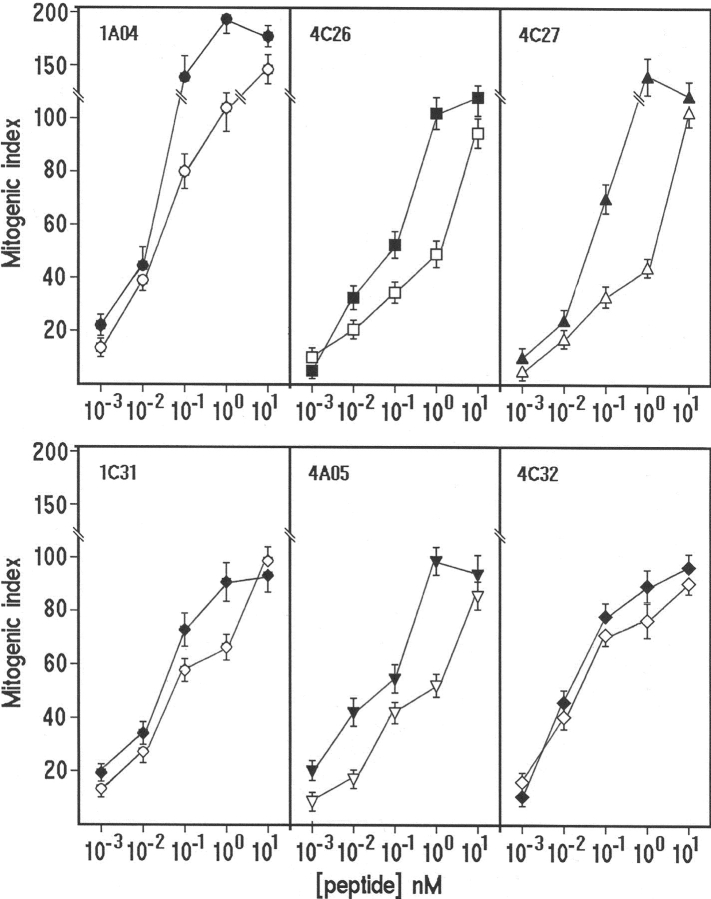
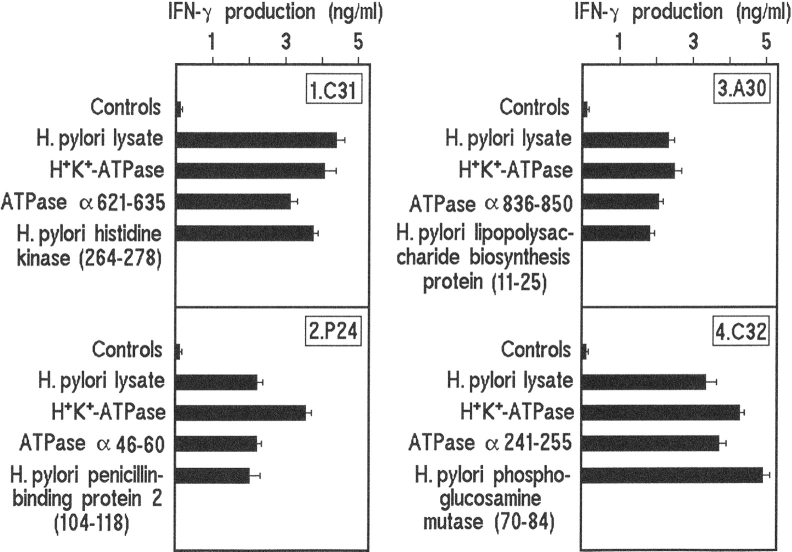
Autoimmune gastritis and Helicobacter pylori-associated gastric atrophy develop through similar mechanisms involving the proton pump H+,K+-adenosine triphosphatase as autoantigen. Here, we report that H. pylori-infected patients with gastric autoimmunity harbor in vivo-activated gastric CD4+ T cells that recognize both H+, K+-adenosine triphosphatase and H. pylori antigens. We characterized the submolecular specificity of such gastric T cells and identified cross-reactive epitopes from nine H. pylori proteins. Cross-reactive H. pylori peptides induced T cell proliferation and expression of T helper type 1 functions. We suggest that in genetically susceptible individuals, H. pylori infection can activate cross-reactive gastric T cells leading to gastric autoimmunity via molecular mimicry.
Figures
References
-
- Rose, N.R., and C. Bona. 1993. Defining criteria for autoimmune diseases (Witebsky's postulates revisited). Immunol. Today. 14:426–430. - PubMed
-
- Theofilopoulos, A.N., and D.H. Kono. 1998. Mechanisms and genetics of autoimmunity. Ann. NY Acad. Sci. 841:225–235. - PubMed
-
- Lori, J.A., and R.D. Inman. 1999. Molecular mimicry and autoimmunity. N. Engl. J. Med. 341:2068–2074. - PubMed
-
- Benoist, C., and D. Mathis. 2001. Autoimmunity provoked by infection: how good is the case for T cell epitope mimicry? Nat. Immunol. 2:797–801. - PubMed
Publication types
MeSH terms
Substances
LinkOut - more resources
Full Text Sources
Medical
Research Materials
