


Biological applications of protein transduction technology
- PMID: 14573363
- PMCID: PMC2597147
- DOI: 10.1016/j.tibtech.2003.09.008
Biological applications of protein transduction technology
Abstract
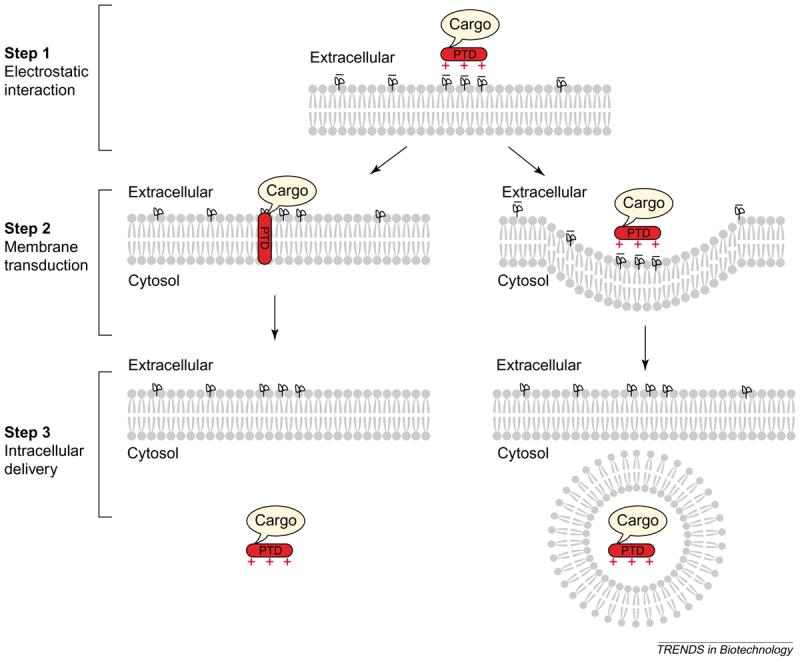
The impermeable nature of the cell membrane to peptides, proteins, DNA and oligonucleotides limits the therapeutic potential of these biological agents. However, the recent discovery of short cationic peptides that cross the plasma membrane efficiently is opening up new possibilities for the intracellular delivery of such agents. These peptides are commonly referred to as protein transduction domains (PTDs) and are successfully used to transport heterologous proteins, peptides and other types of cargo into cells. Several recent reports have used the membrane transducing technology in vivo to deliver biologically active cargo into various tissues. This review discusses the structure of the most commonly used PTDs and how their ability to transduce membranes is used to regulate biological functions. It also considers future directions and the potential of this technology to move from the laboratory into the clinic.
Figures
References
-
- Gomperts BD, Fernandez JM. Techniques for membrane permeabilization. Trends Biochem. Sci. 1985;10:414–417.
-
- Chang DC, et al. Guide to Electroporation and Electrofusion. Academic Press; 1991.
-
- Celis JE, et al. Microinjection and Organelle Transplantation Techniques. Academic Press; 1986.
-
- Green M, Loewenstein PM. Autonomous functional domains of chemically synthesized human immunodeficiency virus tat trans-activator protein. Cell. 1988;55:1179–1188. - PubMed
-
- Frankel AD, Pabo CO. Cellular uptake of the tat protein from human immunodeficiency virus. Cell. 1988;55:1189–1193. - PubMed
Publication types
MeSH terms
Substances
Grants and funding
LinkOut - more resources
Full Text Sources
Other Literature Sources
