


New roles for astrocytes: gap junction hemichannels have something to communicate
- PMID: 14585601
- PMCID: PMC3694339
- DOI: 10.1016/j.tins.2003.09.008
New roles for astrocytes: gap junction hemichannels have something to communicate
Abstract
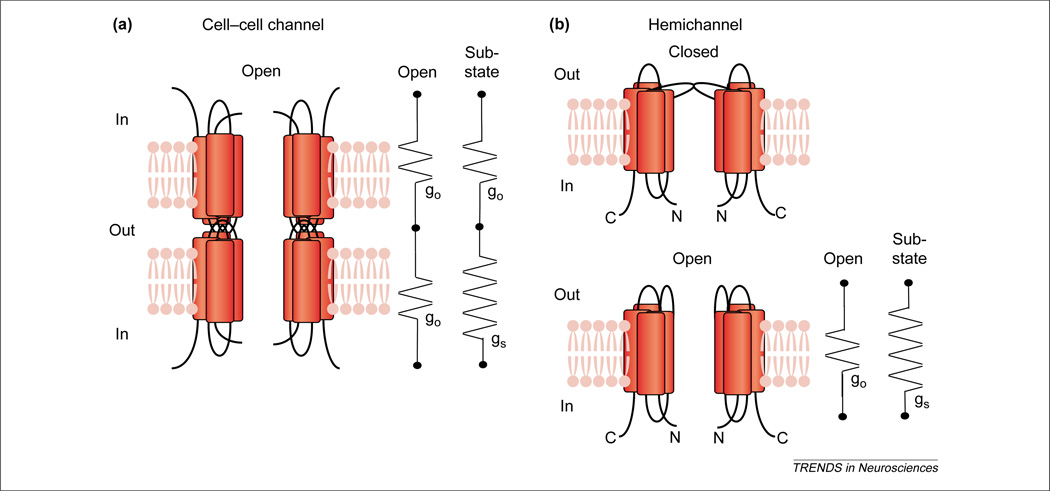
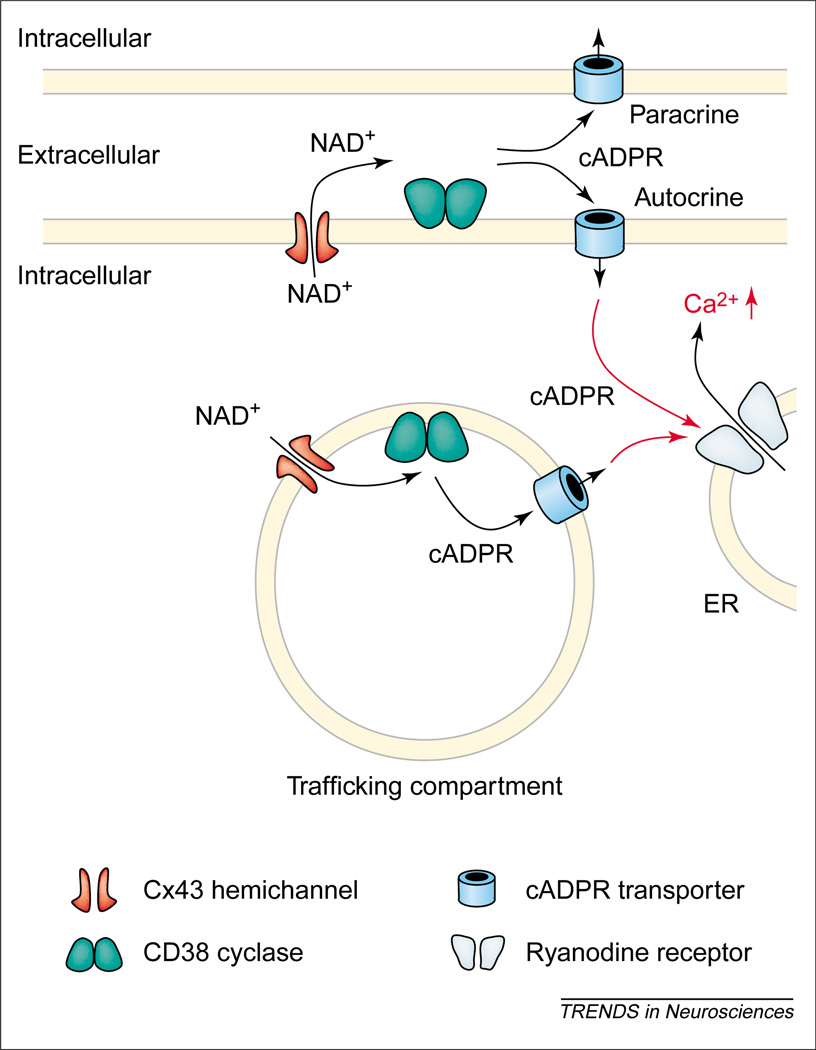
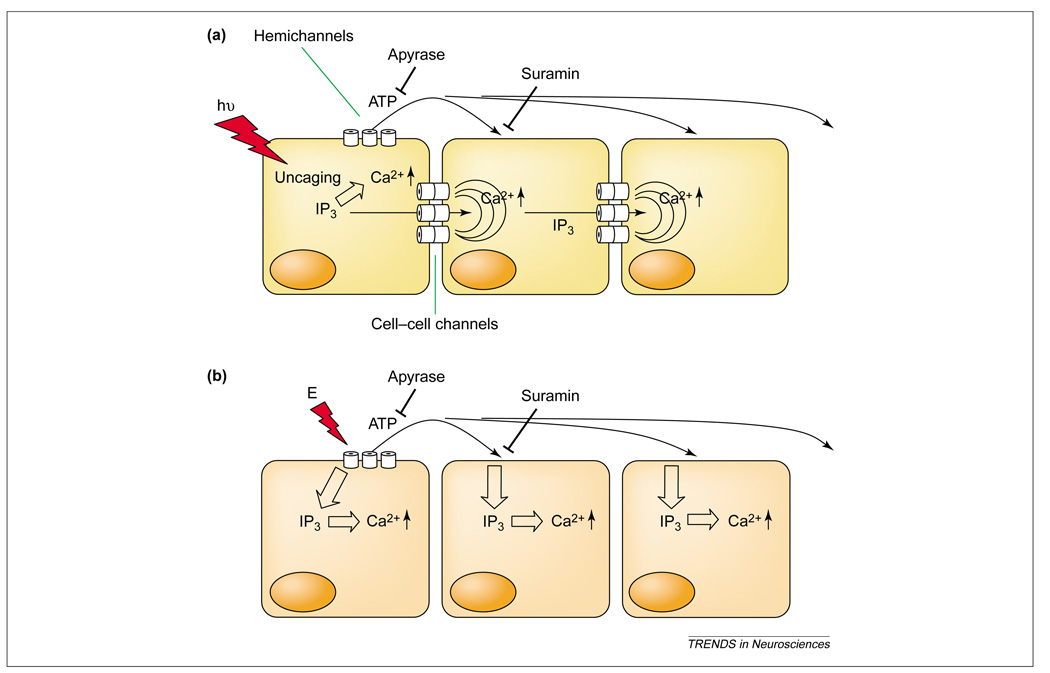
Gap junctions are clusters of aqueous channels that connect the cytoplasm of adjoining cells. Each cell contributes a hemichannel, or connexon, to each cell-cell channel. The cell-cell channels are permeable to relatively large molecules, and it was thought that opening of hemichannels to the extracellular space would kill cells through loss of metabolites, collapse of ionic gradients and influx of Ca(2+). Recent findings indicate that specific non-junctional hemichannels do open under both physiological and pathological conditions, and that opening is functional or deleterious depending on the situation. Most of these studies utilized cells in tissue culture that expressed a specific gap junction protein, connexin 43. Several such examples are reviewed here, with a particular focus on astrocytes.
Figures
References
-
- Willecke K, et al. Structural and functional diversity of connexin genes in the mouse and human genome. Biol. Chem. 2002;383:725–737. - PubMed
-
- Harris AL. Emerging issues of connexin channels: biophysics fills the gap. Q. Rev. Biophys. 2001;34:325–472. - PubMed
-
- Kumari SS, et al. Site-directed mutations in the transmembrane domain M3 of human connexin 37 alter channel conductance and gating. Biochem. Biophys. Res. Commun. 2001;280:440–447. - PubMed
Publication types
MeSH terms
Substances
Grants and funding
LinkOut - more resources
Full Text Sources
Other Literature Sources
Miscellaneous
