


Tuberculosis in household contacts of infectious cases in Kampala, Uganda
- PMID: 14585767
- PMCID: PMC2869090
- DOI: 10.1093/aje/kwg227
Tuberculosis in household contacts of infectious cases in Kampala, Uganda
Abstract
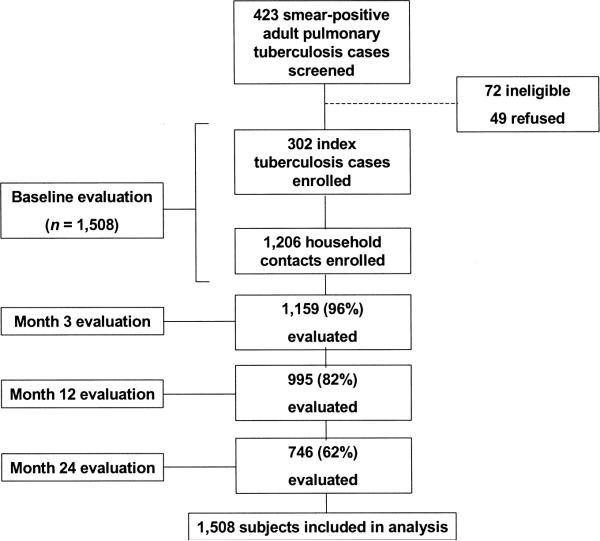
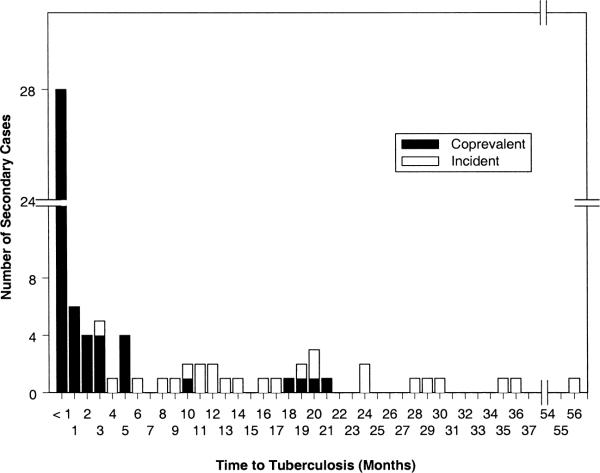
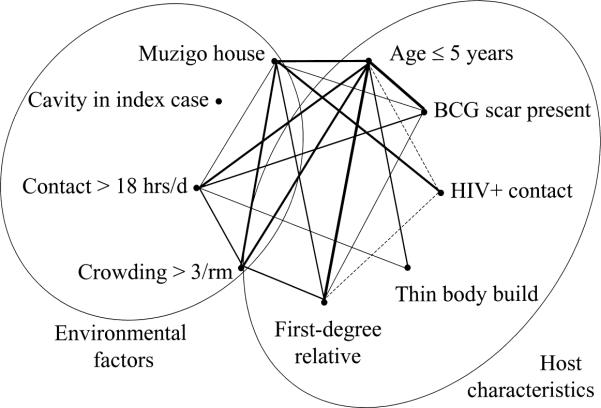
Tuberculosis remains a serious threat to public health, especially in sub-Saharan Africa. To determine the host and environmental factors responsible for tuberculosis in African households, the authors performed a prospective cohort study of 1,206 household contacts of 302 index cases with tuberculosis enrolled in Uganda between 1995 and 1999. All contacts were systematically evaluated for active tuberculosis and risk factors for active disease. Among the 1,206 household contacts, 76 secondary cases (6%) of tuberculosis were identified. Of these cases, 51 were identified in the baseline evaluation, and 25 developed during follow-up. Compared with index cases, secondary cases presented more often with minimal disease. The risk for secondary tuberculosis was greater among young children than adults (10% vs. 1.9%) and among human immunodeficiency virus-seropositive than -seronegative contacts (23% vs. 3.3%). Host risk factors could not be completely separated from the effects of environmental risk factors, suggesting that a household may represent a complex system of interacting risks for tuberculosis.
Figures
References
-
- McPhedran FM, Opie EL. The spread of tuberculosis in families. Am J Hyg. 1935;22:565–643.
-
- Loudon RG, Spohn SK. Cough frequency and infectivity in patients with pulmonary tuberculosis. Am Rev Respir Dis. 1969;99:109–11. - PubMed
-
- Shaw JB, Wynn-Williams N. Infectivity of pulmonary tuberculosis in relation to sputum status. Am Rev Tuberc. 1954;69:724–32. - PubMed
-
- Rose CE, Zerbe GO, Lantz SO, et al. Establishing priority during investigation of tuberculosis contacts. Am Rev Respir Dis. 1979;119:603–9. - PubMed
-
- Puffer RR, Zeidberg LD, Dillon A, et al. Tuberculosis attack and death rates of household associates. Am Rev Tuberc. 1952;65:111–27. - PubMed
