Comparative Study
. 2003 Nov 3;22(21):5928-40.
doi: 10.1093/emboj/cdg565.

Exportin 6: a novel nuclear export receptor that is specific for profilin.actin complexes

Affiliations
Comparative Study

Exportin 6: a novel nuclear export receptor that is specific for profilin.actin complexes

Theis Stüven et al. EMBO J. .

Abstract

Active macromolecular transport between the nucleus and cytoplasm proceeds through nuclear pore complexes and is mostly mediated by transport receptors of the importin beta-superfamily. Here we identify exportin 6 (Exp6) as a novel family member from higher eukaryotes and show that it mediates nuclear export of profilin.actin complexes. Exp6 appears to contact primarily actin, but the interaction is greatly enhanced by the presence of profilin. Profilin thus functions not only as the nucleotide exchange factor for actin, but can also be regarded as a cofactor of actin export and hence as a suppressor of actin polymerization in the nucleus. Even though human and Drosophila Exp6 share only approximately 20% identical amino acid residues, their function in profilin.actin export is conserved. A knock-down of Drosophila Exp6 by RNA interference abolishes nuclear exclusion of actin and results in the appearance of nuclear actin paracrystals. In contrast to a previous report, we found no indications of a major and direct role for CRM1 in actin export from mammalian or insect nuclei.


Figures
None
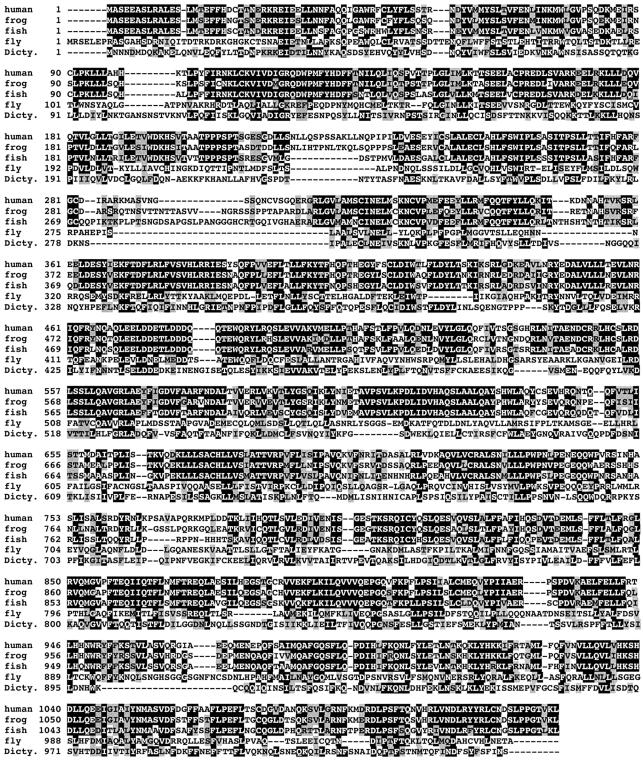
Fig. 1. shows the multiple alignment of Exp6 from human, frog (X.laevis), fish (D.rerio), fruitfly (D.melanogaster) and slime mould (D.discoideum). Identical residues are shaded in black, similar ones in grey.
None
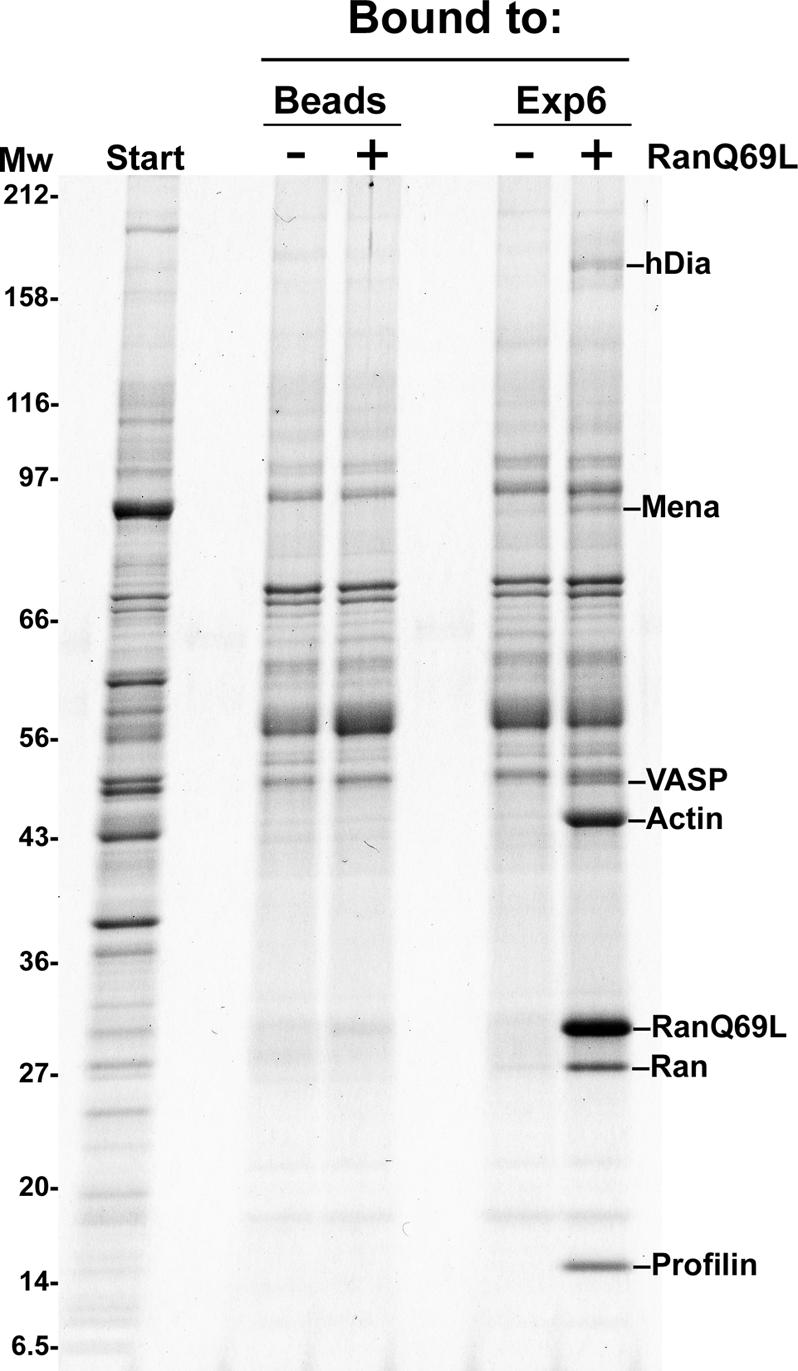
Fig. 2. Identification of the profilin I and β-actin as putative export substrates for Exp6. zz-tagged Exp6 was immobilized to IgG–Sepharose and used to enrich potential cargoes from a cytoplasmic HeLa cell extract. Binding was in the absence or presence of 5 µM RanGTP (Q69L-mutant). Starting material and bound fractions were analysed by SDS–gel electrophoresis, followed by Coomassie staining. Protein bands identified by mass spectrometry are indicated. The negative control was empty beads. The putative export cargoes profilin I, β-actin, and the actin-binding proteins Mena, VASP and Diaphanous 1 bound specifically to Exp6, provided RanGTP (Q69L-mutant) had been added to mimic a nuclear environment.
None
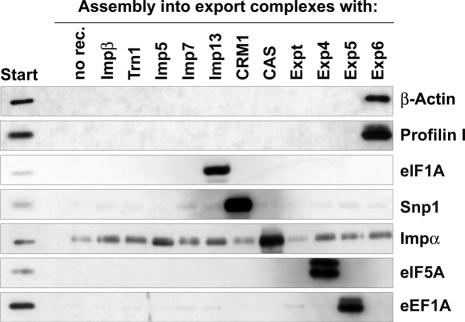
Fig. 3. A cytoplasmic HeLa cell extract was depleted of endogenous nuclear transport receptors and subsequently replenished with individual importins and exportins as indicated. To form export complexes between the added receptors and cargoes from the extract, zz-tagged RanGTP (Q69L) was added. The complexes were purified on IgG–Sepharose, and analysed by immunoblotting with anti β-actin and anti-profilin I antibodies. Note that both proteins formed export complexes with Exp6 and with no other transport receptor tested. As controls, we included immunoblots against characterized cargoes of other export pathways, namely eIF1A (exported by importin 13), snurportin 1 (exported by CRM1), importin α (exported by CAS), eIF5A (exported by Exp4) and eEF1A (exported by Exp5).
None
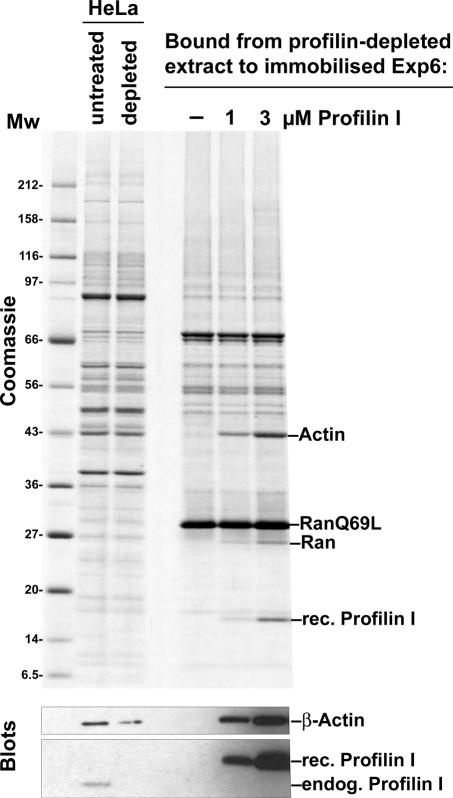
Fig. 4. Profilin enhances actin binding to Exp6. Profilin was depleted from a cytoplasmic HeLa cell extract by means of polyproline–Sepharose. The resulting extract was used to assemble export complexes with RanGTP (Q69L-mutant) and immobilized Exp6. Binding of actin to Exp6 was only observed when profilin was re-added. Analysis was performed as described in Figure 2. Binding was performed in 50 mM Tris–HCl pH 7.5, 50 mM NaCl, 5 mM magnesium acetate.
None
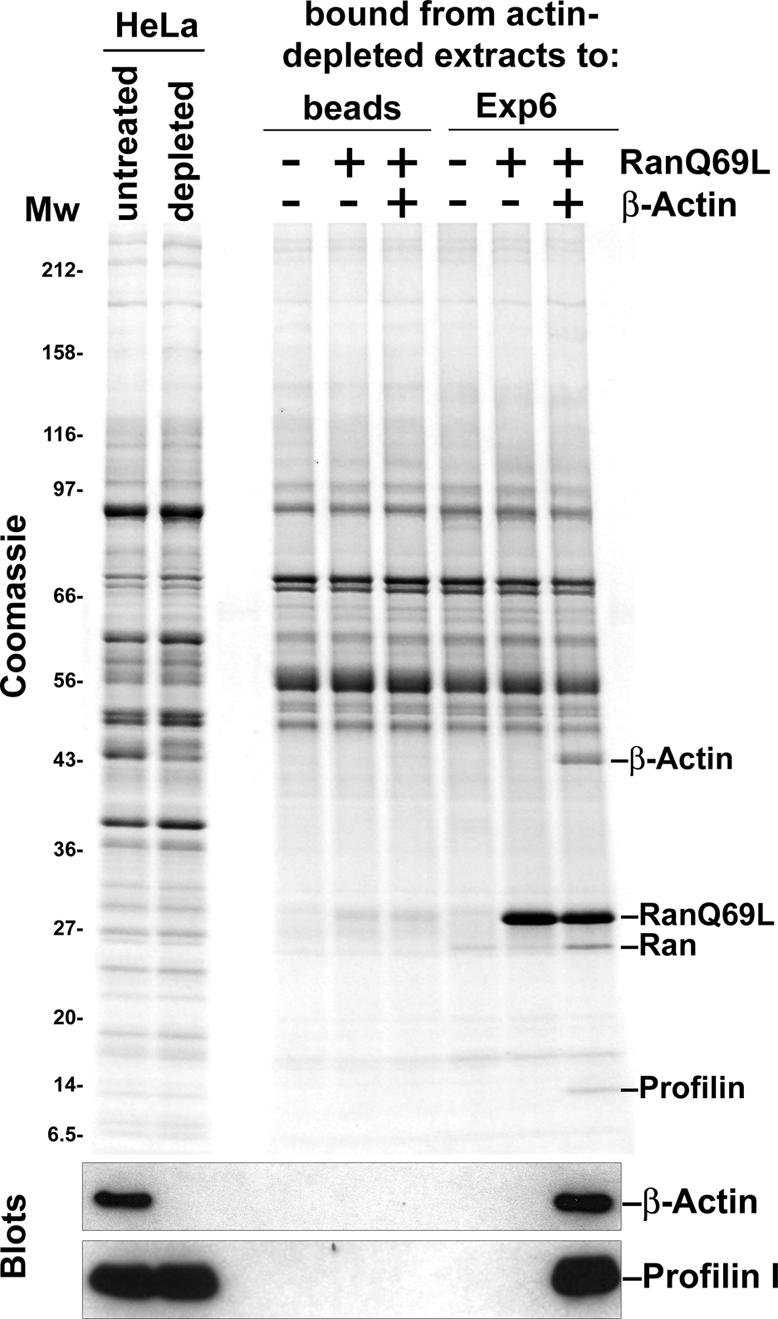
Fig. 5. Actin is required for a stable profilin–Exp6 interaction. Actin was depleted from a HeLa extract by phalloidin treatment, followed by passage through a DNase I column. The resulting actin-free extract was then used to assemble export complexes with immobilized Exp6. Binding of profilin to Exp6 was only observed when actin (1 µM) had been re-added.
None
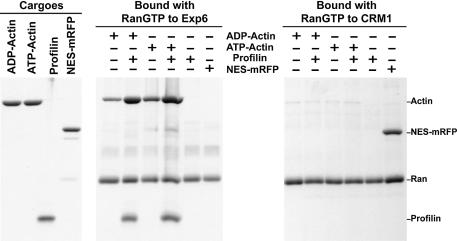
Fig. 6. Exp6 appears to contact the profilin·actin complex via the actin component. Export complexes were formed with purified cargoes (1 µM ADP–actin, ATP–actin or NES–mRFP), recombinant exportins (1 µM Exp6 or CRM1) and the RanQ69L 1–180 mutant (3 µM) that binds transport receptors more tightly than the full-length protein. Binding was performed in a low salt buffer (15 mM Tris–HCl pH 7.5, 1 mM magnesium acetate, 0.2% digitonin) to favour low-affinity interactions. Export complexes were retrieved with IgG–Sepharose via the zz-tag of the exportins, and exportin-bound components were eluted after very brief washing with 1.5 M magnesium chloride. Analysis of bound components was by SDS–PAGE/Coomassie staining. Note that actin assembled into export complexes with Exp6, although not as efficiently as in the presence of profilin. CRM1 bound the NES–mRFP but showed no significant interaction with any of the actin forms.
None
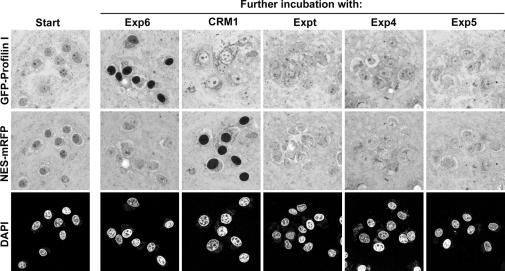
Fig. 7. Exp6 mediates nuclear export of profilin. Nuclei were incubated in a Xenopus egg extract, which had been prior depleted of endogenous nuclear transport receptors and replenished with an energy-regenerating system and 0.3 µM NTF2. GFP–profilin fusion protein (3 µM) and an NES–mRFP fusion (4 µM) were added and allowed to equilibrate between nuclei and cytoplasm (‘Start’). The sample was then split, indicated nuclear transport receptors were added and the distributions of the export substrates were imaged 10 min later by confocal laser scanning microscopy. Exp6 promoted nuclear export of profilin, while the other exportins had no effect. Conversely, only CRM1 caused nuclear exclusion of the NES–mRFP fusion. Chromatin was detected by DAPI staining and excitation at 405 nm to indicate the positions of nuclei. GFP and mRFP were excited at 488 and 547 nm, respectively.
None
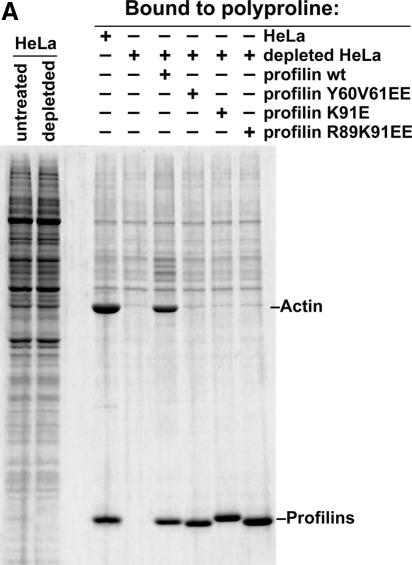
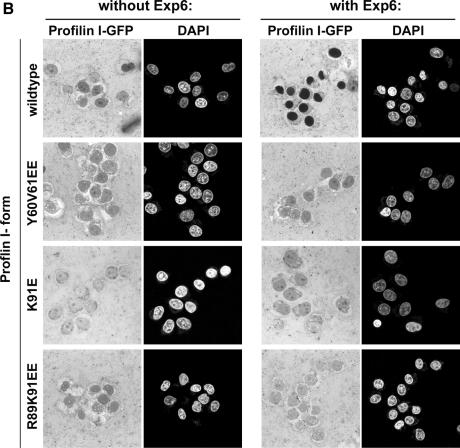
Fig. 8. Mutational analysis shows that Exp6 exports profilin only if profilin binds actin. (A) Binding to polyproline–Sepharose was performed from an unfractionated cytosolic HeLa extract, a profilin-depleted HeLa extract, or from depleted extracts supplemented with either wild-type profilin I or indicated profilin I mutants (untagged proteins). Panels show analysis of bound fractions by SDS–PAGE, followed by Coomassie staining. Note that all forms of profilin bound to polyproline–Sepharose. β-Actin co-purified on polyproline–Sepharose with endogenous and recombinant wild-type profilin, but not with the Y60V61→EE, K91→E and R89K91→EE profilin mutants, which had been designed to disrupt interaction with actin. (B) Nuclear export of GFP-tagged profilin derivatives was performed as in Figure 7. Addition of Exp6 resulted in nuclear export of wild-type profilin. In contrast, the Y60V61→EE, K91→E and R89K91→EE profilin mutants resisted Exp6-mediated export.
None
Fig. 8. Mutational analysis shows that Exp6 exports profilin only if profilin binds actin. (A) Binding to polyproline–Sepharose was performed from an unfractionated cytosolic HeLa extract, a profilin-depleted HeLa extract, or from depleted extracts supplemented with either wild-type profilin I or indicated profilin I mutants (untagged proteins). Panels show analysis of bound fractions by SDS–PAGE, followed by Coomassie staining. Note that all forms of profilin bound to polyproline–Sepharose. β-Actin co-purified on polyproline–Sepharose with endogenous and recombinant wild-type profilin, but not with the Y60V61→EE, K91→E and R89K91→EE profilin mutants, which had been designed to disrupt interaction with actin. (B) Nuclear export of GFP-tagged profilin derivatives was performed as in Figure 7. Addition of Exp6 resulted in nuclear export of wild-type profilin. In contrast, the Y60V61→EE, K91→E and R89K91→EE profilin mutants resisted Exp6-mediated export.
None
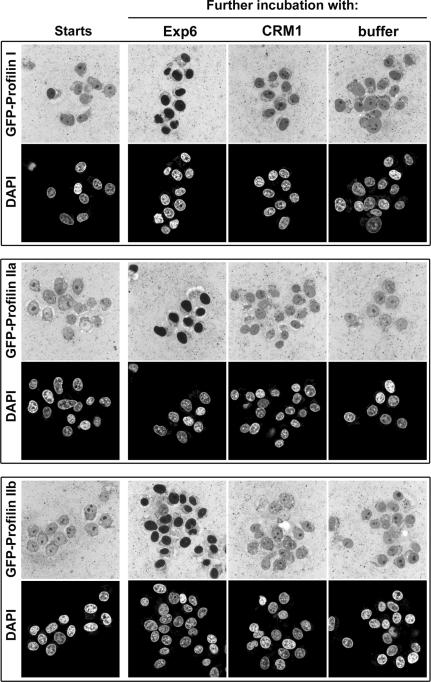
Fig. 9. Panels show nuclear export assays for human GFP–profilin I and the isoforms IIa and IIb, using human Exp6 or CRM1 as nuclear export receptors. Experimental set-up was as described in Figure 7.
None
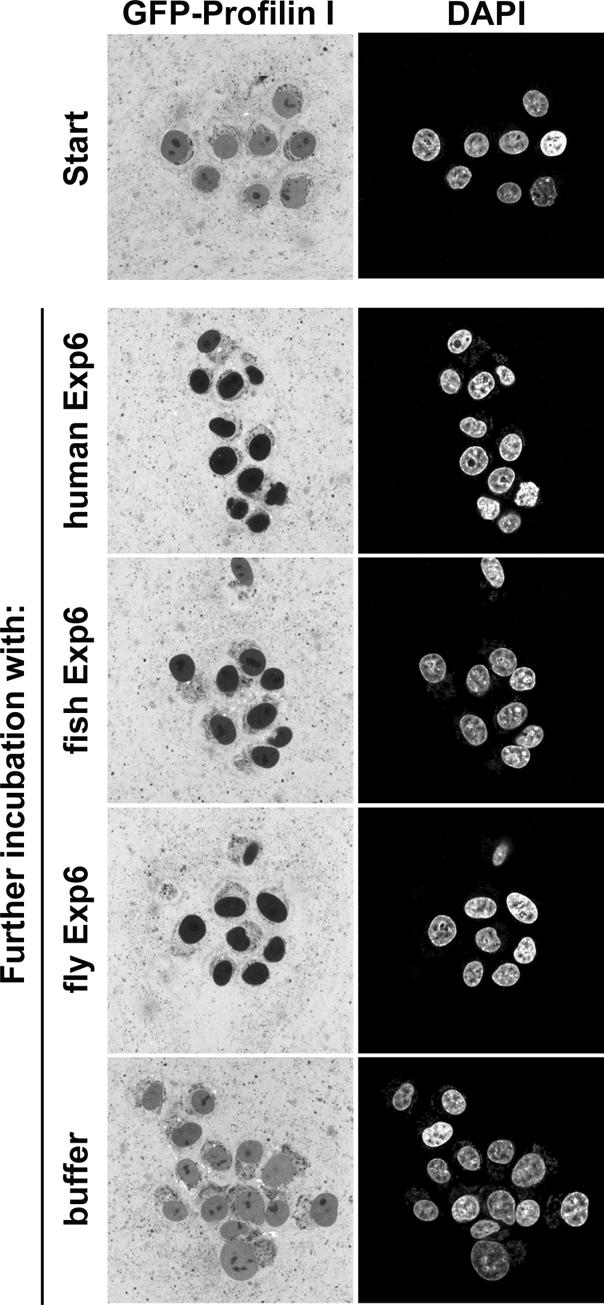
Fig. 10. Panels compare nuclear export of human GFP–profilin I mediated by Exp6 from human, zebrafish (D.rerio) or fruitfly (D.melanogaster). Experimental set-up was as described in Figure 7.
None
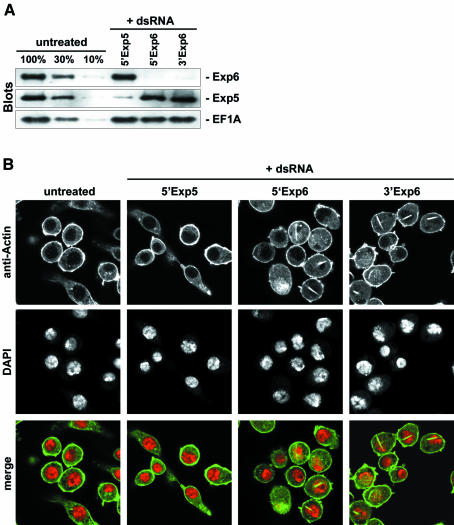
Fig. 11. Exp6 is required for nuclear exclusion of actin in living cells. Drosophila Schneider cells were left either untreated or incubated for 6 days with double-stranded RNA to deplete Exp5 and Exp6 by RNA interference. (A) Immunoblot analysis with anti-Exp6 and anti-Exp5 antibodies of treated and untreated cells. The anti eEF1A immunoblot served as a loading control. (B) Actin distribution in untreated and RNA-interference cells as detected by anti-actin immuno-staining and confocal laser scanning microscopy. Positions of nuclei were detected by DAPI staining. In the merged images, actin is shown in green and DNA in red.

References

    1. Arts G.J., Fornerod,M. and Mattaj,I.W. (1998) Identification of a nuclear export receptor for tRNA. Curr. Biol., 8, 305–314. - PubMed
    1. Bischoff F.R. and Görlich,D. (1997) RanBP1 is crucial for the release of RanGTP from importin β-related nuclear transport factors. FEBS Lett., 419, 249–254. - PubMed
    1. Bohnsack M.T., Regener,K., Schwappach,B., Saffrich,R., Paraskeva,E., Hartmann,E. and Görlich,D. (2002) Exp5 exports eEF1A via tRNA from nuclei and synergizes with other transport pathways to confine translation to the cytoplasm. EMBO J., 21, 6205–6215. - PMC - PubMed
    1. Calado A., Treichel,N., Muller,E.C., Otto,A. and Kutay,U. (2002) Exportin-5-mediated nuclear export of eukaryotic elongation factor 1A and tRNA. EMBO J., 21, 6216–6224. - PMC - PubMed
    1. Campbell R.E., Tour,O., Palmer,A.E., Steinbach,P.A., Baird,G.S., Zacharias,D.A. and Tsien,R.Y. (2002) A monomeric red fluorescent protein. Proc. Natl Acad. Sci. USA, 99, 7877–7882. - PMC - PubMed

Publication types

MeSH terms