Inflammatory pseudotumour associated with chronic persistent Eikenella corrodens infection: a case report and brief review
- PMID: 14600136
- PMCID: PMC1770116
- DOI: 10.1136/jcp.56.11.868
Inflammatory pseudotumour associated with chronic persistent Eikenella corrodens infection: a case report and brief review
Abstract
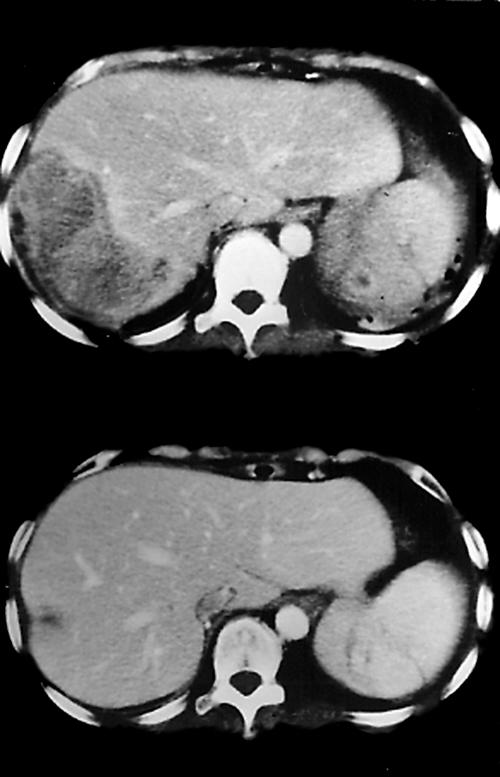
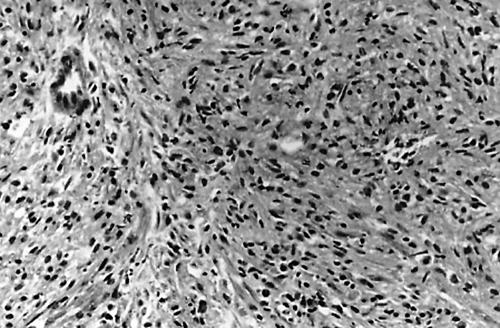
Inflammatory pseudotumour is an uncommon mass forming lesion, representing the histological expression of an infective or reactive/reparative process (pseudotumour) in most cases, and a bona fide neoplasm (for example, inflammatory myofibroblastic tumour) in a minority of cases. This report describes the case of an inflammatory pseudotumour with a pathology that unveiled proliferative CD68 positive and actin negative spindle shaped cells, with a mild mixed inflammatory infiltrate, and a culture that yielded an uncommon fastidious bacillus, Eikenella corrodens. The clinical course was indolent but protracted, with insidious progression to multifocal non-contiguous lesions, involving the lungs, liver, spleen, left kidney, and deep neck tissue, all of which responded to medical treatment with appropriate antibiotics. It is of paramount importance that clinicians search for an infective cause of an inflammatory pseudotumour, to ensure appropriate treatment.
Figures
References
-
- Coffin CM, Humphrey PA, Dehner LP. Extrapulmonary inflammatory myofibroblastic tumour, a clinical and pathological survey. Semin Diagn Pathol 1998;15:85–101. - PubMed
-
- Manuselis G Jr. Utilization of colonial morphology for the presumptive identification of microorganisms. In: Mahon CR, Manuselis G Jr, eds. Textbook of diagnostic microbiology, 1st ed. Philadelphia, PA: W. B. Saunders, 1995:307–38.
-
- Massey BT. Eikenella corrodens isolated from a polymicrobial hepatic abscess. Am J Gastroenterol 1989;84:1100–2. - PubMed
-
- Quinlivan D, Davis TME, Daly FJ, et al. Hepatic abscess due to Eikenella corrodens and Streptococcus milleri, implications for antibiotic therapy. J Infect 1996;33:47–8. - PubMed
-
- Arnon R, Ruzai-Shapiro C, Salen E, et al. A rare pathogen in a polymicrobial hepatic abscess in an adolescent. Clin Pediatr 1999;38:429–32. - PubMed
Publication types
MeSH terms
LinkOut - more resources
Full Text Sources
Medical