


T cell activation-induced mitochondrial hyperpolarization is mediated by Ca2+- and redox-dependent production of nitric oxide
- PMID: 14607919
- PMCID: PMC4078644
- DOI: 10.4049/jimmunol.171.10.5188
T cell activation-induced mitochondrial hyperpolarization is mediated by Ca2+- and redox-dependent production of nitric oxide
Abstract
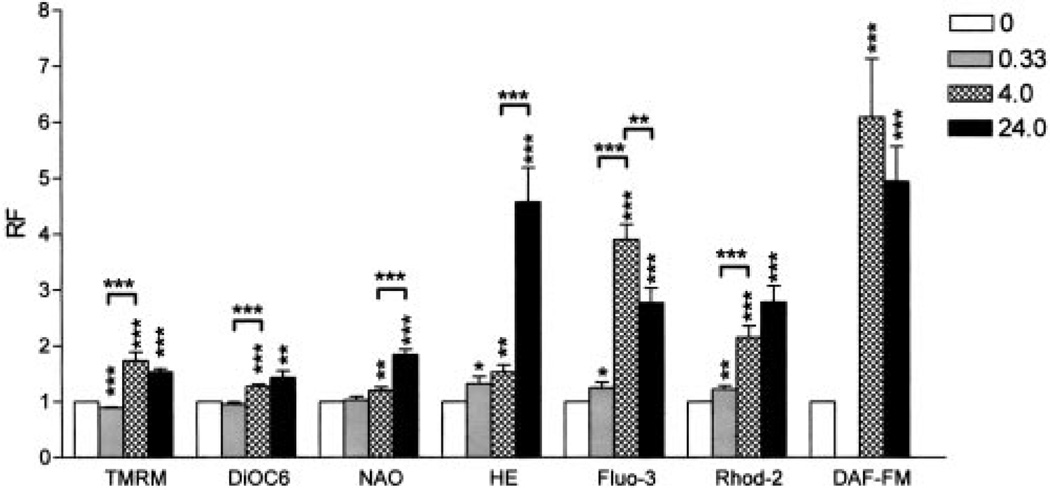
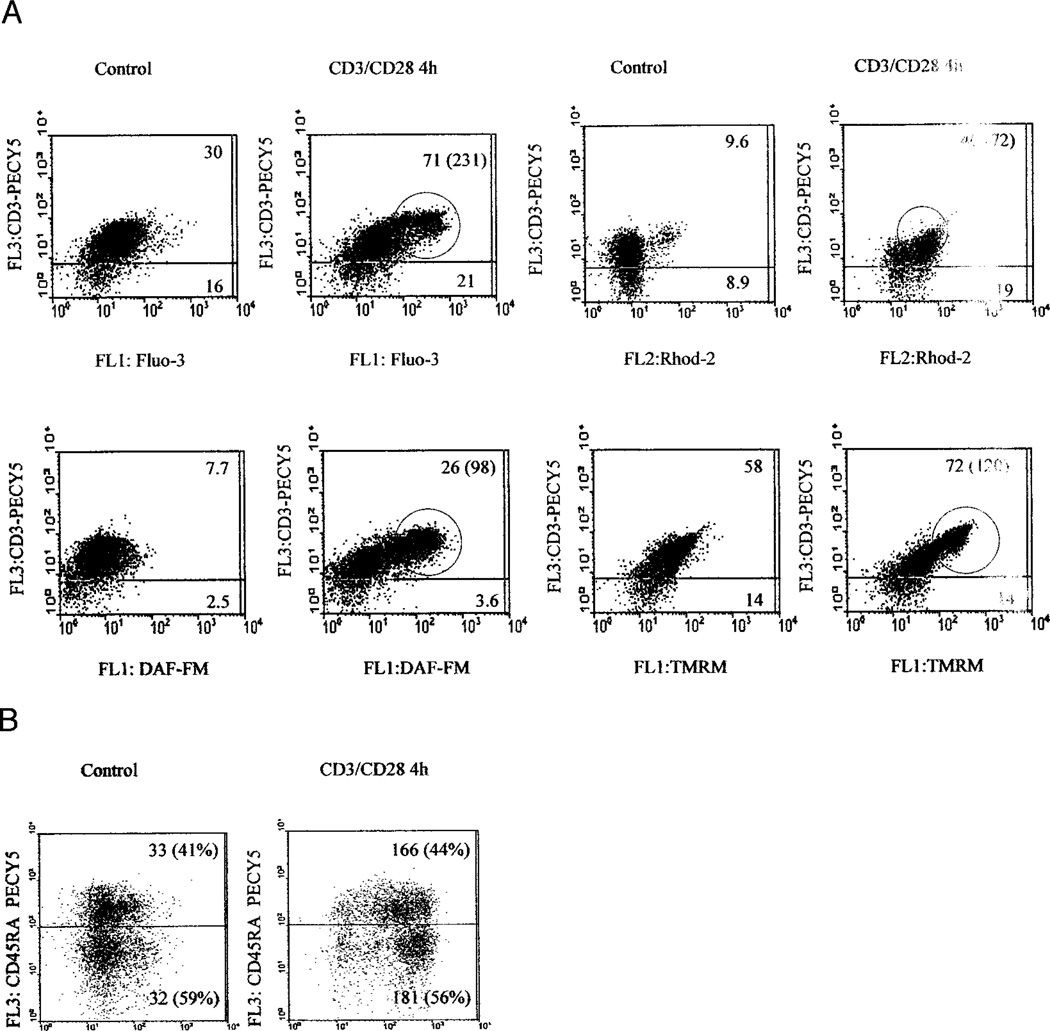
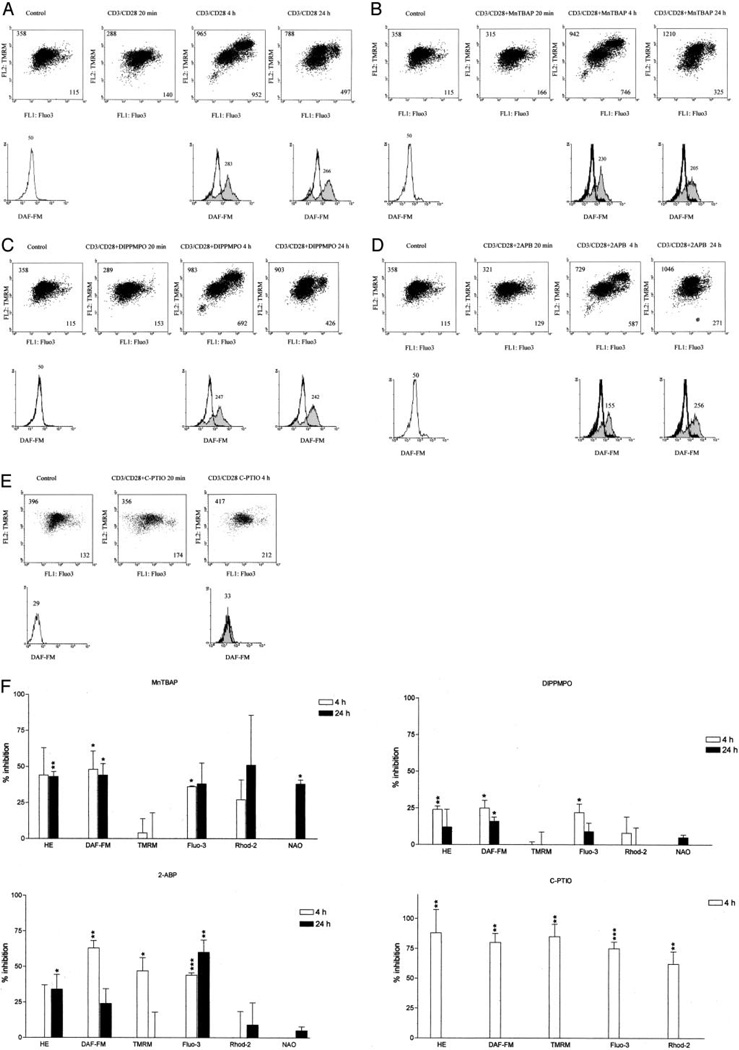
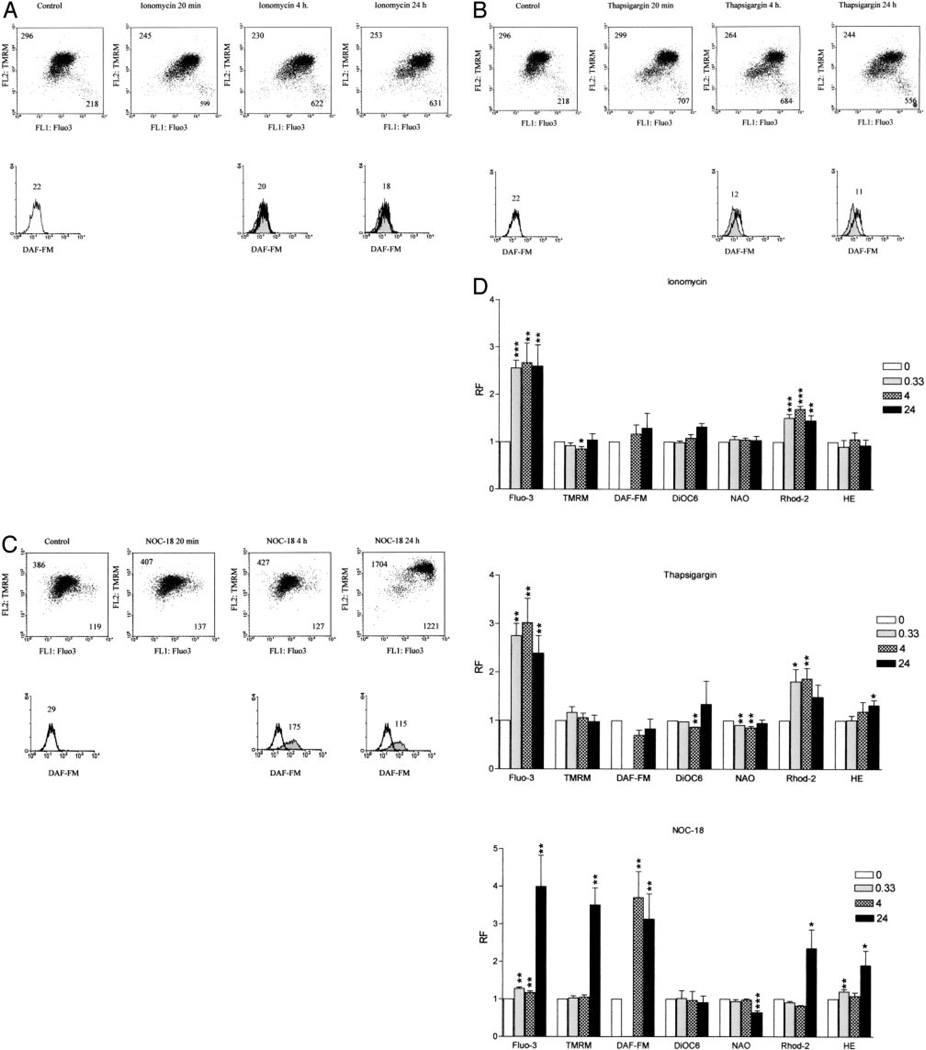
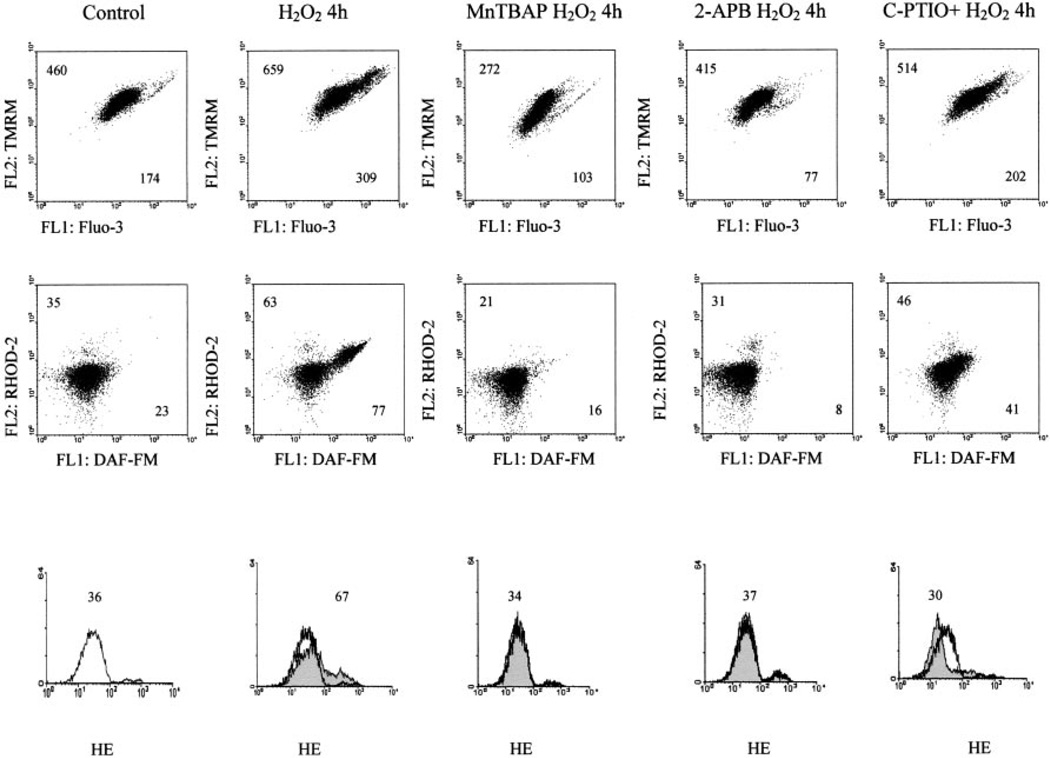
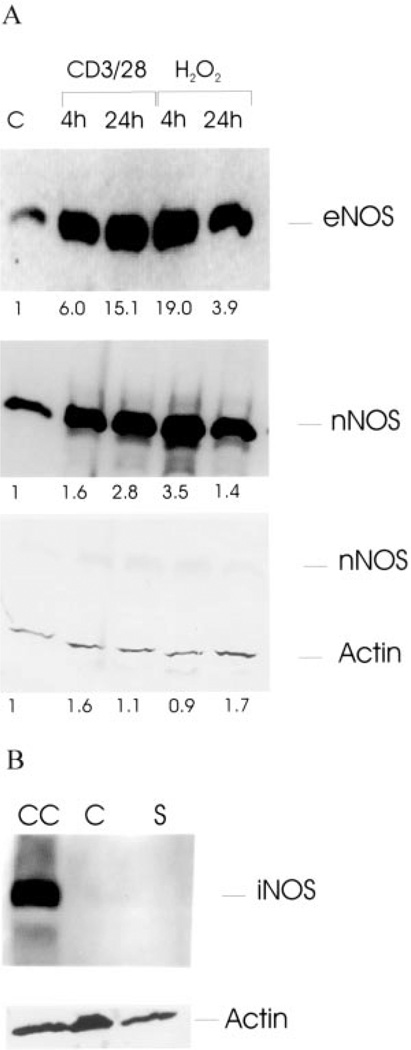
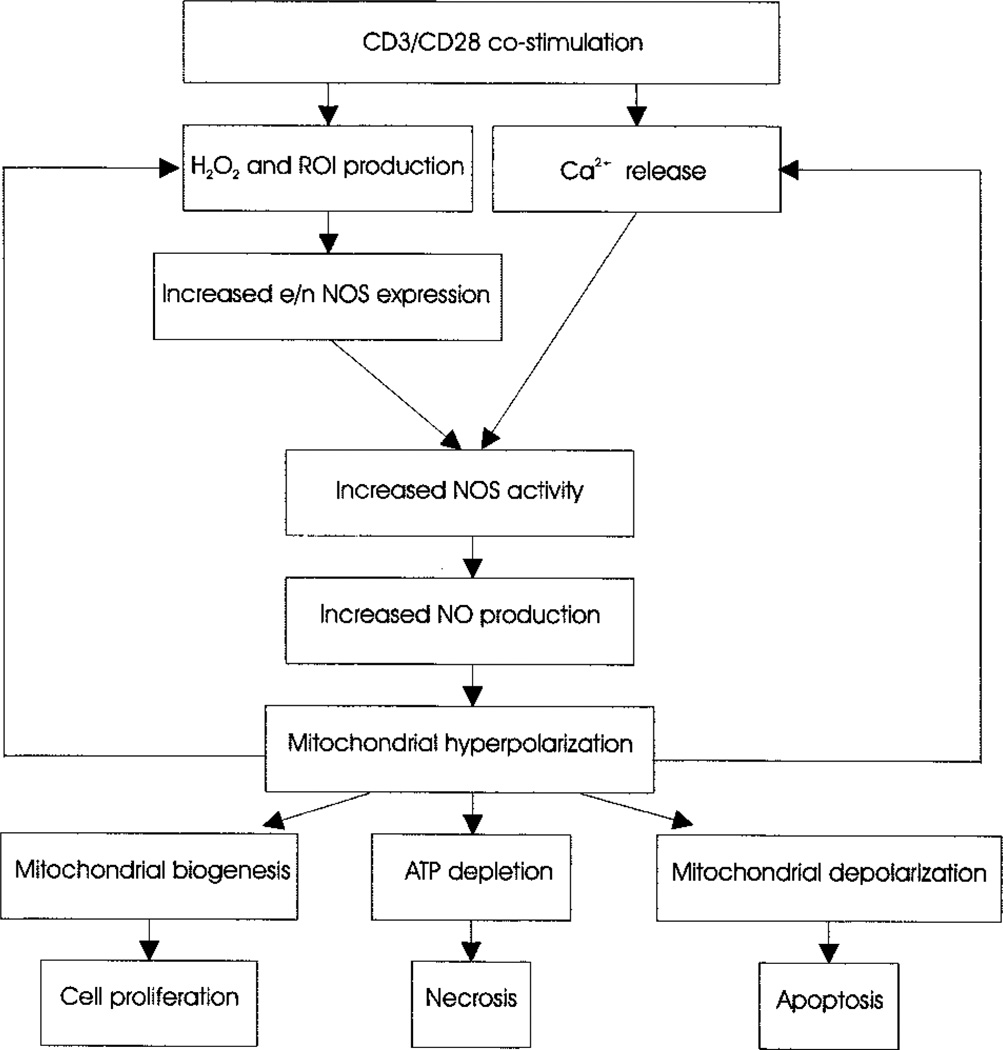
Activation, proliferation, or programmed cell death of T lymphocytes is regulated by the mitochondrial transmembrane potential (Deltapsi(m)) through controlling ATP synthesis, production of reactive oxygen intermediates (ROI), and release of cell death-inducing factors. Elevation of Deltapsi(m) or mitochondrial hyperpolarization is an early and reversible event associated with both T cell activation and apoptosis. In the present study, T cell activation signals leading to mitochondrial hyperpolarization were investigated. CD3/CD28 costimulation of human PBL elevated cytoplasmic and mitochondrial Ca(2+) levels, ROI production, and NO production, and elicited mitochondrial hyperpolarization. Although T cell activation-induced Ca(2+) release, ROI levels, and NO production were diminished by inositol 1,4,5-triphosphate receptor antagonist 2-aminoethoxydiphenyl borane, superoxide dismutase mimic manganese (III) tetrakis (4-benzoic acid) porphyrin chloride, spin trap 5-diisopropoxyphosphoryl-5-methyl-1-pyrroline-N-oxide, and NO chelator carboxy-2-phenyl-4,4,5,5-tetramethyl-imidazoline-1-oxyl-3-oxide, mitochondrial hyperpolarization was selectively inhibited by carboxy-2-phenyl-4,4,5,5-tetramethyl-imidazoline-1-oxyl-3-oxide (-85.0 +/- 10.0%; p = 0.008) and, to a lesser extent, by 2-aminoethoxydiphenyl borane. Moreover, NO precursor (Z)-1-[2-(2-aminoethyl)-N-(2-ammonioethyl)amino]diazen-1-ium-1,2-diolate diethylenetriamine elicited NO and ROI production, Ca(2+) release, transient ATP depletion, and robust mitochondrial hyperpolarization (3.5 +/- 0.8-fold; p = 0.002). Western blot analysis revealed expression of Ca-dependent endothelial NO synthase and neuronal NO synthase isoforms and absence of Ca-independent inducible NO synthase in PBL. CD3/CD28 costimulation or H(2)O(2) elicited severalfold elevations of endothelial NO synthase and neuronal NO synthase expression, as compared with beta-actin. H(2)O(2) also led to moderate mitochondrial hyperpolarization; however, Ca(2+) influx by ionomycin or Ca(2+) release from intracellular stores by thapsigargin alone failed to induce NO synthase expression, NO production, or Deltapsi(m) elevation. The results suggest that T cell activation-induced mitochondrial hyperpolarization is mediated by ROI- and Ca(2+)-dependent NO production.
Figures
References
-
- Lenardo M, Chan KM, Hornung F, McFarland H, Siegel R, Wang J, Zheng L. Mature T lymphocyte apoptosis—immune regulation in a dynamic and unpredictable antigenic environment. Annu. Rev. Immunol. 1999;17:221. - PubMed
-
- Gringhuis SI, Leow A, Voort EAPapendrecht-Van Der, Remans PH, Breedveld FC, Verweij CL. Displacement of linker for activation of T cells from the plasma membrane due to redox balance alterations results in hyporesponsiveness of synovial fluid T lymphocytes in rheumatoid arthritis. J. Immunol. 2000;164:2170. - PubMed
-
- Lewis RS. Calcium signaling mechanisms in T lymphocytes. Annu. Rev. Immunol. 2001;19:497. - PubMed
-
- Gergely P, Jr, Niland B, Gonchoroff N, Pullmann R, Jr, Phillips PE, Perl A. Persistent mitochondrial hyperpolarization, increased reactive oxygen intermediate production, and cytoplasmic alkalinization characterize altered IL-10 signaling in patients with systemic lupus erythematosus. J. Immunol. 2002;169:1092. - PMC - PubMed
Publication types
MeSH terms
Substances
Grants and funding
LinkOut - more resources
Full Text Sources
Other Literature Sources
Miscellaneous
