


RIDOM: comprehensive and public sequence database for identification of Mycobacterium species
- PMID: 14611664
- PMCID: PMC280682
- DOI: 10.1186/1471-2334-3-26
RIDOM: comprehensive and public sequence database for identification of Mycobacterium species
Abstract
Background: Molecular identification of Mycobacterium species has two primary advantages when compared to phenotypic identification: rapid turn-around time and improved accuracy. The information content of the 5' end of the 16S ribosomal RNA gene (16S rDNA) is sufficient for identification of most bacterial species. However, reliable sequence-based identification is hampered by many faulty and some missing sequence entries in publicly accessible databases.
Methods: In order to establish an improved 16S rDNA sequence database for the identification of clinical and environmental isolates, we sequenced both strands of the 5' end of 16S rDNA (Escherichia coli positions 54 to 510) from 199 mycobacterial culture collection isolates. All validly described species (n = 89; up to March 21, 2000) and nearly all published sequevar variants were included. If the 16S rDNA sequences were not discriminatory, the internal transcribed spacer (ITS) region sequences (n = 84) were also determined.
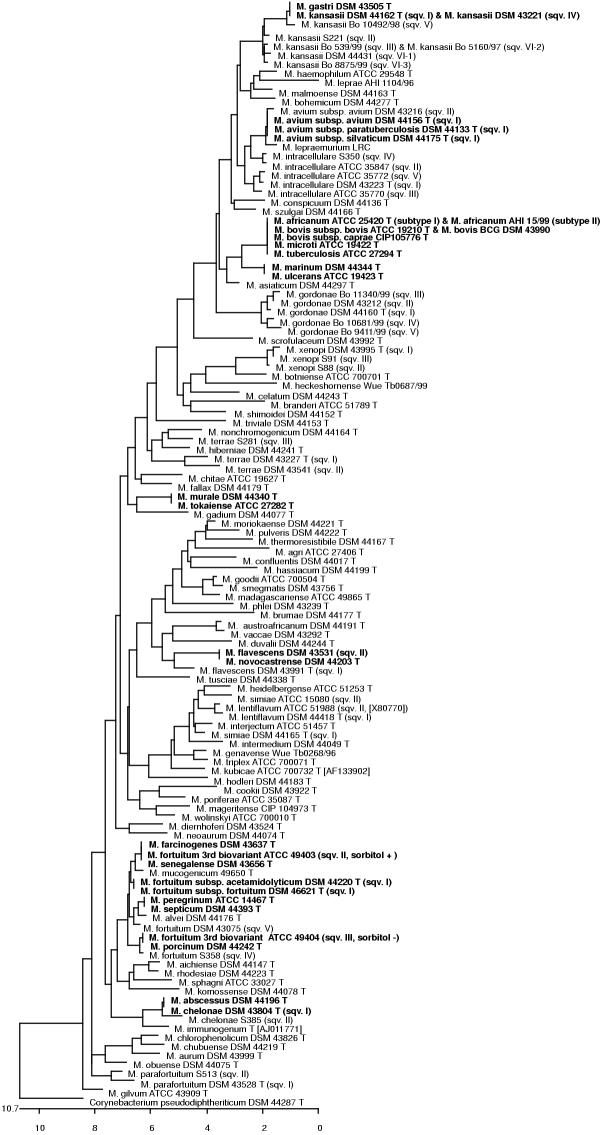
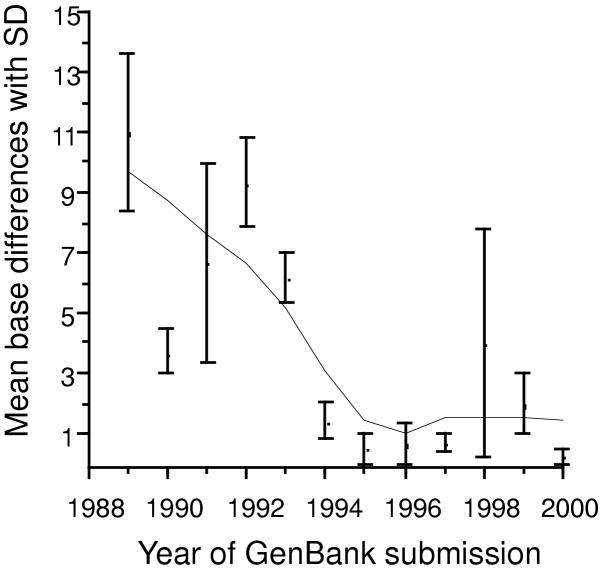
Results: Using 5'-16S rDNA sequencing a total of 64 different mycobacterial species (71.9%) could be identified. With the additional input of the ITS sequence, a further 16 species or subspecies could be differentiated. Only Mycobacterium tuberculosis complex species, M. marinum/M. ulcerans and the M. avium subspecies could not be differentiated using 5'-16S rDNA or ITS sequencing. A total of 77 culture collection strain sequences, exhibiting an overlap of at least 80% and identical by strain number to the isolates used in this study, were found in the GenBank. Comparing these with our sequences revealed that an average of 4.31 nucleotide differences (SD +/- 0.57) were present.
Conclusions: The data from this analysis show that it is possible to differentiate most mycobacterial species by sequence analysis of partial 16S rDNA. The high-quality sequences reported here, together with ancillary information (e.g., taxonomic, medical), are available in a public database, which is currently being expanded in the RIDOM project http://www.ridom-rdna.de), for similarity searches.
Figures
References
-
- Murray PR, Baron EJ, Pfaller MA, Tenover FC, Yolken RH. In: Manual of clinical microbiology. 7. MurrayPR, BaronEJ, PfallerMA, TenoverFC and YolkenRH, editor. Washinghton, D.C., American Society for Microbiology; 1999.
-
- Persing DH, Smith TF, Tenover FC, White TJ. In: Diagnostic molecular microbiology: principles and applications. PersingDH, SmithTF, TenoverFC and WhiteTJ, editor. Washington, D.C., American Society for Microbiology; 1993.
Publication types
MeSH terms
Substances
LinkOut - more resources
Full Text Sources
