


Moderate neutropenia with adjuvant CMF confers improved survival in early breast cancer
- PMID: 14612889
- PMCID: PMC2394463
- DOI: 10.1038/sj.bjc.6601366
Moderate neutropenia with adjuvant CMF confers improved survival in early breast cancer
Abstract
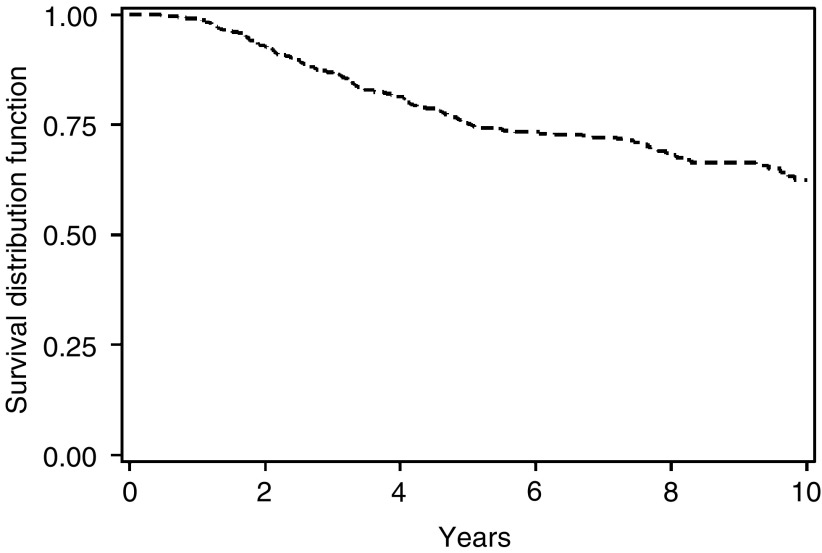
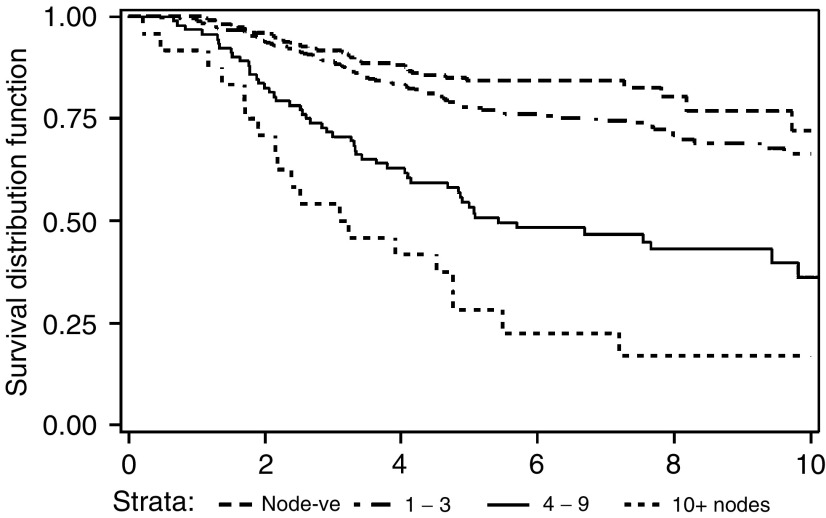
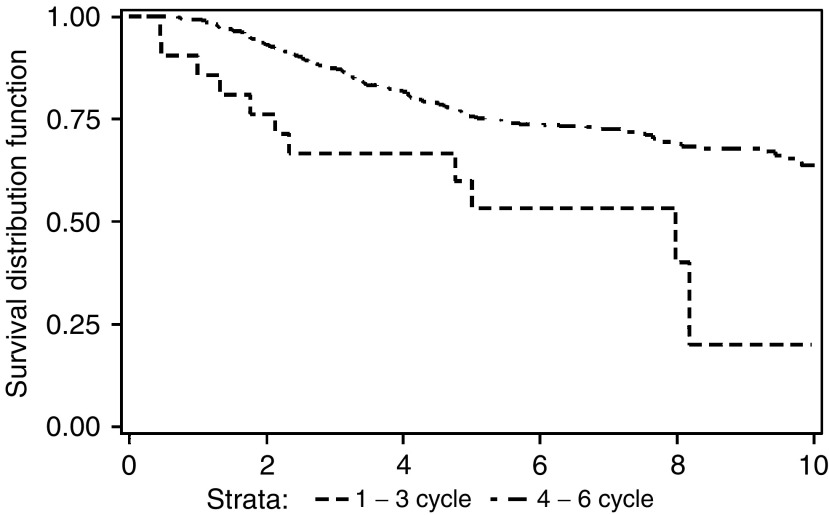
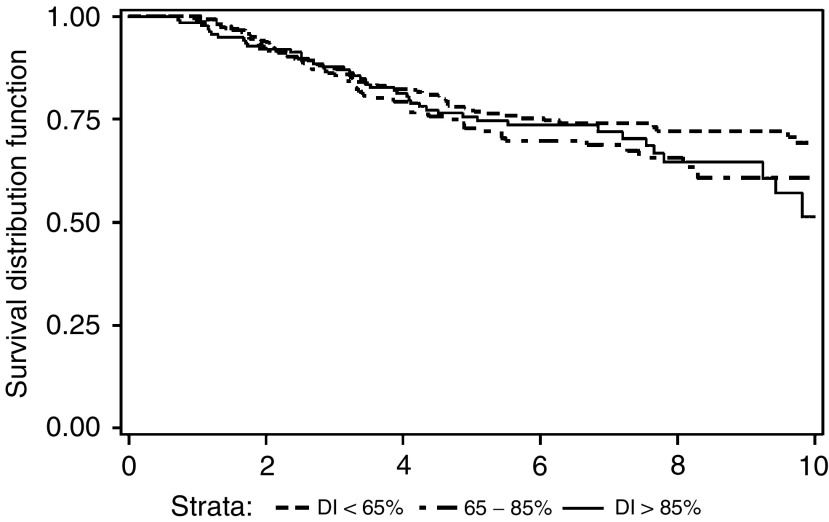
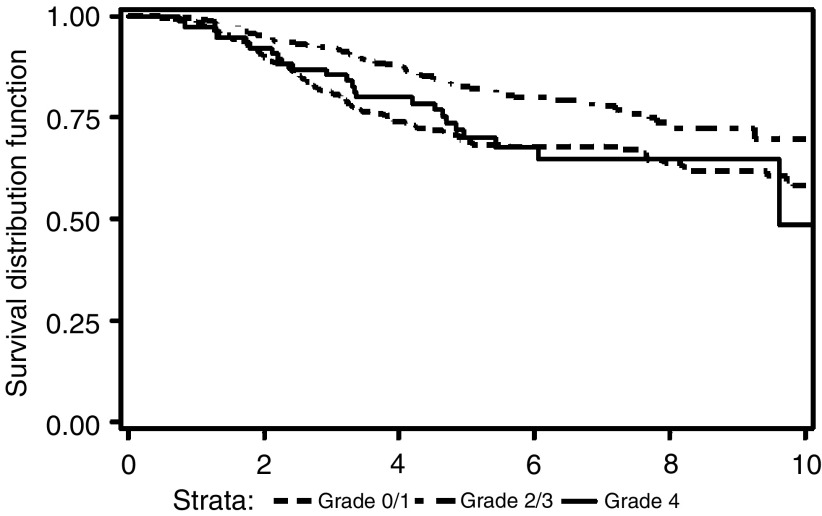
Despite the extensive literature clearly demonstrating the survival benefit for adjuvant chemotherapy in women with operable breast cancer, there are few data confirming this in routine practice. Some studies have suggested that not all women gain to the same extent, with older women showing a smaller benefit and lower doses achieving poorer outcomes. We therefore reviewed the case notes of 750 women treated over a 15-year period at The Edinburgh Cancer Centre with the same intravenous CMF (cyclophosphamide, methotrexate and 5-fluorouracil) regimen, to identify patient- and treatment-related factors influencing outcome in routine practice. The actuarial 10-year survival for these women was 59.3%, with the anticipated poorer outcome for those with more involved ipsilateral axillary nodes, higher grade and ER-negative tumours. There was no evidence that a lower delivered dose intensity or older age at presentation resulted in a poorer survival. Of particular interest was the observation that 45% of patients who had grade 2/3 neutropenia had a 10% absolute survival advantage over those with no neutropenia (P<0.001). This strongly suggests that some degree of neutropenia has more influence on outcome than age or delivered dose intensity.
Figures
References
-
- Batey MA, Wright JG, Azzabi A, Newell DR, Lind MJ, Calvert AH, Boddy AV (2002) Population pharmacokinetics of adjuvant cyclophosphamide, methotrexate and 5-fluorouracil (CMF). Eur J Cancer 38: 1081–1089 - PubMed
-
- Bergh J, Wiklund T, Erikstein B, Lidbrink E, Lindman H, Malmstrom, Kellokumpu-Lehtinen P, Bengtsson NO, Soderlund G, Anker G, Wist, Ottosson S, Salminen E, Ljungman P, Holte H, Nilsson J, Blomqvist C, Wilking N (2000) Tailored fluorouracil, epirubicin, and cyclophosphamide compared with marrow-supported high-dose chemotherapy as adjuvant treatment for high-risk breast cancer: a randomised trial. Scandinavian Breast Group 9401 study. Lancet 356: 1384–1391 - PubMed
-
- Bonadonna G, Valagussa P, Moliterni A, Zambetti M, Brambilla C (1995a) Adjuvant cyclophosphamide, methotrexate, and fluorouracil in node-positive breast cancer. N Engl J Med 332: 901–906 - PubMed
-
- Bonadonna G, Zambetti M, Valagussa P (1995b) Sequential or alternating doxorubicin and CMF regimens in breast cancer with more than three positive nodes. Ten-year results (see comments). JAMA 273: 542–547 - PubMed
Publication types
MeSH terms
Substances
Supplementary concepts
LinkOut - more resources
Full Text Sources
Medical
