


Monoamine oxidase inhibitors l-deprenyl and clorgyline protect nonmalignant human cells from ionising radiation and chemotherapy toxicity
- PMID: 14612913
- PMCID: PMC2394440
- DOI: 10.1038/sj.bjc.6601361
Monoamine oxidase inhibitors l-deprenyl and clorgyline protect nonmalignant human cells from ionising radiation and chemotherapy toxicity
Abstract
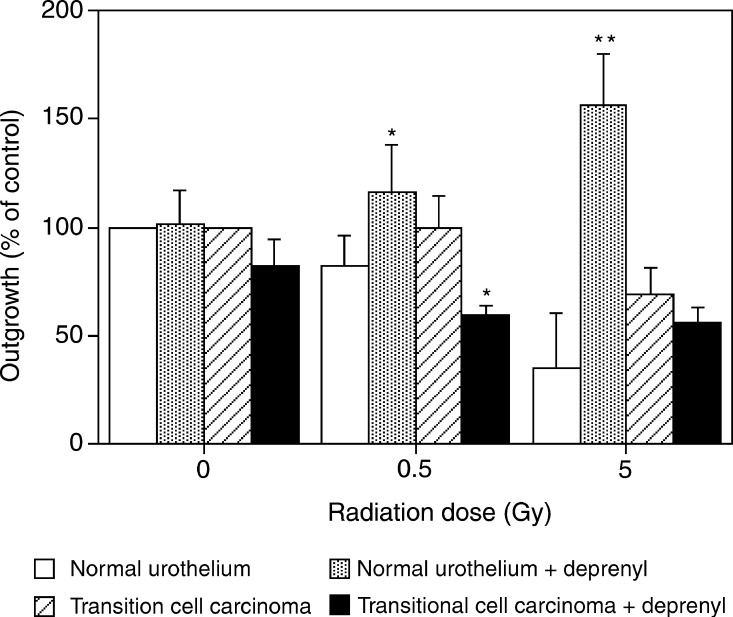
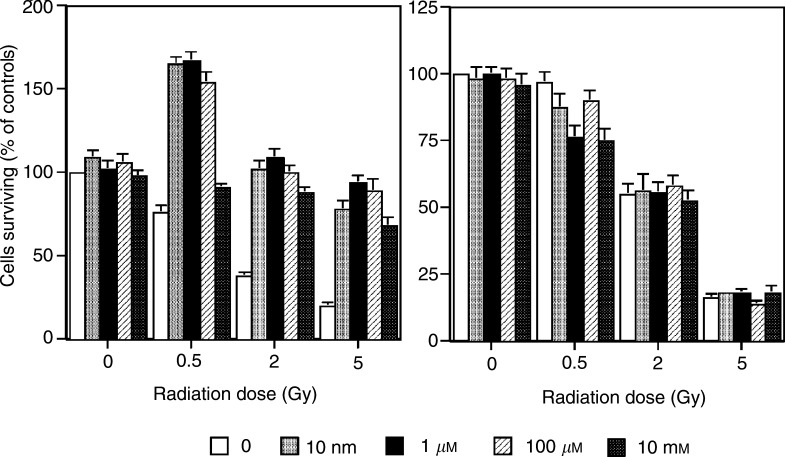
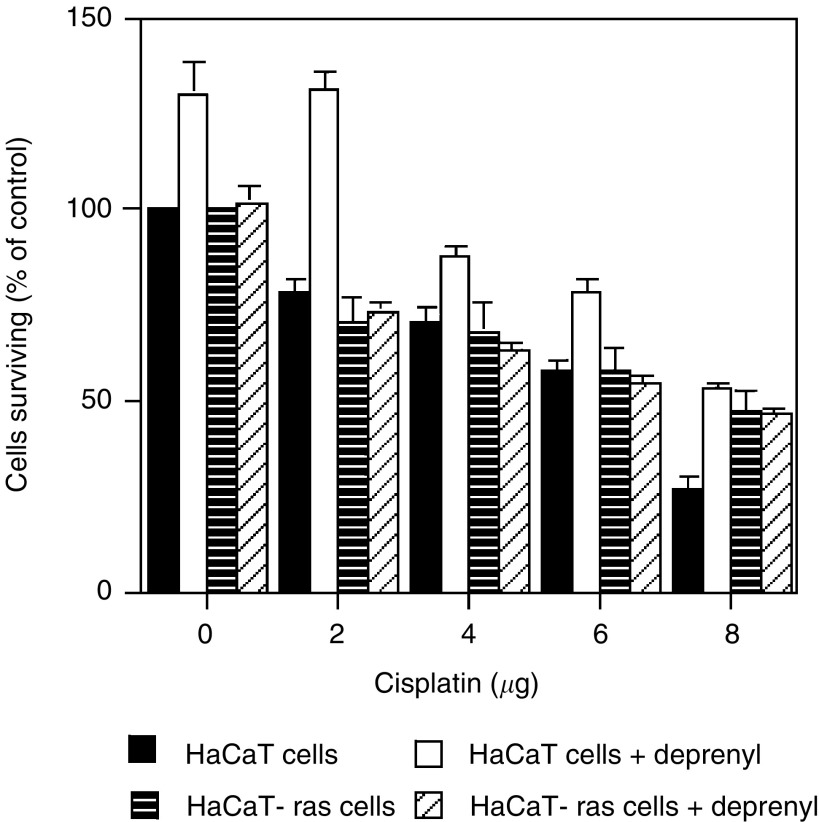
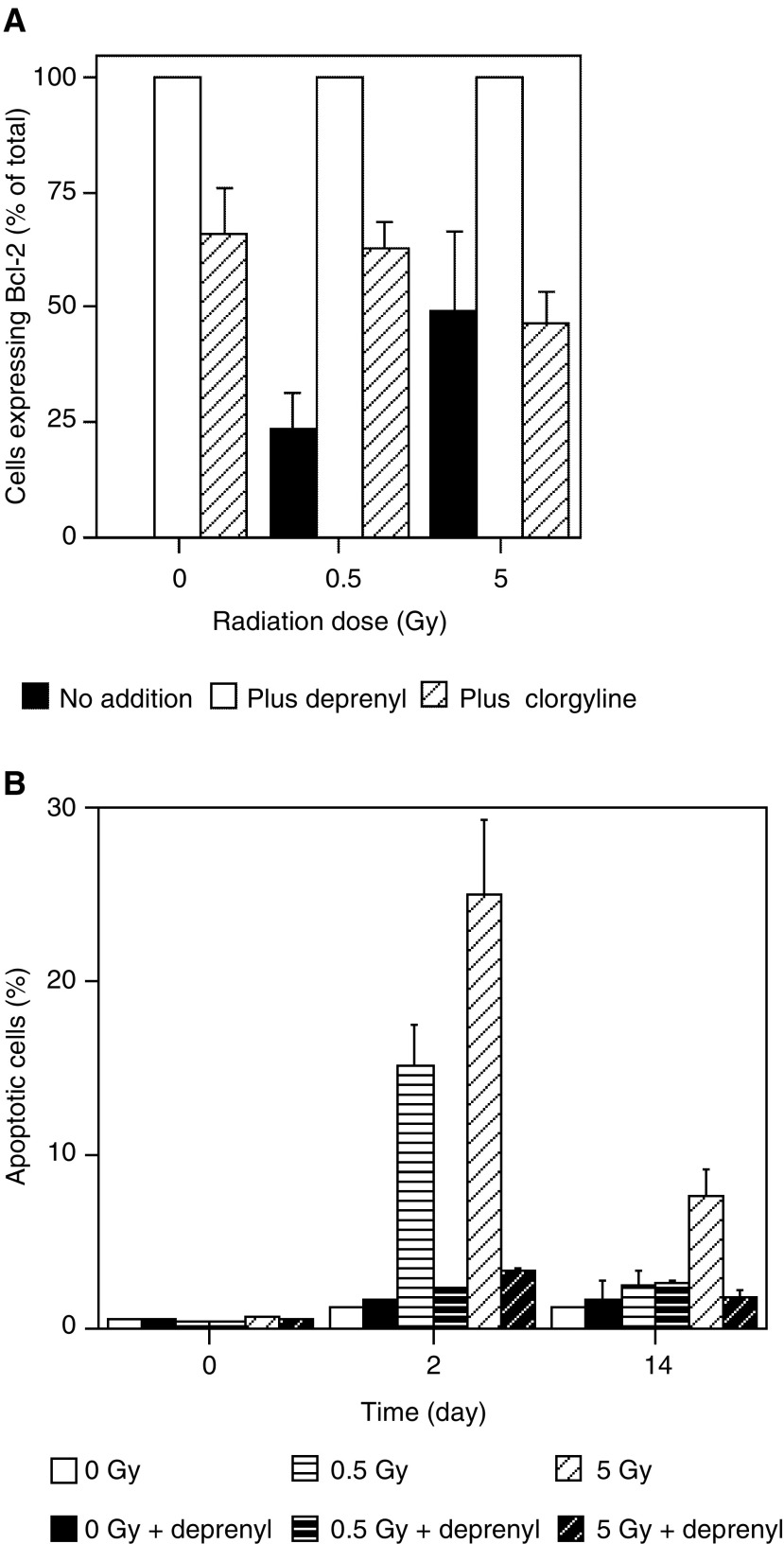
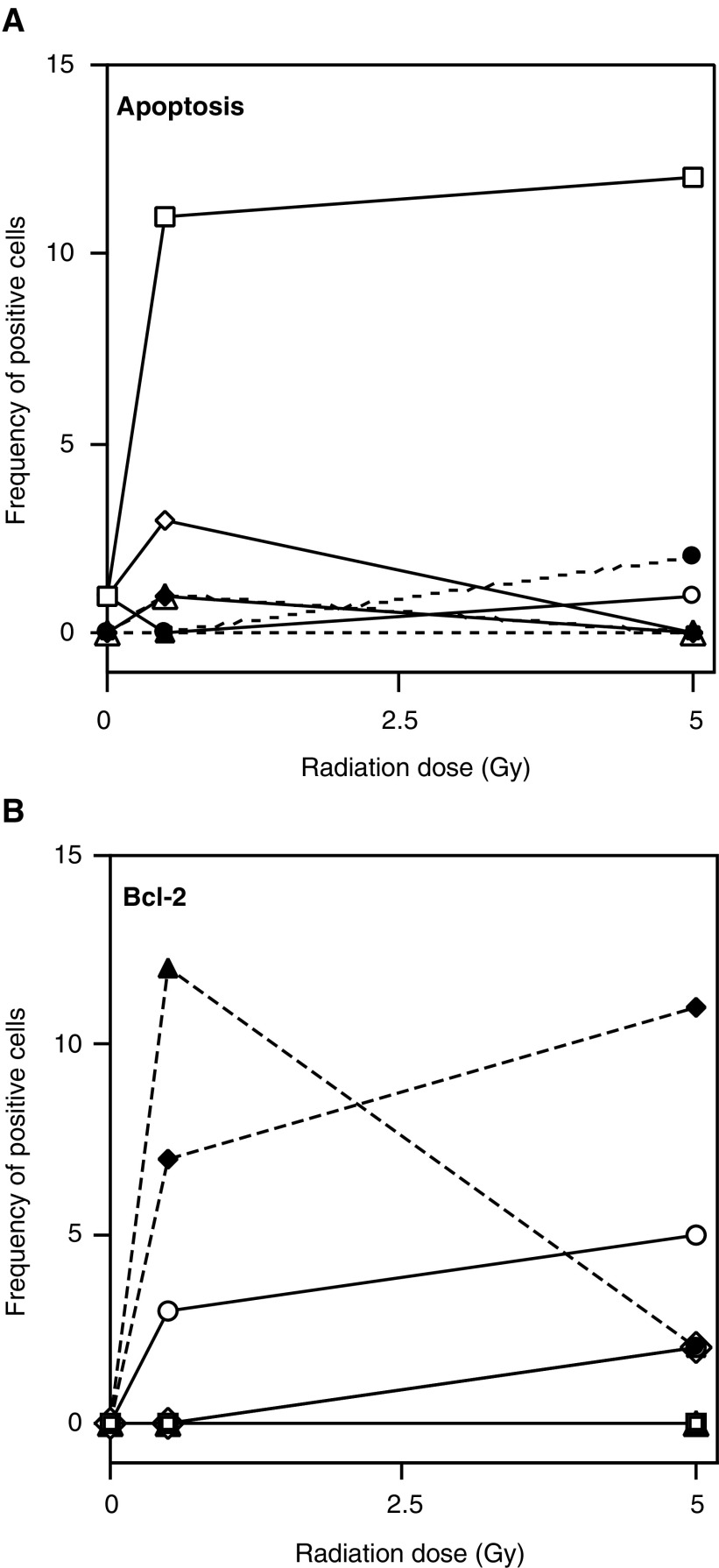
l-Deprenyl (R-(-)-deprenyl, selegiline) is an inhibitor of monoamine oxidase-B (MAO-B) that is known to protect nerve cells from a variety of chemical and physical insults. As apoptosis is a common mechanism of radiation-induced cell death, the effect of l-deprenyl on the survival of cultured cells and tissue explants was studied following exposure to gamma radiation. The results obtained were compared with the effects of the less-selective MAO-B inhibitor pargyline and the MAO-A inhibitor clorgyline. l-Deprenyl at a concentration of 10(-9) M protected the nontumorigenic cell line (HaCaT) and normal human urothelial explants from the effects of cobalt-60 gamma radiation, but did not protect tumorigenic human cell lines HaCaT-ras, HPV-transfected human keratinocytes (HPV-G cells), or PC3. Human bladder carcinoma explants were not protected. Clorgyline showed a smaller protective effect of normal cells, whereas pargyline had no effect. Radiation-induced delayed effects (genomic instability measured as delayed cell death) were prevented in normal cells by l-deprenyl but, interestingly, deprenyl appeared to increase the amount of delayed death in the tumorigenic cell lines. Studies using l-deprenyl prior to the exposure of nonmalignant cells to cisplatin showed that cell death due to this agent was also reduced. Treatment of cultures of nontumorigenic cells with l-deprenyl or clorgyline significantly increased the levels of the protein Bcl-2 following irradiation, but there was no such effect on the already-elevated levels of this protein in the tumour samples. Since the Bcl-2 has been shown to be an inhibitor of apoptosis or programmed cell death, this would imply that the protective effects of l-deprenyl and clorgyline involve activation of antiapoptotic pathways within the normal cell. This hypothesis is supported by data showing reduced levels of apoptosis in HaCAT cells and in normal bladder explant cultures following treatment with l-deprenyl.
Figures
References
-
- Birkmayer W, Riederer P, Youdim M, Linauer W (1975) Potentiation of the anti-akinetic effect of L-dopa treatment by an inhibitor of MAO-B, deprenyl. J Neural Transmission 36: 303–326 - PubMed
-
- Boukamp P, Popp S, Bleuel K, Tomakidi E, Burkle A, Fusenig NE (1999) Tumorigenic conversion of immortal human skin keratinocytes (HaCaT) by elevated temperature. Oncogene 18(41) :5638–5645 - PubMed
-
- Chiueh CC, Huang SJ, Murphy DL (1994) Suppression of hydroxyl radical formation by MAO inhibitors: a novel possible neuroprotective mechanism in dopaminergic neurotoxicity. J Neural Transmission 41(Suppl): 189–196 - PubMed
-
- Finberg J, Lamensdorf I, Weinstock M, Schwartz M, Youdim MBH (1999) Pharmacology of rasagiline (N-propargyl-1R-aminoindan). Adv Neurol 80: 495–499 - PubMed
-
- Hockenbery DM, Nunez G, Milliman C, Schrieber RD, Korsmeyer SJ (1990) Bcl-2 is an inner mitochondrial membrane protein that blocks programmed cell death. Nature 348: 334–335 - PubMed
Publication types
MeSH terms
Substances
LinkOut - more resources
Full Text Sources
Other Literature Sources
Research Materials
