


Neural stem cells and the regulation of adult neurogenesis
- PMID: 14614786
- PMCID: PMC293430
- DOI: 10.1186/1477-7827-1-99
Neural stem cells and the regulation of adult neurogenesis
Abstract
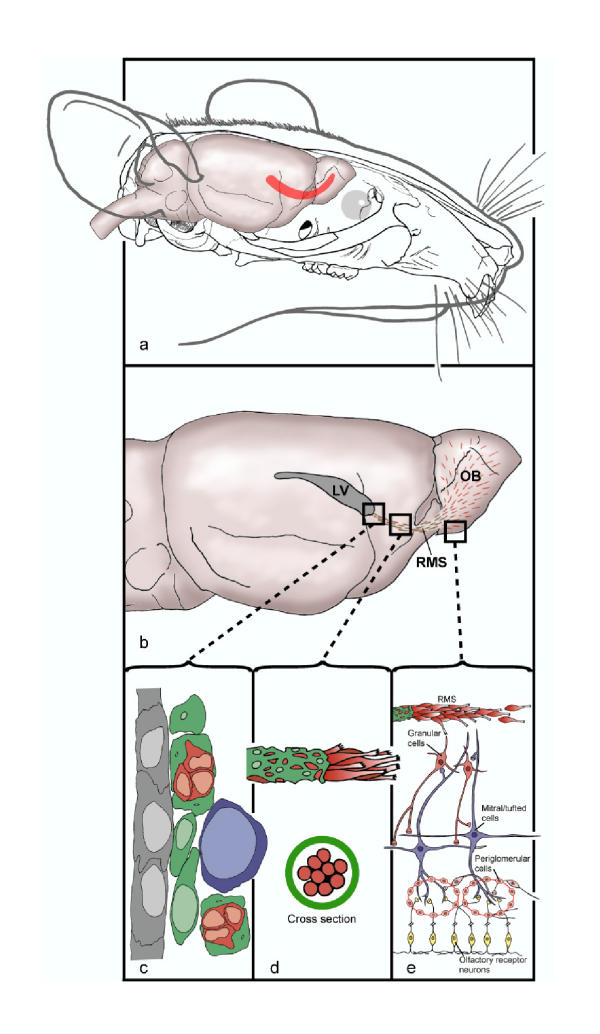
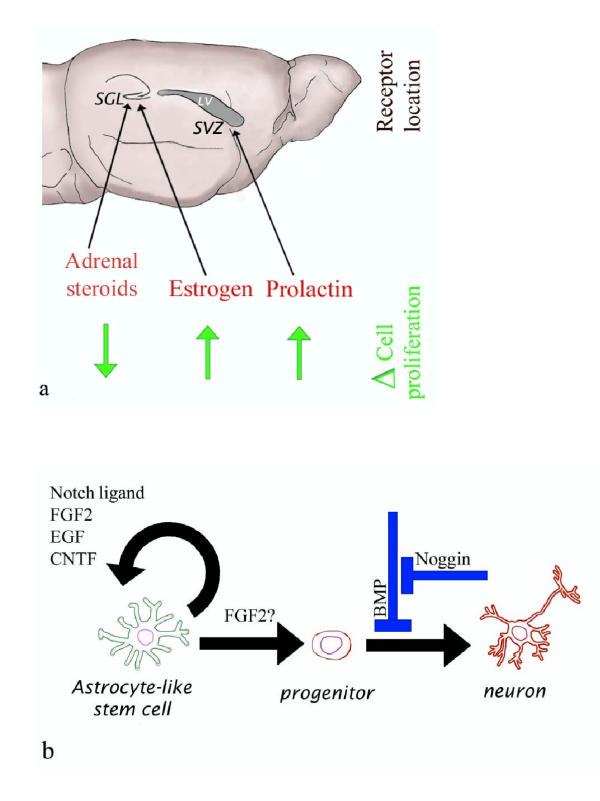
Presumably, the 'hard-wired' neuronal circuitry of the adult brain dissuades addition of new neurons, which could potentially disrupt existing circuits. This is borne out by the fact that, in general, new neurons are not produced in the mature brain. However, recent studies have established that the adult brain does maintain discrete regions of neurogenesis from which new neurons migrate and become incorporated into the functional circuitry of the brain. These neurogenic zones appear to be vestiges of the original developmental program that initiates brain formation. The largest of these germinal regions in the adult brain is the subventricular zone (SVZ), which lines the lateral walls of the lateral ventricles. Neural stem cells produce neuroblasts that migrate from the SVZ along a discrete pathway, the rostral migratory stream, into the olfactory bulb where they form mature neurons involved in the sense of smell. The subgranular layer (SGL) of the hippocampal dentate gyrus is another neurogenic region; new SGL neurons migrate only a short distance and differentiate into hippocampal granule cells. Here, we discuss the surprising finding of neural stem cells in the adult brain and the molecular mechanisms that regulate adult neurogenesis.
Figures
References
-
- Smart I. The subependymal layer of the mouse brain and its cell production as shown by radioautography after thymidine-H3 injection. J Comp Neurol. 1961;116:325–347.
-
- Altman J. Autoradiographic investigation of cell proliferation in the brains of rats and cats. Anat Rec. 1963;145:573–591. - PubMed
-
- Altman J. Are neurons formed in the brains of adult mammals? Science. 1962;135:1127–1128. - PubMed
Publication types
MeSH terms
Substances
Grants and funding
LinkOut - more resources
Full Text Sources
Other Literature Sources
