


LCN6, a novel human epididymal lipocalin
- PMID: 14617364
- PMCID: PMC293424
- DOI: 10.1186/1477-7827-1-112
LCN6, a novel human epididymal lipocalin
Abstract
Background: The lipocalin (LCN) family of structurally conserved hydrophobic ligand binding proteins is represented in all major taxonomic groups from prokaryotes to primates. The importance of lipocalins in reproduction and the similarity to known epididymal lipocalins prompted us to characterize the novel human epididymal LCN6.
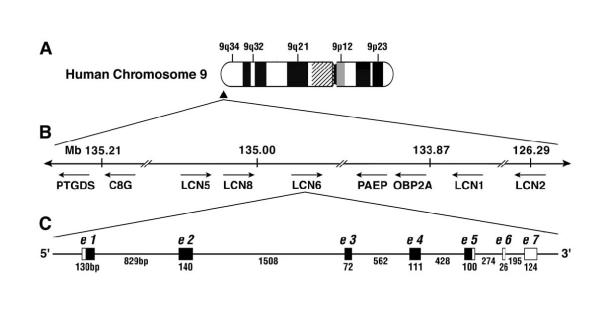
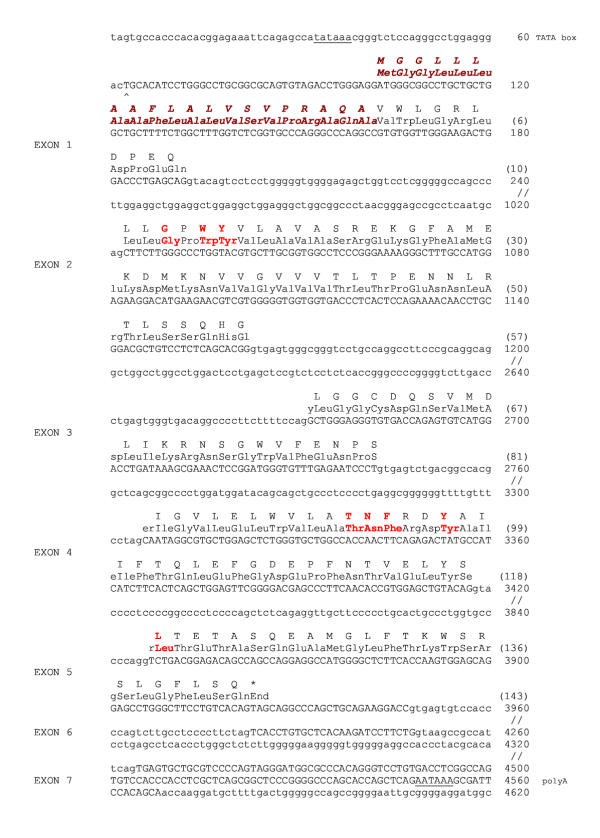
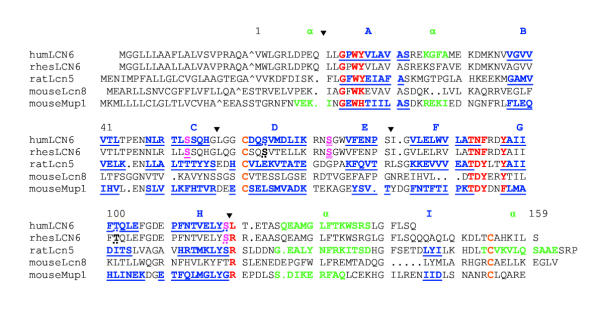
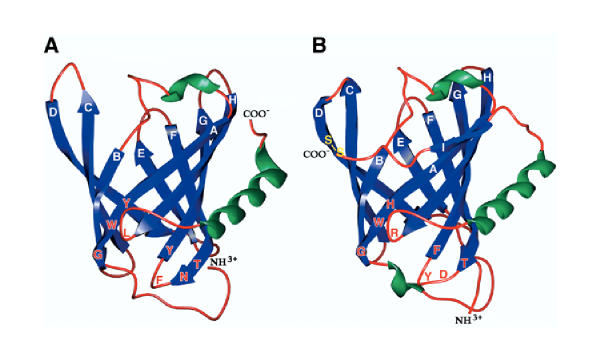
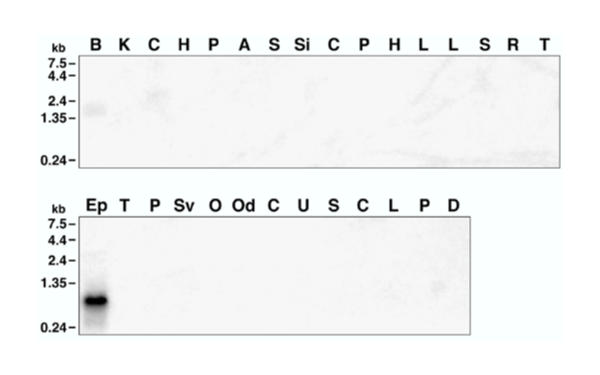
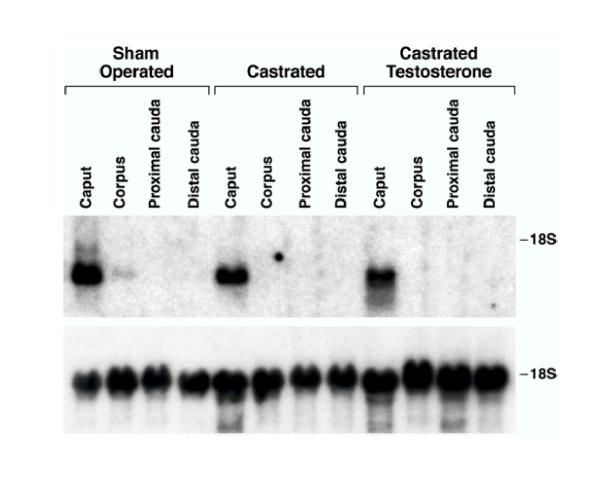
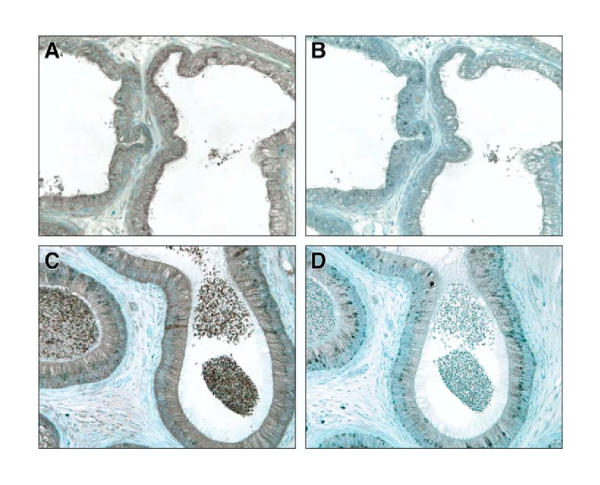
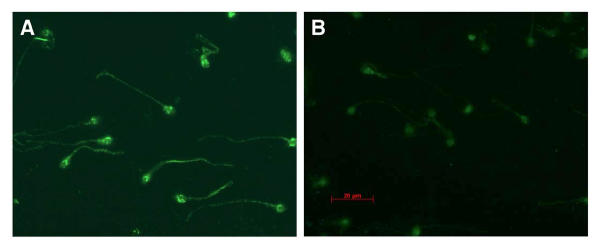
Methods and results: LCN6 cDNA was identified by database analysis in a comprehensive human library sequencing program. Macaca mulatta (rhesus monkey) cDNA was obtained from an epididymis cDNA library and is 93% homologous to the human. The gene is located on chromosome 9q34 adjacent LCN8 and LCN5. LCN6 amino acid sequence is most closely related to LCN5, but the LCN6 beta-barrel structure is best modeled on mouse major urinary protein 1, a pheromone binding protein. Northern blot analysis of RNAs isolated from 25 human tissues revealed predominant expression of a 1.0 kb mRNA in the epididymis. No other transcript was detected except for weak expression of a larger hybridizing mRNA in urinary bladder. Northern hybridization analysis of LCN6 mRNA expression in sham-operated, castrated and testosterone replaced rhesus monkeys suggests mRNA levels are little affected 6 days after castration. Immunohistochemical staining revealed that LCN6 protein is abundant in the caput epithelium and lumen. Immunofluorescent staining of human spermatozoa shows LCN6 located on the head and tail of spermatozoa with the highest concentration of LCN6 on the post-acrosomal region of the head, where it appeared aggregated into large patches.
Conclusions: LCN6 is a novel lipocalin closely related to Lcn5 and Lcn8 and these three genes are likely products of gene duplication events that predate rodent-primate divergence. Predominant expression in the epididymis and location on sperm surface are consistent with a role for LCN6 in male fertility.
Figures
References
-
- Cooper TG. Epididymal proteins and sperm maturation. In: Nieschlag E, Habenicht UF, editor. In Spermatogenesis-Fertilization-Contraception. Berlin/New York:Springer-Verlag; 1992. pp. 285–318.
-
- Cuasnicú PS, Cohen DJ, Ellerman DA, Buso D, DaRos VG, Morgenfeld MM. Changes in specific sperm proteins during epididymal maturation. In: Robaire B, Hinton BT, editor. In The Epididymis From Molecules to Clinical Practice. New York: Kluwer Academic/Plenum; 2002. pp. 389–403.
-
- Rankin TL, Tsuruta KJ, Holland MK, Griswold MD, Orgebin-Crist MC. Isolation, immunolocalization and sperm-association of three proteins of 18, 25 and 29 kilodaltons secreted by the mouse epididymis. Biol Reprod. 1992;46:747–766. - PubMed
-
- Gerena RL, Irikura D, Eguchi N, Urade Y, Killian GJ. Immunocytochemical localization of lipocalin-type prostaglandin D synthase in the bull testis and epididymis and on ejaculated sperm. Biol Reprod. 2000;62:547–556. - PubMed
Publication types
MeSH terms
Substances
Grants and funding
LinkOut - more resources
Full Text Sources
Molecular Biology Databases
Research Materials
Miscellaneous
