


ET-1-associated vasomotion and vasospasm in lymphatic vessels of the guinea-pig mesentery
- PMID: 14623768
- PMCID: PMC1574159
- DOI: 10.1038/sj.bjp.0705573
ET-1-associated vasomotion and vasospasm in lymphatic vessels of the guinea-pig mesentery
Abstract
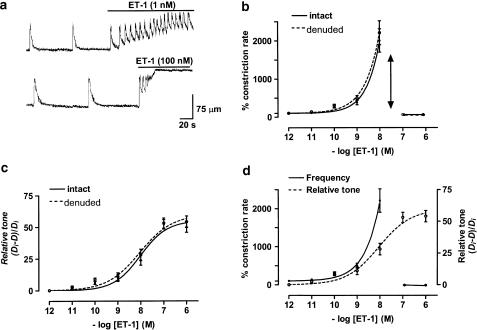
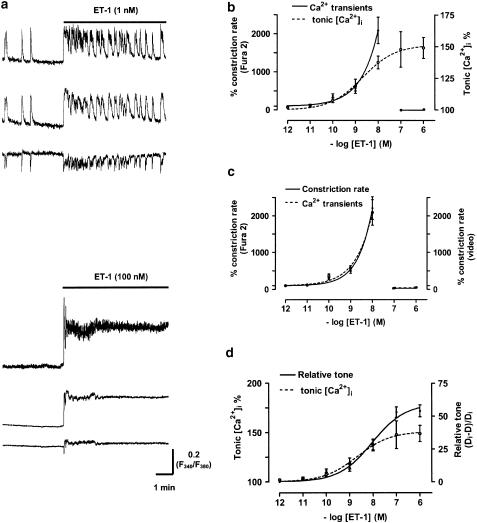
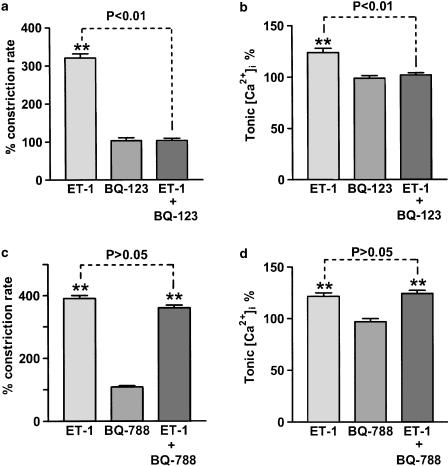
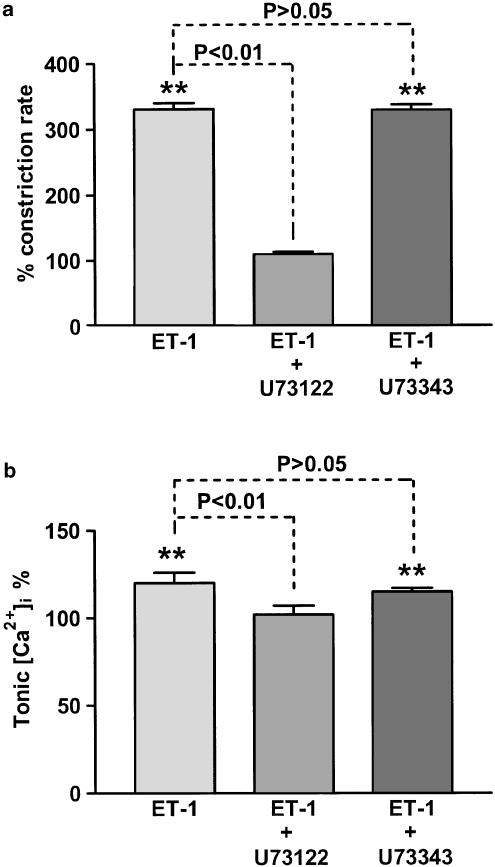
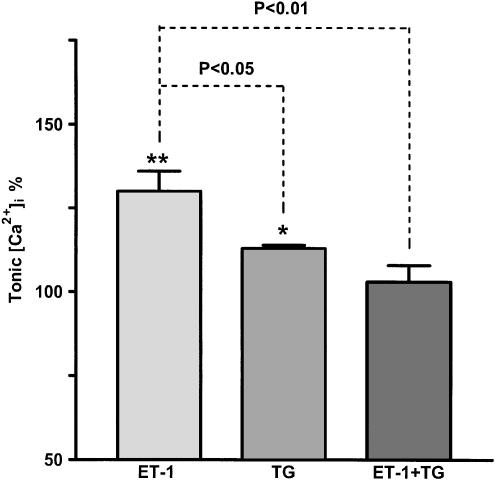
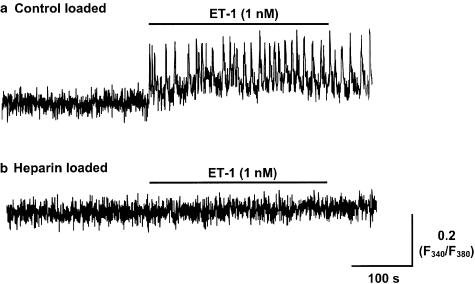
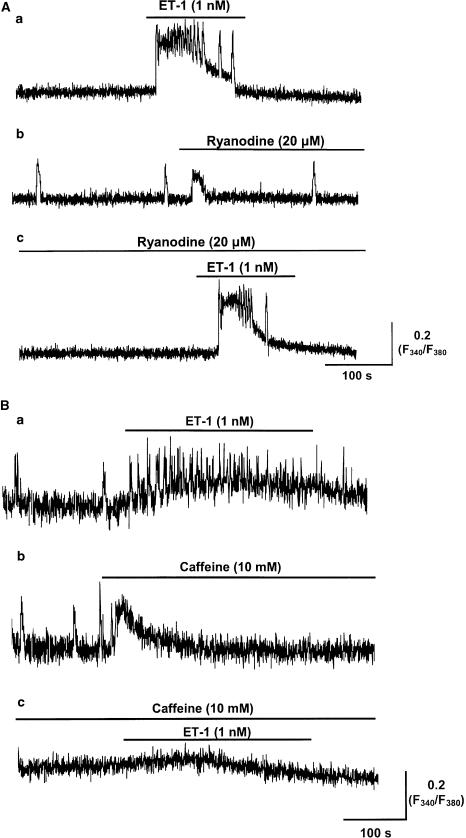
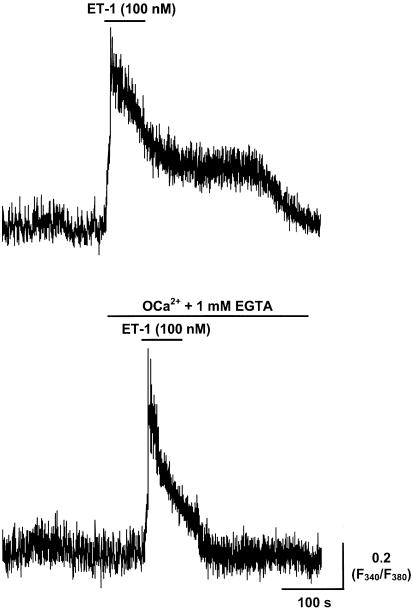
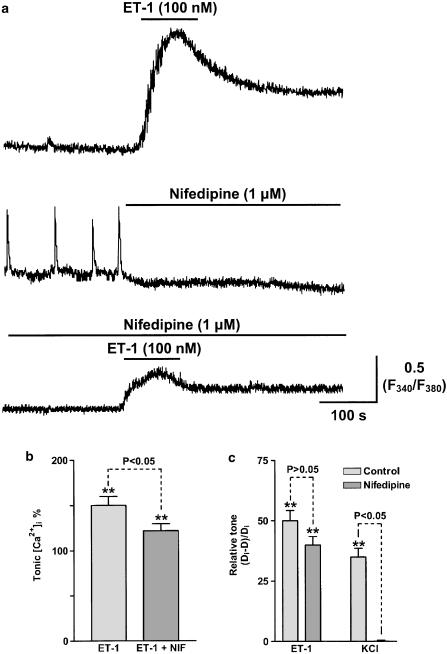
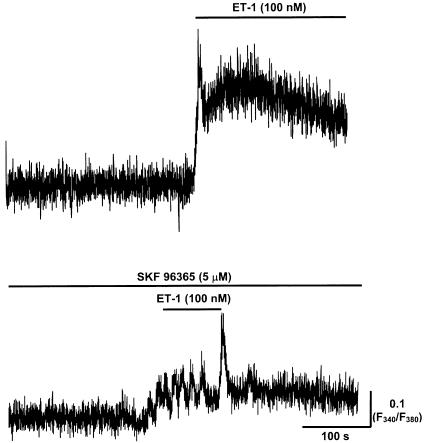
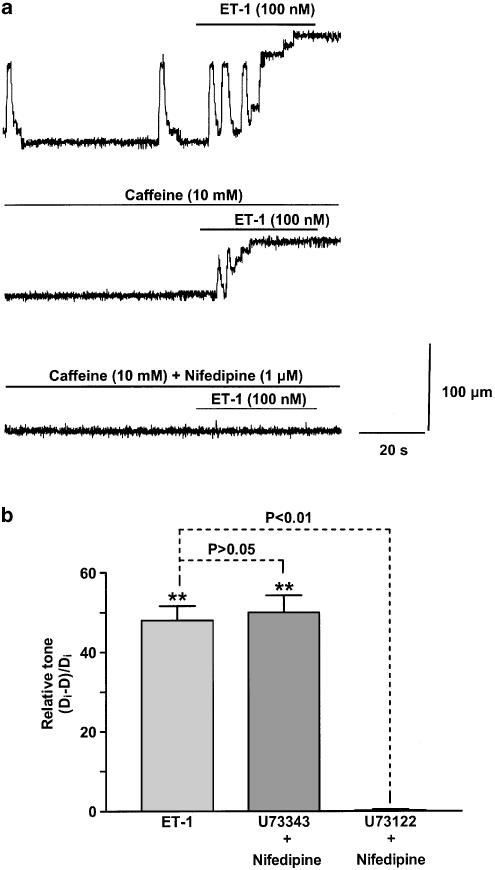
In vitro experiments were performed to investigate the actions of endothelin-1 (ET-1) on vasomotion and vasospasm in guinea-pig mesenteric lymphatics. ET-1 modulated lymphatic vasomotion independent of the endothelium, with lower concentrations (<or=10 nm) increasing lymphatic vasomotion and higher concentrations (>or=100 nm) causing vasospasm. ET-1-induced increases in vasomotion were accompanied by an increase in tonic [Ca2+]i. These actions were inhibited by the ETA receptor antagonist BQ-123 (1 microm), the phospholipase C (PLC) inhibitor U73122 (5 microm), removal of extracellular Ca2+, chelation of intracellular Ca2+ with BAPTA/AM (10 microm), the store Ca2+-ATPase inhibitor thapsigargin (1 microm), caffeine (10 mm) and the inositol 1,4,5-trisphosphate (IP3) receptor blocker heparin and 2-APB (30 microm). In contrast, the ETB receptor antagonist BQ-788 (1 microm), ryanodine (1 & 20 microm), pertussis toxin (PTx) or Cs+ had no significant actions on vasomotion or the magnitude of increase in tonic [Ca2+]i. ET-1-induced vasospasm was accompanied by a transient increase in smooth muscle [Ca2+]i followed by a sustained plateau, an action that was abolished by removal of extracellular Ca2+, but only marginally inhibited by nifedipine (1 microm). Caffeine (10 mm), SKF 96165 (30 microm) or U73122 (5 microm) together with nifedipine (1 microm) abolished ET-1-induced vasospasm and increase in [Ca2+]i. These results indicate that ET-1 increases lymphatic vasomotion by acting on smooth muscle ETA receptors and activation of G-protein-PLC-IP3 cascade, which is known to cause pacemaker Ca2+ release and resultant pacemaker potentials. High concentrations of ET-1 cause a failure in Ca2+ homeostasis causing vasospasm, triggered by excessive Ca2+ influx primarily through store-operated channels (SOCs) with l-Ca2+ voltage-operated channels (VOCs) also contributing, but to a much lesser extent.
Figures
References
-
- ASCHER-LANDSBERG J., SAUNDERS T., ELOVITZ M., PHILLIPPE M. The effects of 2-aminoethoxydiphenyl borate, a novel inositol 1,4,5-trisphosphate receptor modulator on myometrial contractions. Biochem. Biophys. Res. Commun. 1999;264:979–982. - PubMed
-
- BEAVO J.A., REIFSNYDER D.H. Primary sequence of cyclic nucleotide phosphodiesterase isozymes and the design of selective inhibitors. Trends Pharmacol. Sci. 1990;11:150–155. - PubMed
-
- BERRIDGE M.J. Inositol trisphosphate and calcium signalling. Nature. 1993;361:315–325. - PubMed
-
- BEZPROZVANNY I., WATRAS J., EHRLICH B.E. Bell-shaped calcium-response curves of Ins(1,4,5)P3- and calcium-gated channels from endoplasmic reticulum of cerebellum. Nature. 1991;351:751–754. - PubMed
-
- BLEASDALE J.E., THAKUR N.R., GREMBAN R.S., BUNDY G.L., FITZPATRICK F.A., SMITH R.J., BUNTING S. Selective inhibition of receptor-coupled phospholipase C-dependent processes in human platelets and polymorphonuclear neutrophils. J. Pharmacol. Exp. Ther. 1990;255:756–768. - PubMed
Publication types
MeSH terms
Substances
LinkOut - more resources
Full Text Sources
Miscellaneous
