


Genetic anthropology of the colorectal cancer-susceptibility allele APC I1307K: evidence of genetic drift within the Ashkenazim
- PMID: 14624392
- PMCID: PMC1180391
- DOI: 10.1086/379926
Genetic anthropology of the colorectal cancer-susceptibility allele APC I1307K: evidence of genetic drift within the Ashkenazim
Abstract
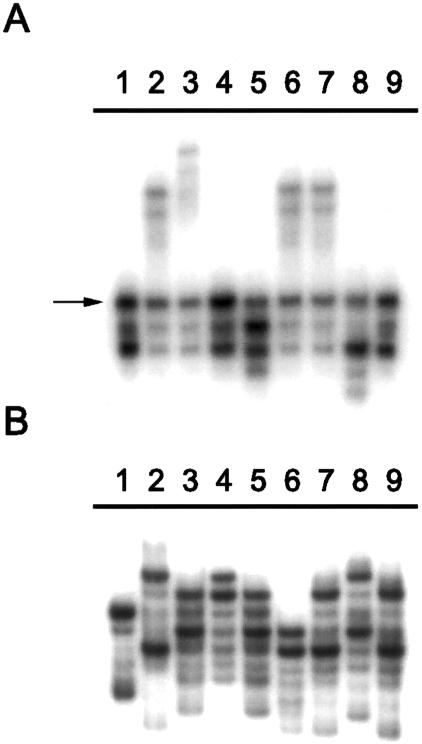
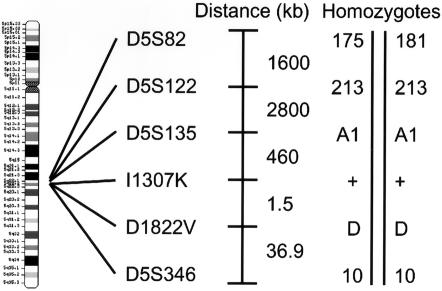
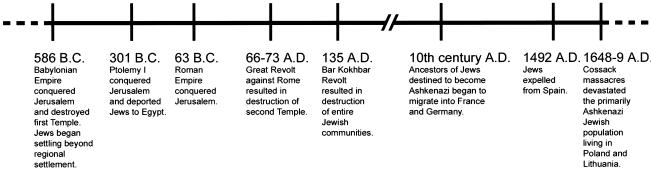
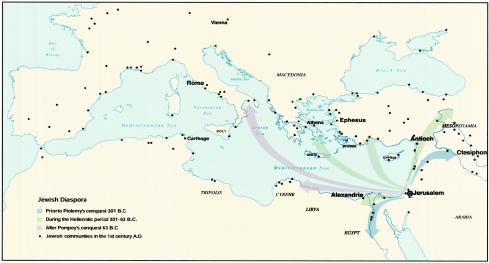
The adenomatous polyposis coli (APC) I1307K allele is found in 6% of the Ashkenazi Jewish population and in 1%-2% of Sephardi Jews; it confers a relative risk of 1.5-2.0 for colorectal cancer (CRC) on all carriers. Within the Ashkenazim, the existence of numerous high-prevalence mutations, including I1307K, has sparked controversy over whether genetic drift or selection is the underlying cause. For the present population-based case-control study of CRC in Israel, we tested whether selection has operated at I1307K. We also estimated the age of the I1307K allele, to understand its origin in the context of the Jewish diasporas and subsequent founder events. We genotyped 83 matched pairs, in which one or both members of the pair carried I1307K, at three microsatellites and two SNPs. Haplotypes were statistically constructed using PHASE software. Single-marker age estimates for I1307K were calculated using the approach described by Risch et al. A common progenitor haplotype spanned across APC I1307K from the centromeric marker D5S135 to the telomeric marker D5S346 and was observed in individuals of Ashkenazi, Sephardi, and Arab descent. The ancestor of modern I1307K alleles existed 87.9-118 generations ago ( approximately 2,200-2,950 years ago). This age estimate indicates that I1307K existed at about the time of the beginning of the Jewish diaspora, explaining its presence in non-Ashkenazi populations. Our data do not indicate that selection operated at I1307K (D5S346, P=.114; D5S135, P=.373), providing compelling evidence that the high frequency of disease-susceptibility alleles in the Ashkenazim is due to genetic drift, not selection. This research underscores the importance of the migratory patterns of ancestral populations in the ethnic and geographic distribution of APC I1307K.
Figures
References
Electronic-Database Information
-
- Centre d’Etude du Polymorphisme Humain (CEPH) database, http://www.cephb.fr
-
- Online Mendelian Inheritance in Man (OMIM), http://www.ncbi.nlm.nih.gov/Omim/ (for APC, BRCA1, and F11)
References
-
- Barnavi E (ed) (1992) A historical atlas of the Jewish people. Schocken Books, New York
Publication types
MeSH terms
Substances
Grants and funding
LinkOut - more resources
Full Text Sources
