


Terminal flower2, an Arabidopsis homolog of heterochromatin protein1, counteracts the activation of flowering locus T by constans in the vascular tissues of leaves to regulate flowering time
- PMID: 14630968
- PMCID: PMC282816
- DOI: 10.1105/tpc.016345
Terminal flower2, an Arabidopsis homolog of heterochromatin protein1, counteracts the activation of flowering locus T by constans in the vascular tissues of leaves to regulate flowering time
Abstract
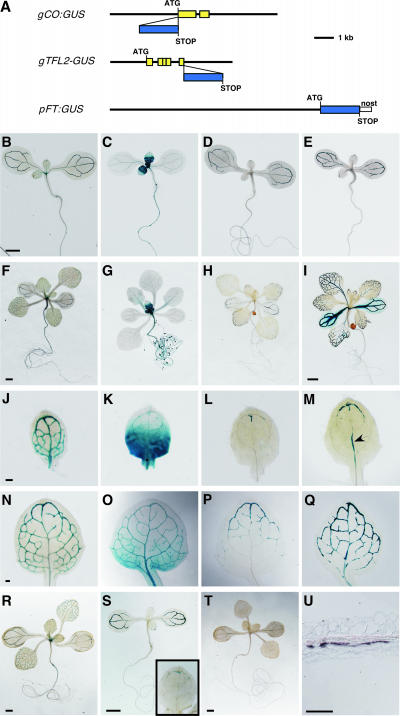
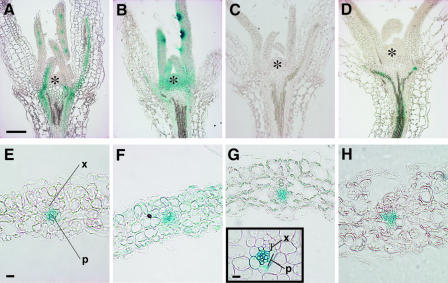
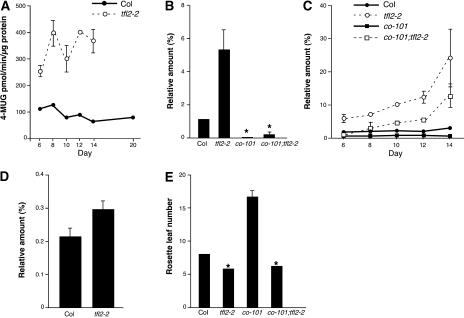
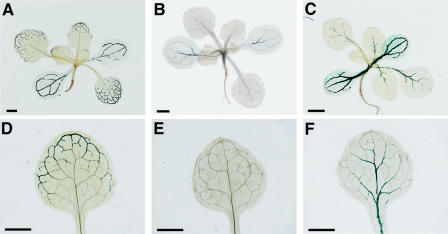
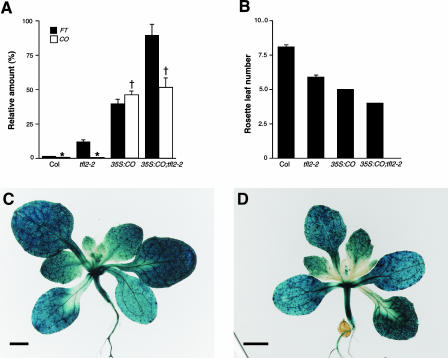
The flowering time of plants is tightly regulated by both promotive and repressive factors. Molecular genetic studies using Arabidopsis have identified several epigenetic repressors that regulate flowering time. Terminal flower2, (TFL2), which encodes a homolog of heterochromatin protein1 represses flowering locus T (FT) expression, which is induced by the activator constans (CO) in response to the long-day signal. Here, we show that TFL2, CO, and FT are expressed together in leaf vascular tissues and that TFL2 represses FT expression continuously throughout development. Mutations in TFL2 derepress FT expression within the vascular tissues of leaves, resulting in daylength-independent early flowering. TFL2 can reduce FT expression even when CO is overexpressed. However, FT expression reaches a level sufficient for floral induction even in the presence of TFL2, suggesting that TFL2 does not maintain FT in a silent state or inhibit it completely; rather, it counteracts the effect of CO on FT activation.
Figures
References
-
- Ahmad, K., and Henikoff, S. (2002). Epigenetic consequences of nucleosome dynamics. Cell 111, 281–284. - PubMed
-
- Araki, T. (2001). Transition from vegetative to reproductive phase. Curr. Opin. Plant Biol. 4, 63–68. - PubMed
-
- Blazquez, M.A., Ahn, J.H., and Weigel, D. (2003). A thermosensory pathway controlling flowering time in Arabidopsis thaliana. Nat. Genet 33, 168–171. - PubMed
-
- Blazquez, M.A., and Weigel, D. (2000). Integration of floral inductive signals in Arabidopsis. Nature 404, 889–892. - PubMed
-
- Colasanti, J., and Sundaresan, V. (2000). ‘Florigen’ enters the molecular age: Long-distance signals that cause plants to flower. Trends Biochem. Sci. 25, 236–240. - PubMed
Publication types
MeSH terms
Substances
LinkOut - more resources
Full Text Sources
Other Literature Sources
Molecular Biology Databases
