DNA damage response and MCL-1 destruction initiate apoptosis in adenovirus-infected cells
- PMID: 14633975
- PMCID: PMC289151
- DOI: 10.1101/gad.1156903
DNA damage response and MCL-1 destruction initiate apoptosis in adenovirus-infected cells
Abstract
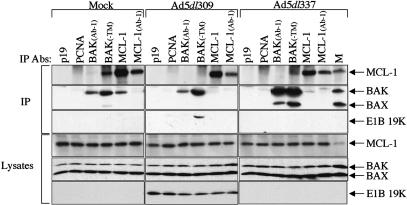
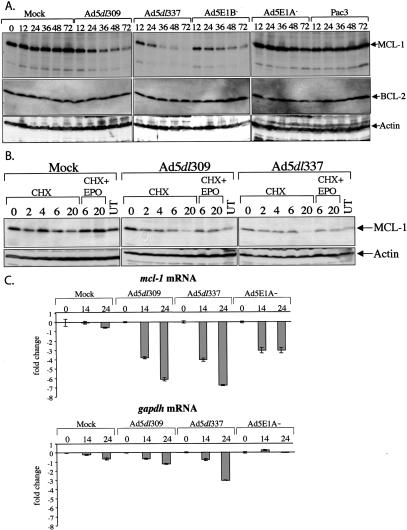
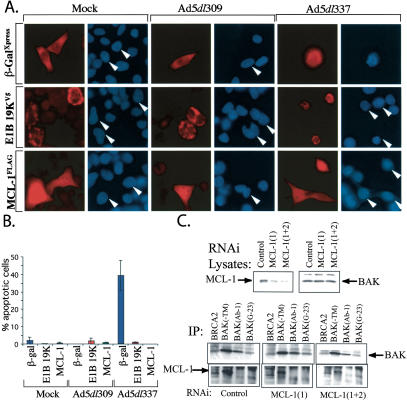
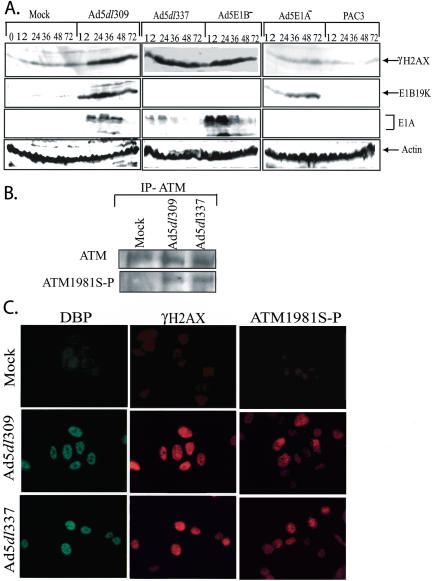
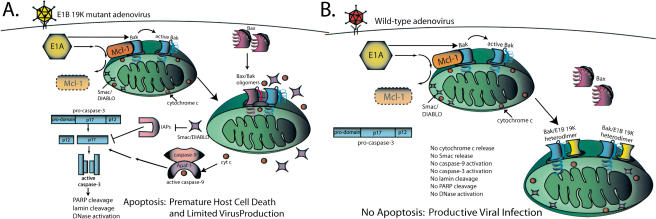
Expression of adenovirus E1A deregulates cell proliferation to facilitate viral DNA replication, prompting the initiation of apoptosis signaled primarily through proapoptotic BAK in productively infected cells. We demonstrate here that in uninfected cells, BAK is complexed with the anti-apoptotic BCL-2 family member Myeloid Cell Leukemia 1 (MCL-1). E1A expression during infection resulted in the specific down-regulation of MCL-1 through destabilization of the protein and loss of the mRNA. Upon loss of the MCL-1-BAK complex, BAK complexed with either BAX in proapoptotic E1B mutant adenovirus-infected cells, or with the adenovirus BCL-2 homolog E1B 19K in cells infected with the wild-type virus in which apoptosis is inhibited. Loss of MCL-1 was required to initiate the apoptotic pathway in infected cells as restoration of MCL-1 expression rescued infected cells from E1A-induced apoptosis. Analogous to E1A expression, DNA damage down-regulates MCL-1, and adenovirus infection resulted in the accumulation of phosphorylated H2AX and ataxia-telangiectasia mutant protein (ATM), hallmarks of DNA double-strand breaks. Thus, MCL-1 may function by maintaining BAK in an inactive state, and the loss of MCL-1 upon activation of the DNA damage response, perhaps through replication stress induced in virus infected cells, may be required to initiate the apoptotic response.
Figures
References
-
- Bae J., Leo, C.P., Hsu, S.Y., and Hsuch, A.J. 2000. MCL-1S, a splicing variant of the antiapoptotic BCL-2 family member MCL-1, encodes a proapoptotic protein possessing only the BH3 domain. J. Biol. Chem. 275: 25255-25261. - PubMed
-
- Bakkenist C. and Kastan, M.B. 2003. DNA damage activates ATM through intermolecular autophosphorylation and dimer dissociation. Nature 421: 499-506. - PubMed
-
- Bassing C.H., Suh, H., Ferguson, D.O., Chua, K.F., Manis, J., Eckersdorff, M., Gleason, M., Bronson, R., Lee, C., and Alt, F.W. 2003. Histone H2AX: A dosage-dependent suppressor of oncogenic translocations and tumors. Cell 114: 359-370. - PubMed
-
- Brader K.R., Wolf, J.K., Hung, M.C., Yu, D., Crispens, M.A., van Golen, K.L., and Price, J.E. 1997. Adenovirus E1A expression enhances the sensitivity of an ovarian cancer cell line to multiple cytotoxic agents through an apoptotic mechanism. Clin. Cancer Res. 3: 2017-2024. - PubMed
Publication types
MeSH terms
Substances
Grants and funding
LinkOut - more resources
Full Text Sources
Other Literature Sources
Research Materials
Miscellaneous