


Neonatal maternal separation and sex-specific plasticity of the hypoxic ventilatory response in awake rat
- PMID: 14634199
- PMCID: PMC1664780
- DOI: 10.1113/jphysiol.2003.052894
Neonatal maternal separation and sex-specific plasticity of the hypoxic ventilatory response in awake rat
Abstract
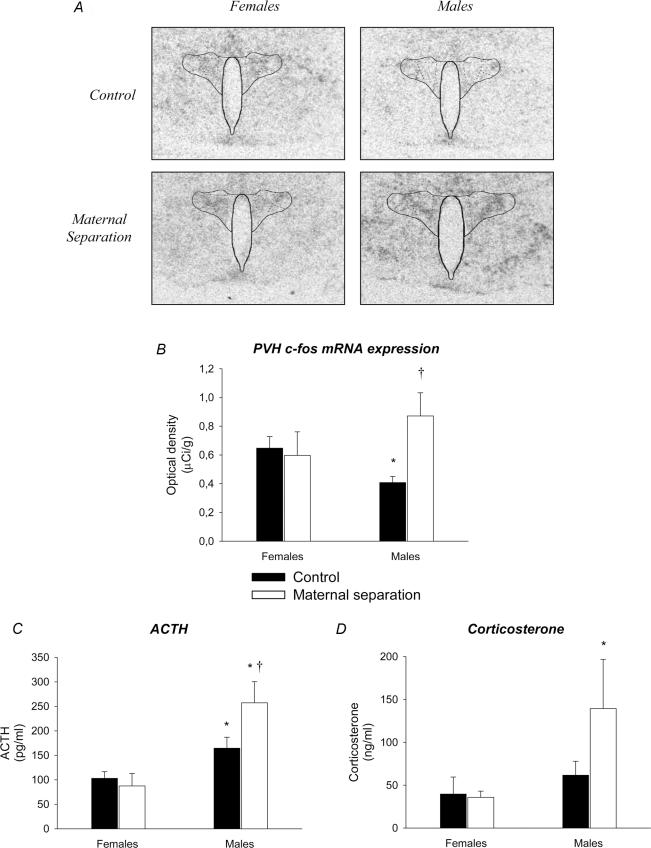
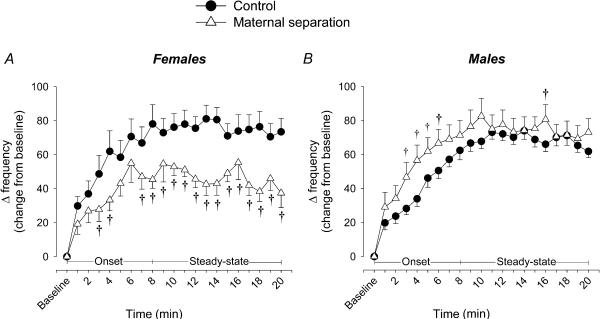
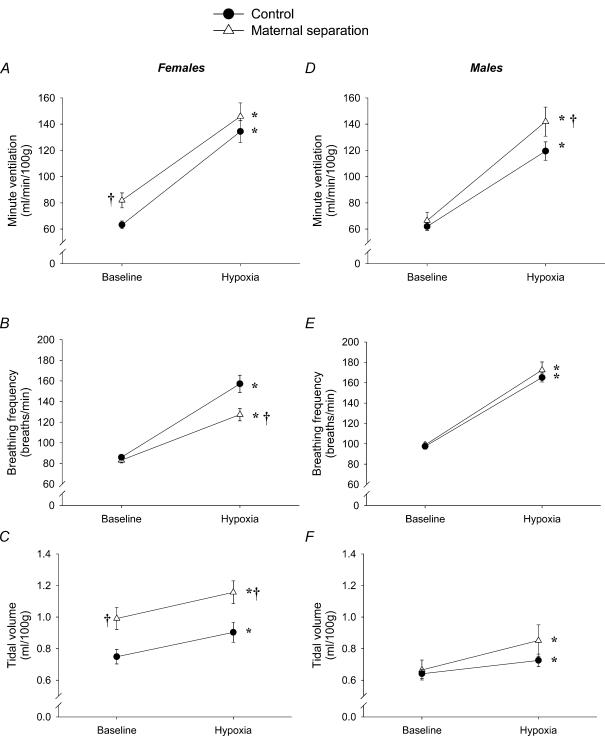
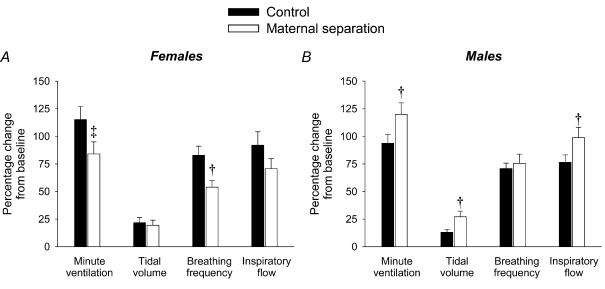
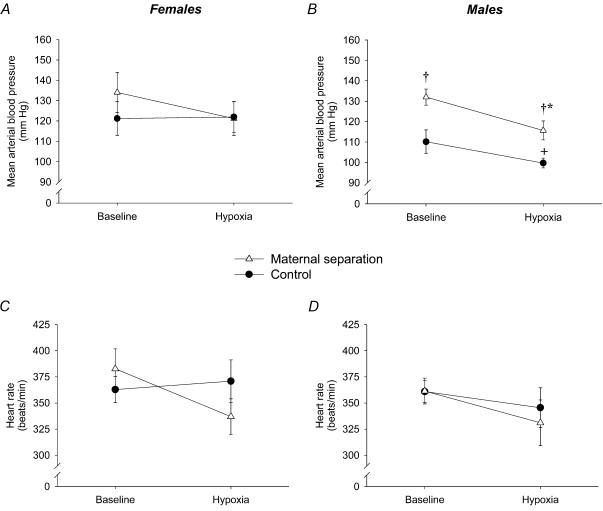
We tested the hypothesis that neonatal maternal separation (NMS), a form of stress that affects hypothalamo-pituitary-adrenal axis (HPA) function in adult rats, alters development of the respiratory control system. Pups subjected to NMS were placed in a temperature and humidity controlled incubator 3 h per day for 10 consecutive days (P3 to P12). Control pups were undisturbed. Once they reached adulthood (8-10 weeks old), rats were placed in a plethysmography chamber for measurement of ventilatory and cardiovascular parameters under normoxic and hypoxic conditions. Measurement of c-fos mRNA expression in the paraventricular nucleus of the hypothalamus (PVH) combined with plasma ACTH and corticosterone levels confirmed that NMS effectively disrupted HPA axis function in males. In males, baseline minute ventilation was not affected by NMS. In contrast, NMS females show a greater resting minute ventilation due to a larger tidal volume. The hypoxic ventilatory response of male NMS rats was 25% greater than controls, owing mainly to an increase in tidal volume response. This augmentation of the hypoxic ventilatory response was sex-specific also because NMS females show an attenuated minute ventilation increase. Baseline mean arterial blood pressure of male NMS rats was 20% higher than controls. NMS-related hypertension was not significant in females. The mechanisms underlying sex-specific disruption of cardio-respiratory control in NMS rats are unknown but may be a consequence of the neuroendocrine disruption associated with NMS. These data indicate that exposure to a non-respiratory stress during early life elicits significant plasticity of these homeostatic functions which persists until adulthood.
Figures
References
-
- Akil H, Campeau S, Culliman WE, Lechan RM, Toni R, Watson SJ, Moore RY. Neuroendocrine systems I: Overview – Thyroid and adrenal axes. In: Zigmond MJ, Bloom FE, Landis SC, Roberts JL, Squire LR, editors. Fundamental Neuroscience. Academic Press, San Diego: 1999. pp. 1127–1150. chapter 43.
-
- Anisman H, Zaharia MD, Meaney MJ, Merali Z. Do early-life events permanently alter behavioral and hormonal responses to stressors. Int J Dev Neurosci. 1998;16:149–164. - PubMed
-
- Beck KD, Luine VN. Sex differences in behavioral and neurochemical profiles after chronic stress. Role of housing conditions. Physiol Behav. 2002;75:661–673. - PubMed
-
- Berquin P, Bodineau L, Gros F, Larnicol N. Brainstem and hypothalamic areas involved in respiratory chemoreflexes: a Fos study in adult rats. Brain Res. 2000a;857:30–40. - PubMed
-
- Berquin P, Cayetanot F, Gros F, Larnicol N. Postnatal changes in Fos-like immunoreactivity evoked by hypoxia in the rat brainstem and hypothalamus. Brain Res. 2000b;877:149–159. - PubMed
Publication types
MeSH terms
LinkOut - more resources
Full Text Sources
