


Predominance of rhinovirus in the nose of symptomatic and asymptomatic infants
- PMID: 14641606
- PMCID: PMC7168036
- DOI: 10.1034/j.1399-3038.2003.00064.x
Predominance of rhinovirus in the nose of symptomatic and asymptomatic infants
Abstract
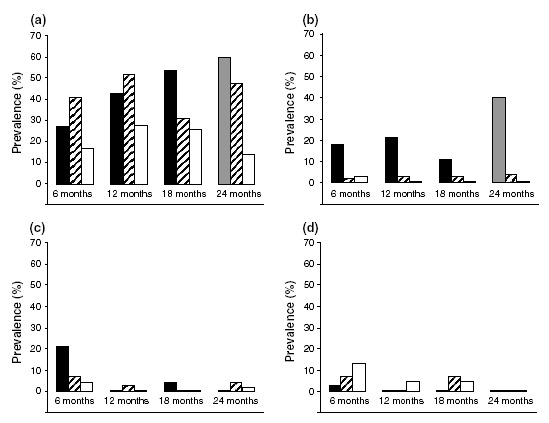
Respiratory infections in infancy may protect against developing Th2-mediated allergic disease (hygiene hypothesis). To estimate the relative contribution of particular viruses to the development of the immune system and allergic disease, we investigated longitudinally the prevalence of respiratory viral infections in infants. One hundred and twenty-six healthy infants were included in this prospective birth cohort study in their first year of life. Physical examination was performed and nasal brush samples were taken during routine visits every 6 months and during an upper respiratory tract infection (URTI) (sick visits). The prevalence of respiratory viral infections in infants with URTI, infants with rhinitis without general malaise and infants without nasal symptoms was studied. Rhinovirus was the most prevalent pathogen during URTI and rhinitis in 0- to 2-year-old infants ( approximately 40%). During URTI, also respiratory syncytial virus ( approximately 20%) and coronavirus ( approximately 10%) infections were found, which were rarely detected in infants with rhinitis. Surprisingly, in 20% of infants who did not present with nasal symptoms, rhinovirus infections were also detected. During routine visits at 12 months, a higher prevalence of rhinovirus infections was found in infants who attended day-care compared with those who did not. We did not observe a relation between breast-feeding or smoking by one or both parents and the prevalence of rhinovirus infections. The parental history of atopy was not related to the prevalence of rhinovirus infection, indicating that the genetic risk of allergic disease does not seem to increase the chance of rhinovirus infections. In conclusion, rhinovirus infection is the most prevalent respiratory viral infection in infants. It may therefore affect the maturation of the immune system and the development of allergic disease considerably.
Figures
References
-
- Finkelman FD, Urban JF Jr The other side of the coin: the protective role of the TH2 cytokines. J Allergy Clin Immunol 2001: 107: 772–80. - PubMed
-
- Hunter CA, Reiner SL. Cytokines and T cells in host defense. Curr Opin Immunol 2000: 12: 413–8. - PubMed
-
- Kuehni CE, Davis A, Brooke AM, Silverman M. Are all wheezing disorders in very young (preschool) children increasing in prevalence? Lancet 2001: 357: 1821–5. - PubMed
-
- Prescott SL, Macaubas C, Smallacombe T, Holt BJ, Sly PD, Holt PG. Development of allergen‐specific T‐cell memory in atopic and normal children. Lancet 1999: 353: 196–200. - PubMed
Publication types
MeSH terms
LinkOut - more resources
Full Text Sources
Other Literature Sources
