


Does hydrotherapy improve strength and physical function in patients with osteoarthritis--a randomised controlled trial comparing a gym based and a hydrotherapy based strengthening programme
- PMID: 14644853
- PMCID: PMC1754378
- DOI: 10.1136/ard.2002.005272
Does hydrotherapy improve strength and physical function in patients with osteoarthritis--a randomised controlled trial comparing a gym based and a hydrotherapy based strengthening programme
Abstract
Objective: To compare the effects of a hydrotherapy resistance exercise programme with a gym based resistance exercise programme on strength and function in the treatment of osteoarthritis (OA).
Design: Single blind, three arm, randomised controlled trial.
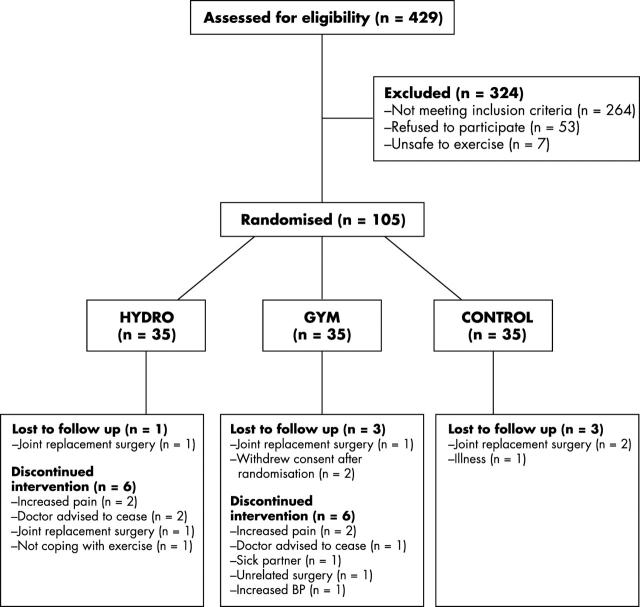
Subjects: 105 community living participants aged 50 years and over with clinical OA of the hip or knee.
Methods: Participants were randomised into one of three groups: hydrotherapy (n = 35), gym (n = 35), or control (n = 35). The two exercising groups had three exercise sessions a week for six weeks. At six weeks an independent physiotherapist unaware of the treatment allocation performed all outcome assessments (muscle strength dynamometry, six minute walk test, WOMAC OA Index, total drugs, SF-12 quality of life, Adelaide Activities Profile, and the Arthritis Self-Efficacy Scale).
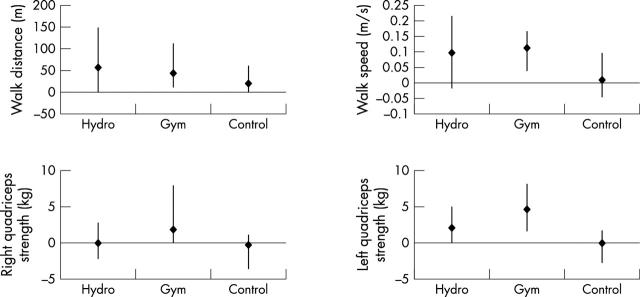
Results: In the gym group both left and right quadriceps significantly increased in strength compared with the control group, and right quadriceps strength was also significantly better than in the hydrotherapy group. The hydrotherapy group increased left quadriceps strength only at follow up, and this was significantly different from the control group. The hydrotherapy group was significantly different from the control group for distance walked and the physical component of the SF-12. The gym group was significantly different from the control group for walk speed and self efficacy satisfaction. Compliance rates were similar for both exercise groups, with 84% of hydrotherapy and 75% of gym sessions attended. There were no differences in drug use between groups over the study period.
Conclusion: Functional gains were achieved with both exercise programmes compared with the control group.
Figures
References
Publication types
MeSH terms
LinkOut - more resources
Full Text Sources
