


Recapitulation of the effects of the human papillomavirus type 16 E7 oncogene on mouse epithelium by somatic Rb deletion and detection of pRb-independent effects of E7 in vivo
- PMID: 14645521
- PMCID: PMC309665
- DOI: 10.1128/MCB.23.24.9094-9103.2003
Recapitulation of the effects of the human papillomavirus type 16 E7 oncogene on mouse epithelium by somatic Rb deletion and detection of pRb-independent effects of E7 in vivo
Abstract
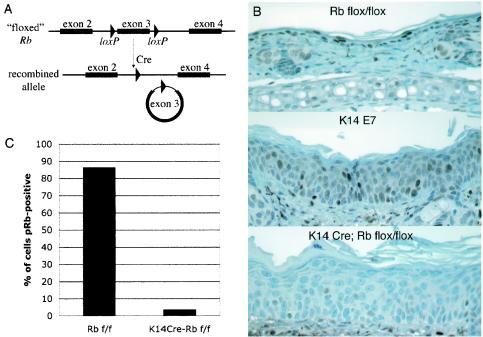
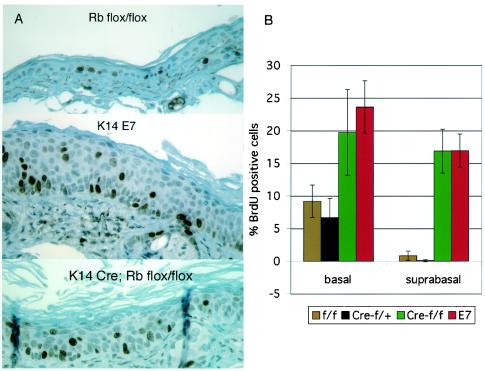
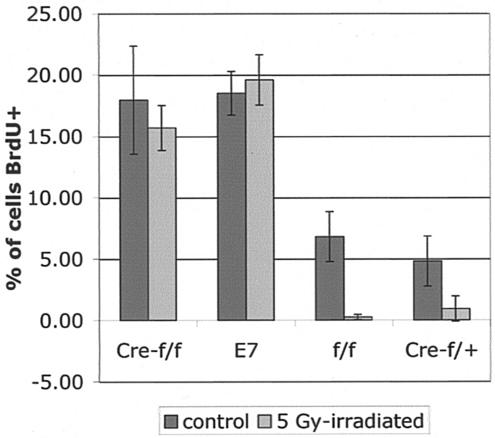
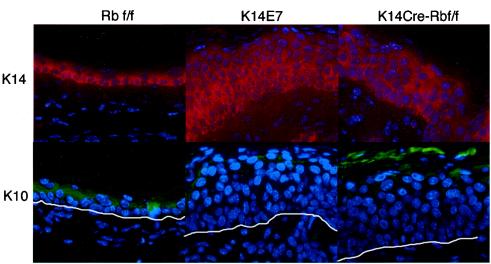
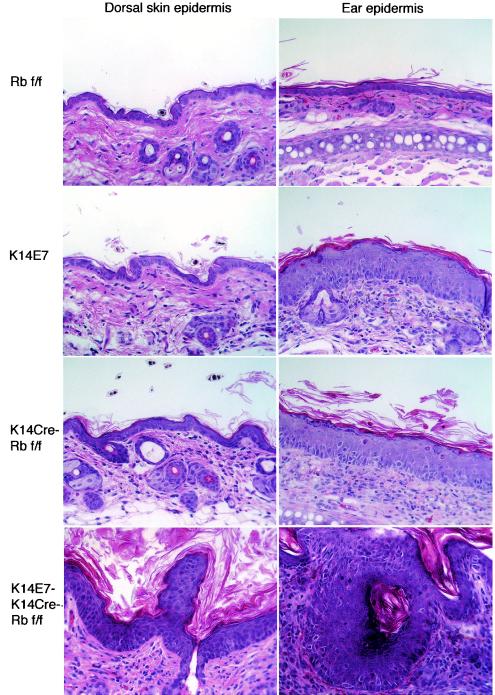
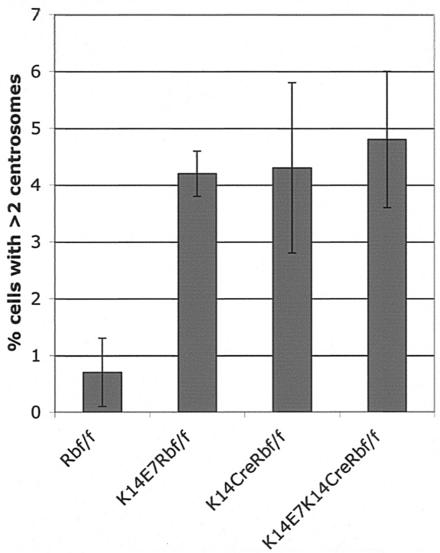
Although the human papillomavirus (HPV) E7 oncogene is known to contribute to the development of human cervical cancer, the mechanisms of its carcinogenesis are poorly understood. The first identified and most recognized function of E7 is its binding to and inactivation of the retinoblastoma tumor suppressor (pRb), but at least 18 other biological activities have also been reported for E7. Thus, it remains unclear which of these many activities contribute to the oncogenic potential of E7. We used a Cre-lox system to abolish pRb expression in the epidermis of transgenic mice and compared the outcome with the effects of E7 expression in the same tissue at early ages. Mice lacking pRb in epidermis showed epithelial hyperplasia, aberrant DNA synthesis, and improper differentiation. In addition, Rb-deleted epidermis (i.e., epidermis composed of cells with Rb deleted) exhibited centrosomal abnormalities and failed to arrest the cell cycle in response to ionizing radiation. Transgenic mice expressing E7 in skin display the same range of phenotypes. In sum, few differences were detected between Rb-deleted epidermis and E7-expressing epidermis in young mice. However, when both E7 was expressed and Rb was deleted in the same tissue, increased hyperplasia and dysplasia were observed. These findings indicate that inactivation of the Rb pathway can largely account for E7's phenotypes at an early age, but that pRb-independent activities of E7 are detectable in vivo.
Figures
References
-
- Bickenbach, J. R., and E. Chism. 1998. Selection and extended growth of murine epidermal stem cells in culture. Exp. Cell Res. 244:184-195. - PubMed
-
- Boyer, S. N., D. E. Wazer, and V. Band. 1996. E7 protein of human papilloma virus-16 induces degradation of retinoblastoma protein through the ubiquitin-proteasome pathway. Cancer Res. 56:4620-4624. - PubMed
-
- Chellappan, S., V. B. Kraus, B. Kroger, K. Munger, P. M. Howley, W. C. Phelps, and J. R. Nevins. 1992. Adenovirus E1A, simian virus 40 tumor antigen, and human papillomavirus E7 protein share the capacity to disrupt the interaction between transcription factor E2F and the retinoblastoma gene product. Proc. Natl. Acad. Sci. USA 89:4549-4553. - PMC - PubMed
Publication types
MeSH terms
Substances
Grants and funding
LinkOut - more resources
Full Text Sources
Molecular Biology Databases
