


Production of virus-specific antiserum corresponding to sequences in the lactate dehydrogenase-elevating virus (LDV) ORF6 protein
- PMID: 14656541
- PMCID: PMC7172777
- DOI: 10.1016/S0147-9571(03)00035-3
Production of virus-specific antiserum corresponding to sequences in the lactate dehydrogenase-elevating virus (LDV) ORF6 protein
Abstract
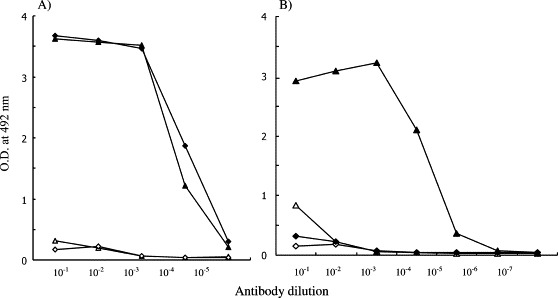
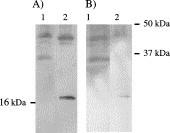
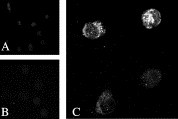
The elucidation of the antigenic structure of the envelope proteins of Arteriviridae which includes lactate dehydrogenase-elevating virus (LDV) will provide further understanding of a mechanism of strict host cell specificity. To analyze the linkage between LDV envelope proteins, M/VP-2 and VP-3, which may play an important role in viral infectivity, we generated specific antibody against M/VP-2 that has not been reported in previous studies. A synthetic polypeptide corresponding to the C-terminal region of LDV strain C (LDV-C) ORF6, which encodes M/VP-2, was chemically synthesized and coupled to keyhole limpet hemocyanin (KLH). The peptide was immunogenic in rabbits and induced antibody specific for viral protein. Western blotting and immunofluorescence analysis of virion M/VP-2 in infected macrophages showed that the antibody was able to react specifically with authentic virion protein. The immunoreactive antibody against LDV M/VP-2 described in this study will be useful for further studies of the specific roles of the envelope proteins in arterivirus assembly and infectivity.
L'explication de la structure antigénique des protéines d'enveloppe des Arteriviridae, dont le virus de la lacticodéhydrogénase (LDV) fait partie, devrait permettre de mieux comprendre le mécanisme de la stricte spécificité des cellules hôtes. Pour analyser les liens entre les protéines d'enveloppe du LDV, à savoir M/VP-2 et VP-3, qui jouent certainement un rôle important dans le pouvoir infectant du virus, nous avons créé un anti-corps spécifique de la M/VP-2 dont il n'a pas encore été fait mention dans les études précédentes. Pour ce faire, nous avons chimiquement synthétisé un polypeptide correspondant à la zone de l'extrémité C d'un virus LDV de souche C (LDV-C), ORF6, codant M/VP-2, et nous l'avons couplé à l'hémocyanine de patelle (KLH). Ce peptide, immunogène chez le lapin, induit un anticorps spécifique à la protéine virale. Le transfert de type western et l'analyse en immunoflorescence de M/VP-2 du virion dans des macrophages infectés ont montré que l'anticorps pouvait réagir de manière spécifique avec une protéine authentique de virion. L'anticorps immunoréactif avec la M/VP-2 du LDV décrit dans cette étude va s'avérer utile dans les études qui vont être conduites sur le rôle spécifique des protéines d'enveloppe dans l'Arteriviridae et dans son pouvoir infectant.
Figures
References
-
- Plagemann P.G.W. Lactate dehydrogenase-elevating virus and related viruses. In: Fields B.N, Knipe D.M, Howley P.M, editors. Fields Virology. Raven Press; New York: 1996. pp. 1105–1120.
-
- Ritzi D.M, Holth M, Smith M.S, Swart W.J, Cafruny W.A, Plagemann P.G.W, Stueckemann J.A. Replication of lactate dehydrogenase-elevating virus in macrophages. 1. Evidence for cytocidal replication. J Gen Virol. 1982;59:245–262. - PubMed
-
- Li K, Chen Z, Plagemann P.G.W. The neutralization epitope of lactate dehydrogenase-elevating virus is located on the short ectodomain of the primary envelope glycoprotein. Virology. 1998;242:239–245. - PubMed
MeSH terms
Substances
LinkOut - more resources
Full Text Sources
