


Comment
doi: 10.1172/JCI20448.
Do allelic variants of SLC6A14 predispose to obesity?
Affiliations
- PMID: 14660737
- PMCID: PMC281657
- DOI: 10.1172/JCI20448
Item in Clipboard
Comment
Do allelic variants of SLC6A14 predispose to obesity?
J Clin Invest.
2003 Dec.
Abstract
Obesity is arguably the world's most prevalent nutritional disorder and is a substantial contributor to morbidity and early mortality. Obesity is known to have a strong genetic component, but the specific influential genes in humans are largely unknown. A new paper describes a genetic variant that appears as though it may cause some people to be fatter or thinner than others (see the related article beginning on page 1762). This commentary considers the strength of the evidence in support of this finding and discusses additional research questions that should be addressed in further evaluations of this genetic variant as a putative contributor to human obesity.
Figures
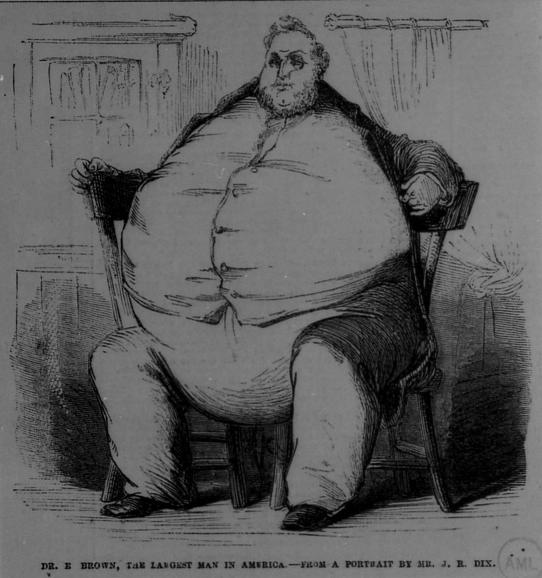
Dr. E. Brown, the Largest Man in America. — From a Portrait by Mr. J.R. Dix. Image courtesy of the U.S. National Library of Medicine.
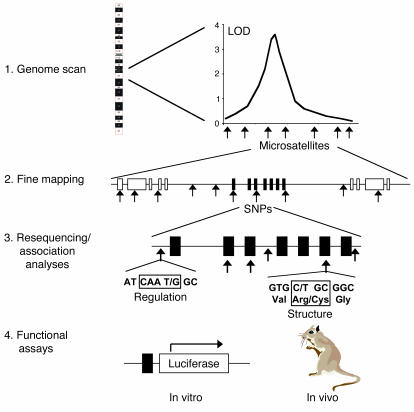
Schematic presentation of the positional cloning strategy. The initial genome-wide linkage scan is followed by fine mapping with additional microsatellite and single SNP markers. Genes showing significant associations with the SNPs are resequenced to identify relevant DNA sequence variants in the study population. The relevance of these mutations is verified with additional association studies in other populations (replications) and using in vitro and in vivo functional studies. Modified with permission from Circulation (22). LOD, log (base 10) of the odds ratio.
Comment on
-
The SLC6A14 gene shows evidence of association with obesity.J Clin Invest. 2003 Dec;112(11):1762-72. doi: 10.1172/JCI17491. J Clin Invest. 2003. PMID: 14660752 Free PMC article.
References
-
- Sturm R. Increases in clinically severe obesity in the United States, 1986–2000. Arch. Intern. Med. 2003; 163:2146–2148. - PubMed
-
- National Institute of Diabetes & Digestive & Kidney Diseases. Phenotyping obesity for human genetic studies. http://www.niddk.nih.gov/fund/other/phenotyping/index.
-
- Chagnon YC, et al. The human obesity gene map: the 2002 update. Obes. Res. 2003; 11:313–367. - PubMed
-
- Redden DT, Allison DB. Non-replication in genetic association studies of obesity and diabetes. J. Nutr. 2003; 133:3323–3326. - PubMed
-
- Rosmond R. Association studies of genetic polymorphisms in central obesity: a critical review. Int. J. Obes. Relat. Metab. Disord. 2003; 27:1141–1151. - PubMed
Publication types
MeSH terms
Substances
Grants and funding
LinkOut - more resources
Full Text Sources
Other Literature Sources
Medical
Molecular Biology Databases
