


A randomised controlled trial to assess the efficacy of Laparoscopic Uterosacral Nerve Ablation (LUNA) in the treatment of chronic pelvic pain: The trial protocol [ISRCTN41196151]
- PMID: 14662012
- PMCID: PMC317334
- DOI: 10.1186/1472-6874-3-6
A randomised controlled trial to assess the efficacy of Laparoscopic Uterosacral Nerve Ablation (LUNA) in the treatment of chronic pelvic pain: The trial protocol [ISRCTN41196151]
Abstract
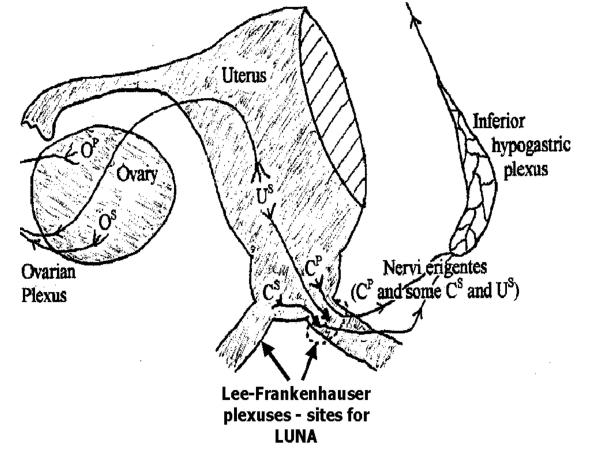
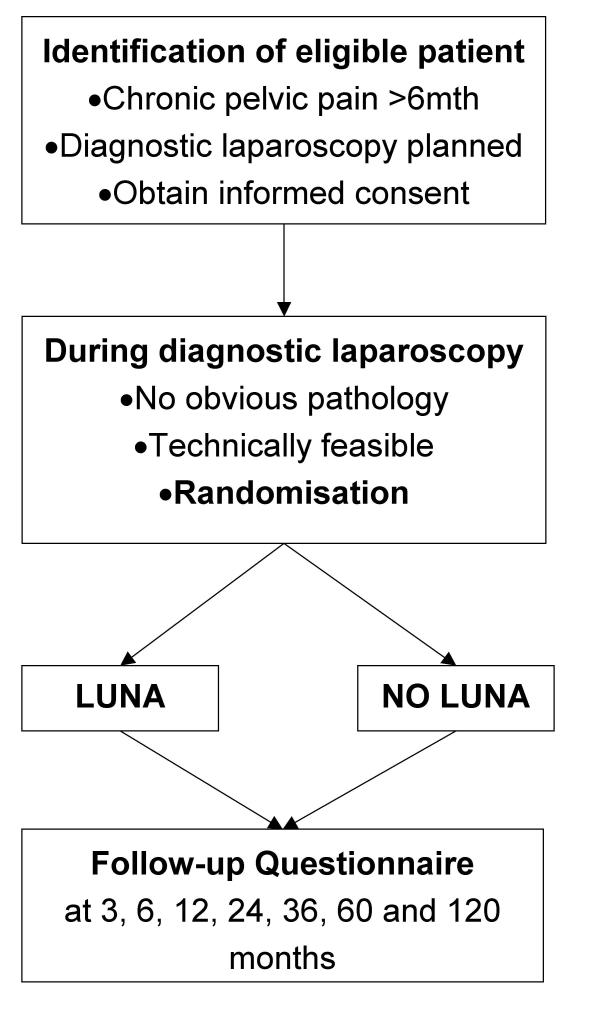
BACKGROUND: Chronic pelvic pain is a common condition with a major impact on health-related quality of life, work productivity and health care utilisation. The cause of the pain is not always obvious as no pathology is seen in 40-60% of the cases. In the absence of pathology there is no established treatment. The Lee-Frankenhauser sensory nerve plexuses and parasympathetic ganglia in the uterosacral ligaments carry pain from the uterus, cervix and other pelvic structures. Interruption of these nerve trunks by laparoscopic uterosacral nerve ablation (LUNA) may alleviate pain. However, the balance of benefits and risks of this intervention have not been reliably assessed. LUNA has, nevertheless, been introduced into practice, although there remains controversy regarding indications for LUNA. Hence, there is an urgent need for a randomised controlled trial to confirm, or refute, any worthwhile effectiveness. The principal hypothesis is that, in women with chronic pelvic pain in whom diagnostic laparoscopy reveals either no pathology or mild endometriosis (AFS score </= 5) LUNA alleviates pain and improves life quality at 12 months. METHODS/DESIGN: The principal objective is to test the hypothesis that in women with chronic pelvic pain in whom diagnostic laparoscopy reveals either no pathology or mild endometriosis (AFS score </= 5) LUNA alleviates pain and improves life quality at 12 months. A multi-centre, prospective, randomised-controlled-trial will be carried out with blind assessment of outcomes in eligible consenting patients randomised at diagnostic laparoscopy to LUNA (experimental group) or to no pelvic denervation (control group). Postal questionnaires including visual analogue scale for pain (primary outcome), an index of sexual satisfaction and the EuroQoL 5D-EQ instrument (secondary outcomes) will be administered at 3, 6 and 12 months. The primary assessment of the effectiveness of LUNA will be from comparison of outcomes at the one-year follow-up, although the medium-term and longer-term risks and benefits of LUNA will also be evaluated.The sample size for this trial has been estimated as 420 patients in total using the hypothesis that LUNA will alleviate pain symptoms (i.e. reduce pain scores on a VAS) more than no intervention at one-year following diagnostic laparoscopy and taking into consideration 20% loss to follow-up. The intention to treat analysis to address the principal research questions will be conducted using the one-year follow-up data.
Figures
References
-
- Howard FM. The role of laparoscopy in chronic pelvic pain: promise and pitfalls. Obstet Gynecol Surv. 1993;48:357–387. - PubMed
-
- Stones RW. Chronic pelvic pain. Personal Assessment in Continuing Education. 97/01. London, Royal College of Obstetricians and Gynaecologists; 1997.
-
- Sundell G, Milsom I, Andersch B. Factors influencing the prevalence and severity of dysmenorrhoea in young women. Br J Obstet Gynaecol. 1990;97:588–594. - PubMed
-
- Davies L, Ganger K, Drummond M, Saunders D, Beard R. The economic burden of intractable gynaecological pain. J Obstet Gynecol. 1992;12:46–54.
LinkOut - more resources
Full Text Sources
