The use of latent trajectory models in psychopathology research
- PMID: 14674867
- PMCID: PMC3689552
- DOI: 10.1037/0021-843X.112.4.526
The use of latent trajectory models in psychopathology research
Abstract
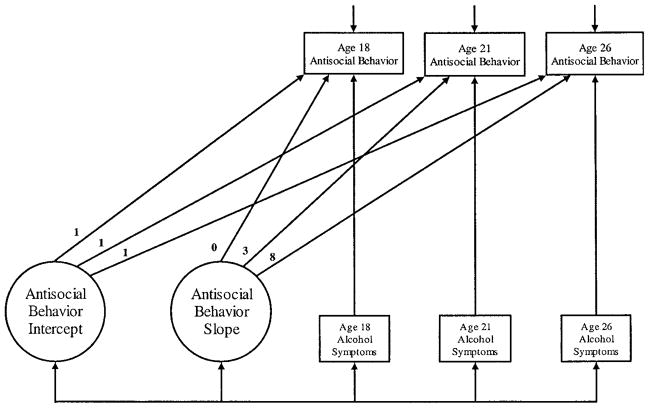
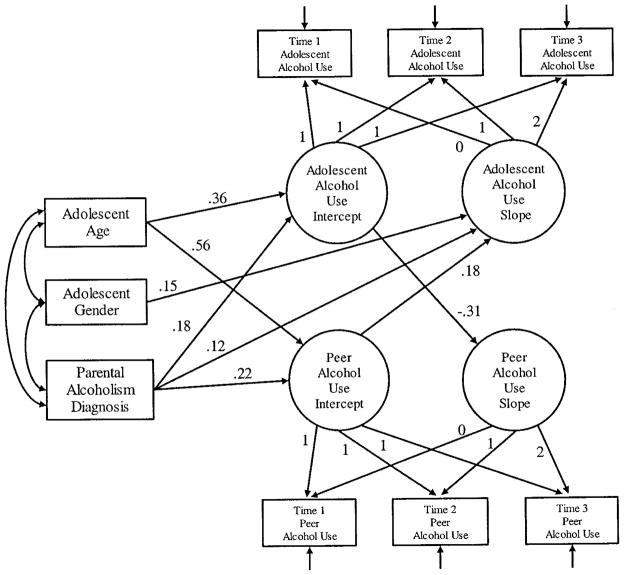
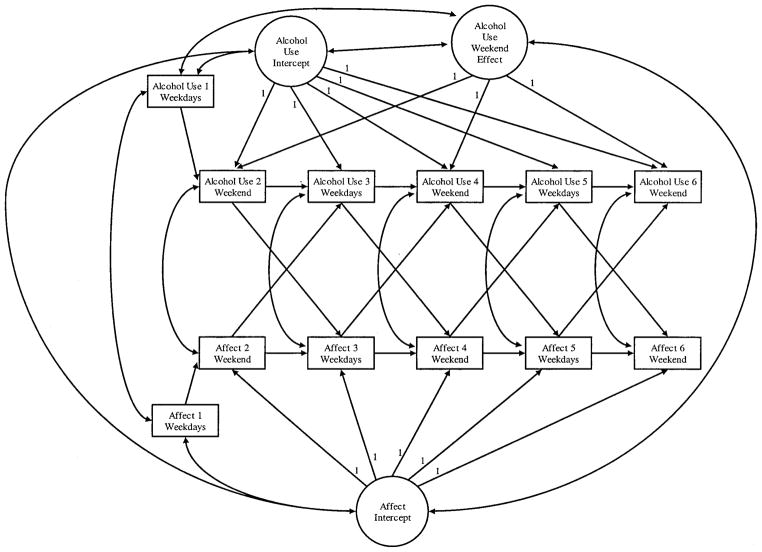
Despite the recent surge in the development of powerful modeling strategies to test questions about individual differences in stability and change over time, these methods are not currently widely used in psychopathology research. In an attempt to further the dissemination of these new methods, the authors present a pedagogical introduction to the structural equation modeling based latent trajectory model, or LTM. They review several different types of LTMs, discuss matching an optimal LTM to a given question of interest, and highlight several issues that might be particularly salient for research in psychopathology. The authors augment each section with a review of published applications of these methods in psychopathology-related research to demonstrate the implementation and interpretation of LTMs in practice.
((c) 2003 APA, all rights reserved)
Figures
References
-
- Aber MS, McArdle JJ. Latent growth curve approaches to modeling the development of competence. In: Chandler M, Chapman M, editors. Criteria for competence. Hillsdale, NJ: Erlbaum; 1991. pp. 231–258.
-
- Aiken LS, West SG. Multiple regression: Testing and interpreting interactions. Newbury Park, CA: Sage; 1991.
-
- Allison PD. Estimation of linear models with incomplete data. In: Clogg C, editor. Sociological methodology 1987. Washington, DC: American Sociological Association; 1987. pp. 71–103.
-
- Allison PD. Multiple imputation for missing data. Sociological Methods & Research. 2000;28:301–309.
-
- Allison PD. Missing data. Newbury Park, CA: Sage; 2001.
Publication types
MeSH terms
Grants and funding
LinkOut - more resources
Full Text Sources
Medical