


The development of the Canberra symptom scorecard: a tool to monitor the physical symptoms of patients with advanced tumours
- PMID: 14678564
- PMCID: PMC317311
- DOI: 10.1186/1471-2407-3-32
The development of the Canberra symptom scorecard: a tool to monitor the physical symptoms of patients with advanced tumours
Abstract
Background: Patients with advanced (incurable) tumours usually experience a diverse burden of symptoms. Although many symptom assessment instruments are available, we examined whether these addressed tumour-related symptoms.
Methods: We reviewed existing symptom assessment instruments and found a number of deficiencies such as instruments being too long or burdensome, too short, or measuring quality of life rather than tumour-related symptoms. Others focused on emotional, rather than physical symptoms. Therefore, we decided to devise a new symptom instrument. A list of 20 symptoms common in patients with advanced tumours generated from the literature and existing instruments, was ranked according to prevalence by 202 Australian clinicians. Following clinicians' responses, the list was revised and two severity assessment scales (functional severity and distress severity) added. The resultant 18-item list was assessed in 44 outpatients with advanced tumours.
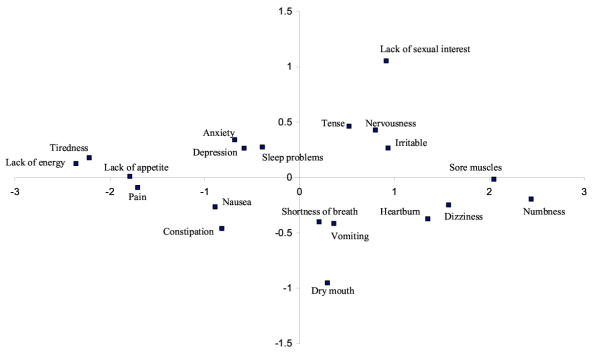
Results: Patient responses indicated that a shorter questionnaire of 11 items, reflecting three main symptom clusters, provided a good representation of physical symptoms. An additional symptom that is an important predictor of survival was added, making a 12-item questionnaire, which was entitled "The Canberra Symptom Scorecard" (CSS). For symptom severity, the distress severity scale was more appropriate than the functional severity scale.
Conclusion: The CSS focuses on tumour-related physical symptoms. It is about to be assessed in patients with advanced tumours receiving palliative treatments, when it will also be validated against existing instruments.
Figures
References
-
- Bruera E, Kuehn N, Miller MJ, Selmser P, Macmillan K. The Edmonton symptom assessment system (ESAS): a simple method for the assessment of palliative care patients. J Palliat Care. 1991;7:6–9. - PubMed
-
- Hollen PJ, Gralla RJ, Kris MG, Potanovich LM. Quality of life assessment in individuals with lung cancer: testing the lung cancer symptom scale (LCSS) Eur J Cancer. 1993;29A:S51–S58. - PubMed
-
- Holmes S. Use of a modified symptom distress scale in assessment of the cancer patient. Int J Nurs Stud. 1989;26:69–79. - PubMed
-
- McCorkle R, Young K. Development of a symptom distress scale. Cancer Nurs. 1978;1:373–378. - PubMed
Publication types
MeSH terms
LinkOut - more resources
Full Text Sources
