


Aberrant interchromosomal exchanges are the predominant cause of the 22q11.2 deletion
- PMID: 14681306
- PMCID: PMC2836129
- DOI: 10.1093/hmg/ddh041
Aberrant interchromosomal exchanges are the predominant cause of the 22q11.2 deletion
Abstract
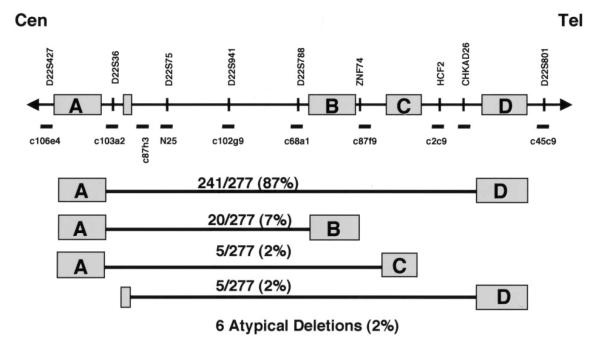
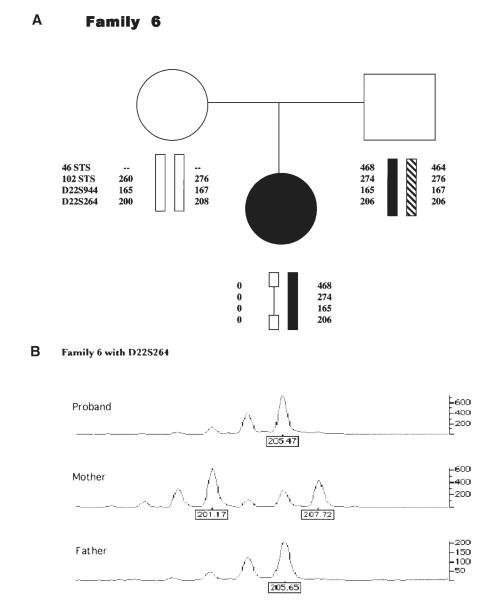
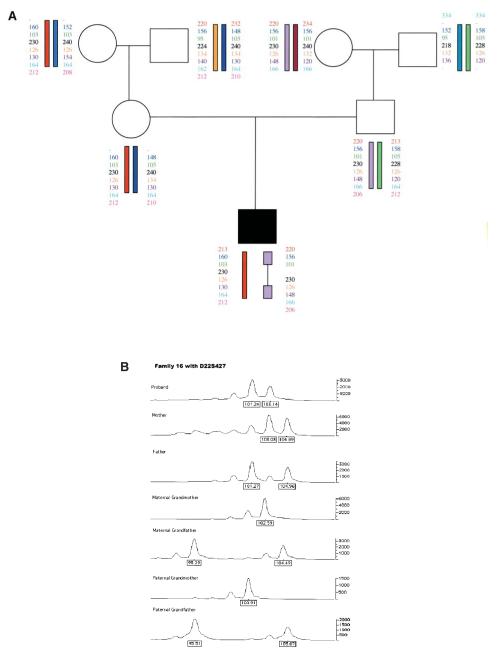
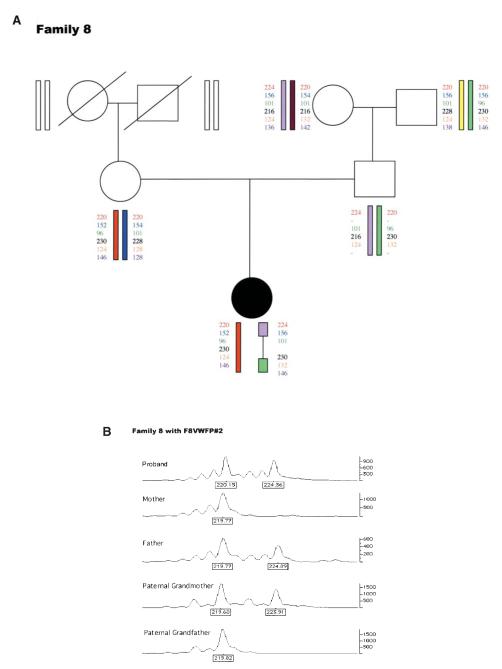
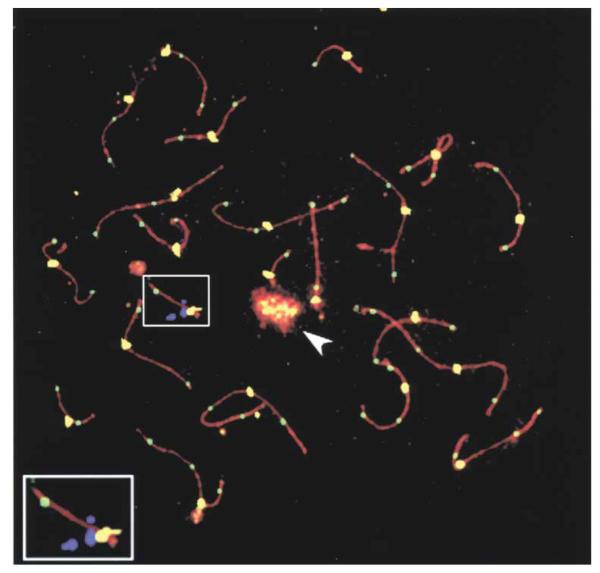
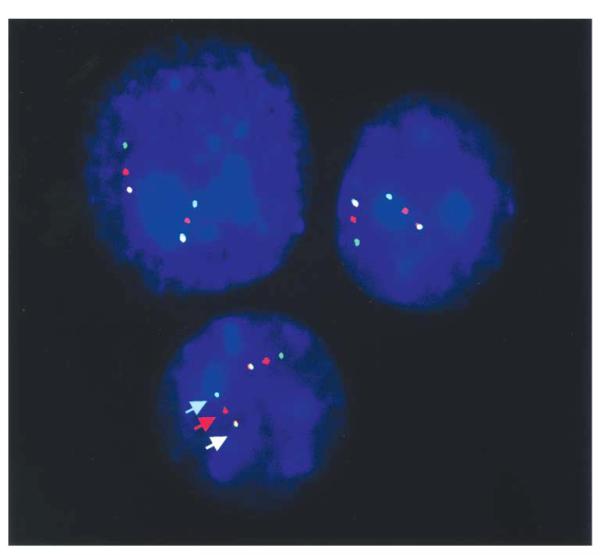
Chromosome 22q11.2 deletions are found in almost 90% of patients with DiGeorge/velocardiofacial syndrome (DGS/VCFS). Large, chromosome-specific low copy repeats (LCRs), flanking and within the deletion interval, are presumed to lead to misalignment and aberrant recombination in meiosis resulting in this frequent microdeletion syndrome. We traced the grandparental origin of regions flanking de novo 3 Mb deletions in 20 informative three-generation families. Haplotype reconstruction showed an unexpectedly high number of proximal interchromosomal exchanges between homologs, occurring in 19/20 families. Instead, the normal chromosome 22 in these probands showed interchromosomal exchanges in 2/15 informative meioses, a rate consistent with the genetic distance. Meiotic exchanges, visualized as MLH1 foci, localize to the distal long arm of chromosome 22 in 75% of human spermatocytes tested, also reflecting the genetic map. Additionally, we found no effect of proband gender or parental age on the crossover frequency. Parental origin studies in 65 de novo 3 Mb deletions (including these 20 patients) demonstrated no bias. Unlike Williams syndrome, we found no chromosomal inversions flanked by LCRs in 22 sets of parents of 22q11 deleted patients, or in eight non-deleted patients with a DGS/VCFS phenotype using FISH. Our data are consistent with significant aberrant interchromosomal exchange events during meiosis I in the proximal region of the affected chromosome 22 as the likely etiology for the deletion. This type of exchange occurs more often than is described for deletions of chromosomes 7q11, 15q11, 17p11 and 17q11, implying a difference in the meiotic behavior of chromosome 22.
Figures
References
-
- McDonald-McGinn DM, Kirschner R, Goldmuntz E, Sullivan K, Eicher P, Gerdes M, Moss E, Solot C, Wang P, Jacobs I, et al. The Philadelphia Story: the 22q11.2 deletion: report on 250 patients. Genet. Couns. 1999;10:11–24. - PubMed
-
- McDonald-McGinn DM, Tonnesen MK, Laufer-Cahana A, Finucane B, Driscoll DA, Emanuel BS, Zackai EH. Phenotype of the 22q11.2 deletion in individuals identified through an affected relative: cast a wide FISHing net! Genet Med. 2001;3:23–29. - PubMed
-
- Emanuel BS, McDonald-McGinn D, Saitta SC, Zackai EH. The 22q11.2 deletion syndrome. Adv. Pediatr. 2001;48:39–73. - PubMed
-
- Burn J, Goodship J. Developmental genetics of the heart. Curr Opin Genet Dev. 1996;6:322–325. - PubMed
Publication types
MeSH terms
Grants and funding
LinkOut - more resources
Full Text Sources
Other Literature Sources
Miscellaneous
