A novel method for rapidly diagnosing the causes of diarrhoea
- PMID: 14684577
- PMCID: PMC1773931
- DOI: 10.1136/gut.53.1.58
A novel method for rapidly diagnosing the causes of diarrhoea
Abstract
Background: The microbiological diagnosis of infectious diarrhoea may take several days using conventional techniques. In order to determine whether flatus can be used to make a rapid diagnosis, the volatile organic compounds associated with diarrhoea were analysed.
Methods: Stool samples were collected from 35 patients with infectious diarrhoea and from six healthy controls. Gaseous compounds were extracted from a headspace using solid phase microextraction and analysed using gas chromatography and mass spectroscopy.
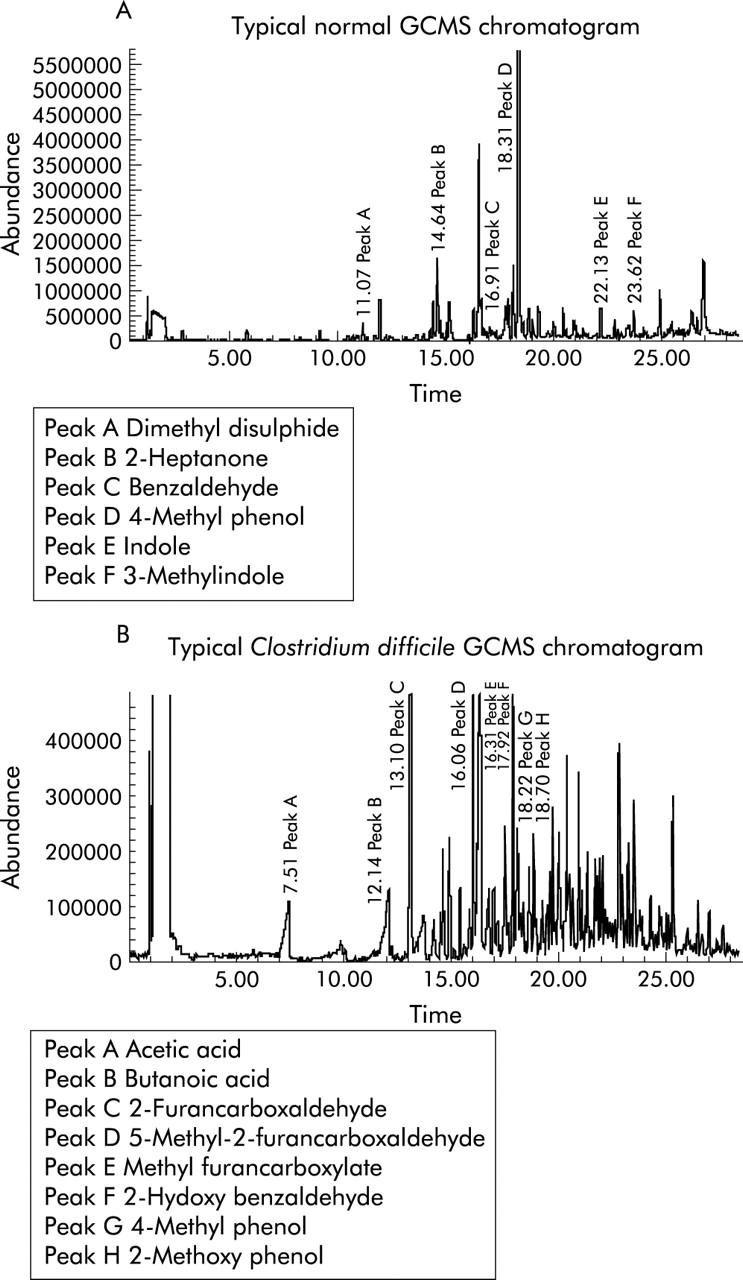
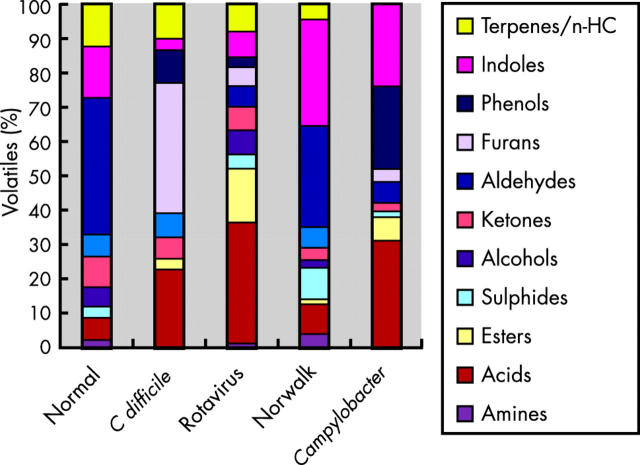
Results: Characteristic patterns of volatile gases were found for the main causes of infectious diarrhoea in hospitals. Furan species without indoles indicated Clostridium difficile, ethyl dodecanoate indicated rotavirus, ammonia without ethyl dodecanoate suggested other enteric viruses, and the absence of hydrocarbons and terpenes indicated Campylobacter infection.
Conclusion: These results could be the basis of rapid near patient diagnosis of infectious diarrhoea.
Figures
References
-
- Spencer RC. Clinical impact and associated costs of Clostridium difficile-associated disease. J Antimicrob Chemothe 1998;41 (suppl):5–12. - PubMed
-
- McFarland LV, Nulligan ME, Kwol RY, et al. Nosocomial acquisition of Clostridium difficile infection. N Engl J Med 1989;26:204–10. - PubMed
-
- Lew JF, Glass RI, Petric M, et al. 6-year retrospective surveillance of gastroenteritis viruses at 10 emergency medical centres in United States and Canada. Pediatr Infect Dis J 1990;9:709–14. - PubMed
-
- De Lacy Costello BPJ, Ewen RJ, Gunson HE, et al. The development of a sensor system for the early detection of soft rot in stored potato tubers. Meas Sci Technol 2000;11:1685–91.
Publication types
MeSH terms
Substances
LinkOut - more resources
Full Text Sources
Other Literature Sources
Medical