The effects of phenylephrine on pupil diameter and accommodation in rhesus monkeys
- PMID: 14691176
- PMCID: PMC2913435
- DOI: 10.1167/iovs.03-0704
The effects of phenylephrine on pupil diameter and accommodation in rhesus monkeys
Abstract
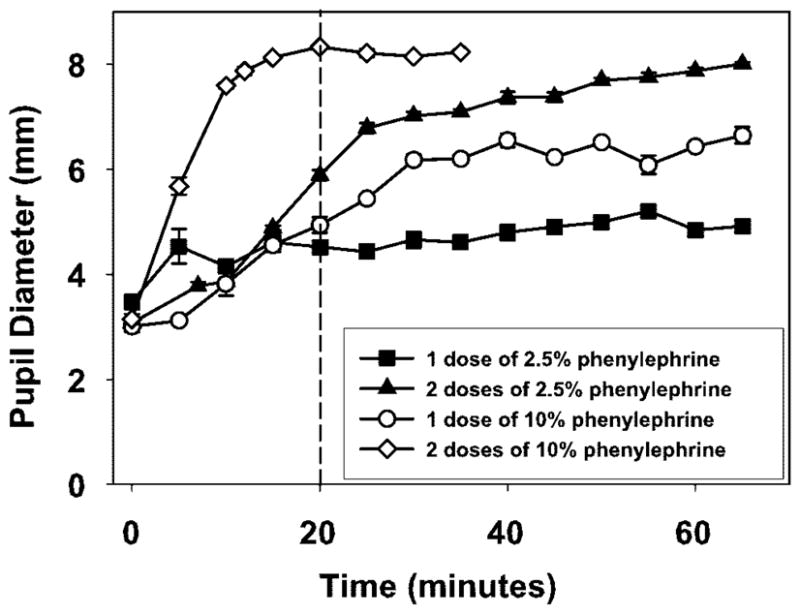
Purpose: Phenylephrine is used to dilate the iris through alpha-adrenergic stimulation of the iris dilator muscle. Sympathetic stimulation of the ciliary muscle is believed to be inhibitory, decreasing accommodative amplitude. Investigations in humans have suggested some loss of functional accommodation after phenylephrine. It is unclear whether this loss is due to direct action of phenylephrine on the ciliary muscle or to secondary optical factors associated with mydriasis. The purpose of this study was to determine whether phenylephrine affects Edinger-Westphal (EW)-stimulated accommodation in rhesus monkeys.
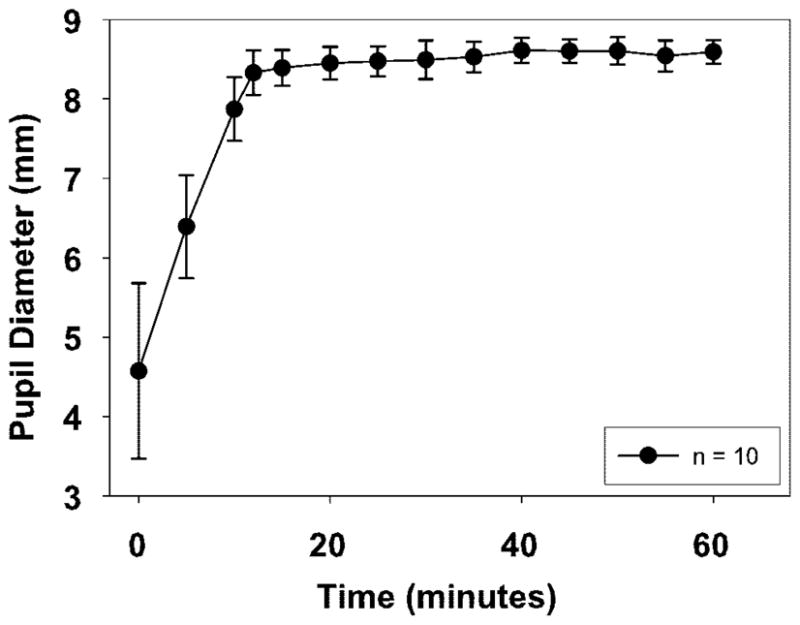
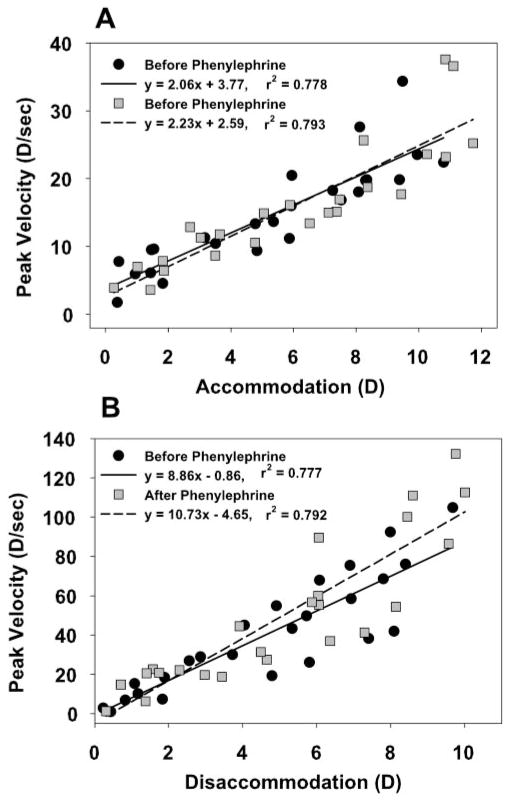
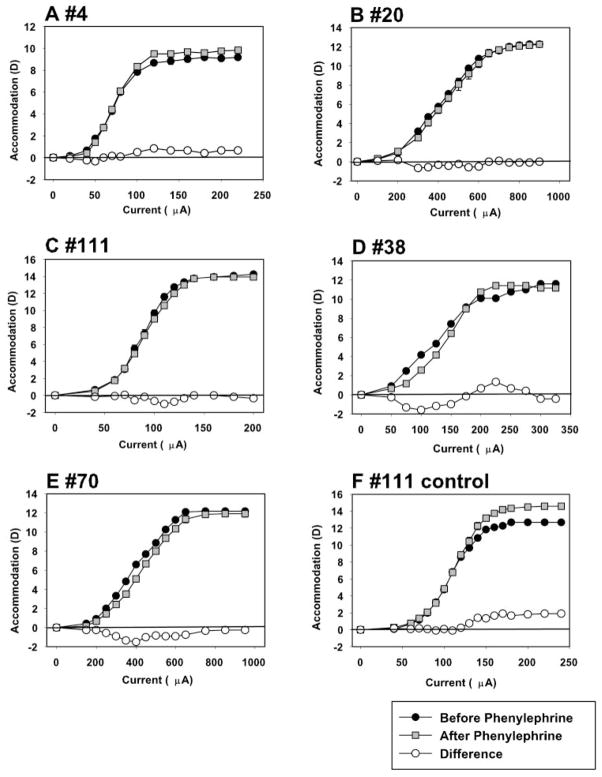
Methods: The time course for maximum mydriasis was determined by videographic pupillography after phenylephrine instillation in 10 normal rhesus monkeys. Static and dynamic EW-stimulated accommodative responses were studied in five iridectomized rhesus monkeys before and after phenylephrine instillation. Accommodative amplitude was measured with a Hartinger coincidence refractometer. Dynamic accommodative responses were measured with infrared photorefraction, and functions were fitted to the data to determine peak velocity versus accommodative response relationships.
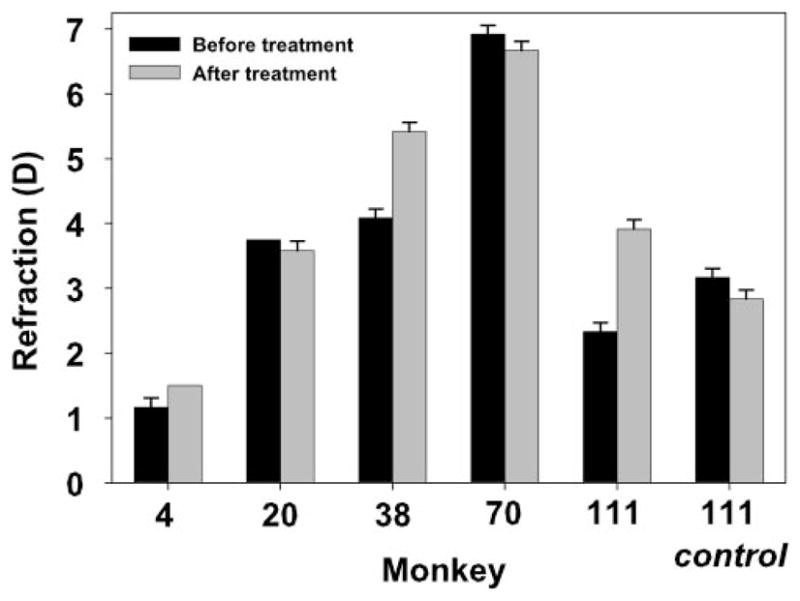
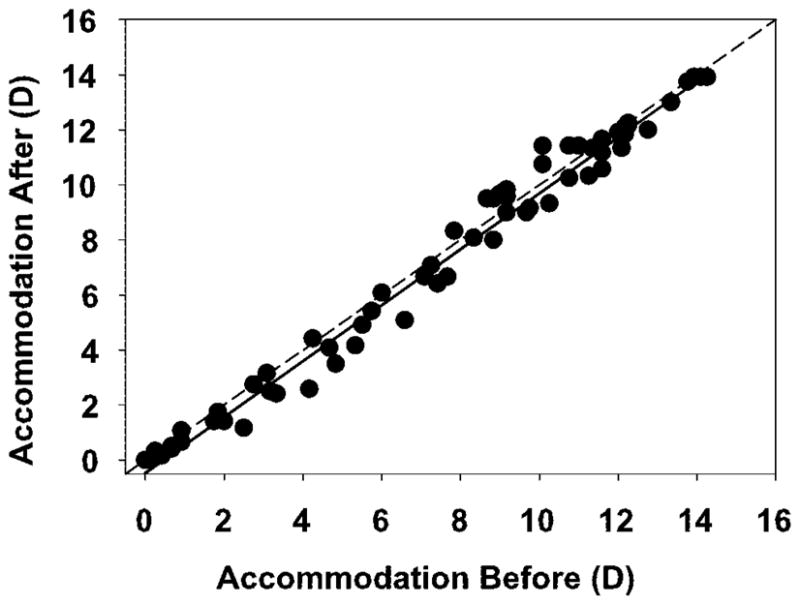
Results: The maximum dilated pupil diameter of 8.39 +/- 0.23 mm occurred 15 minutes after administration of phenylephrine. In iridectomized monkeys, postphenylephrine accommodative amplitudes were similar to prephenylephrine amplitudes. Dynamic analysis of the accommodative responses showed linear peak velocity versus accommodative amplitude relationships that were not statistically different before and after phenylephrine.
Conclusions: alpha-Adrenergic stimulation causes a strong pupil dilation in noniridectomized monkey eyes but does not affect EW-stimulated accommodative amplitude or dynamics in anesthetized, iridectomized rhesus monkeys.
Figures
References
-
- Cogan D. Accommodation and the autonomic nervous system. Arch Ophthalmol. 1937;18:739–766.
-
- Stephens KG. Effect of the sympathetic nervous system on accommodation. Am J Optom Physiol Opt. 1985;62:402–406. - PubMed
-
- Chin NB, Ishikawa S, Lappin H, et al. Accommodation in monkeys induced by midbrain stimulation. Invest Ophthalmol. 1968;7:386–396. - PubMed
-
- Ruskell GL. Sympathetic innervation of the ciliary muscle in monkeys. Exp Eye Res. 1973;16:183–190. - PubMed
-
- Zetterström C, Hahnenberger R. Pharmacological characterization of human ciliary muscle adrenoreceptors in vitro. Exp Eye Res. 1988;46:421–430. - PubMed
Publication types
MeSH terms
Substances
Grants and funding
LinkOut - more resources
Full Text Sources
Other Literature Sources