


doi: 10.1093/nar/gng158.
Improved full-length cDNA production based on RNA tagging by T4 DNA ligase
Affiliations
- PMID: 14704363
- PMCID: PMC373303
- DOI: 10.1093/nar/gng158
Item in Clipboard
Improved full-length cDNA production based on RNA tagging by T4 DNA ligase
Nucleic Acids Res.
.
Abstract
Second-strand cDNA priming is a central problem for full-length characterization of transcripts. A new strategy using bacteriophage T4 DNA ligase and partially degenerate adapters is proposed for grafting a sequence tag to the end of polyribonucleotides. Based on this RNA tagging system and previously described protocols, a new method for full-length cDNA production has been implemented. Validation of the method is shown in Arabidopsis thaliana by the construction of a full-length cDNA library and the analysis of 154 clones and by 5'-RACE-PCR run on a documented experimental system.
Figures
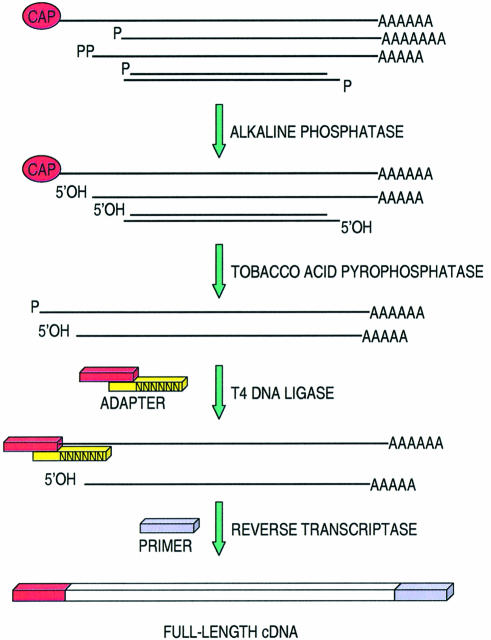
Full-length cDNA production strategy. Single- and double-stranded polynucleotides are represented by single and double bars; P indicates a 5′monophosphate moiety; PP, a 5′ di- or triphosphate.
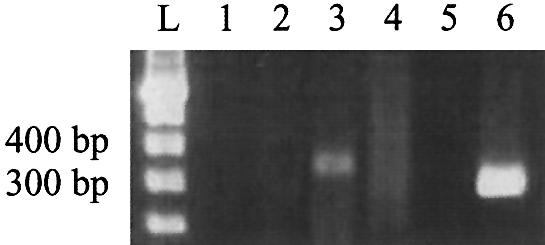
Gel analysis of RACE–PCR products. Ethidium bromide stained 2% agarose gel. Aliquots of 12 µl of PCR products (lanes 1–6), amplified with P1 and rbc402.L (lanes 1–3), P1 (lane 4), rbc402.L (lane 5) and rbc64.U and rbc402.L (lane 6) on cDNA (lanes 3–6) or on genomic DNA (lane 1). Lane 2, no DNA control. Lane L, 100 bp ladder (Life Technologies).
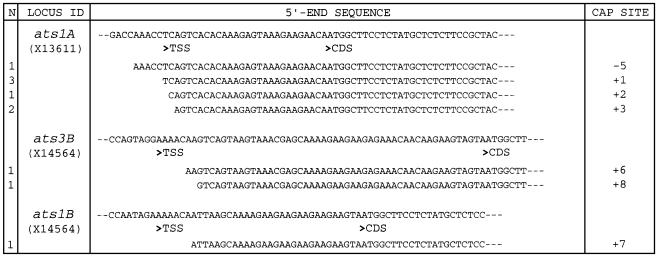
Sequence analysis of RACE–PCR clones. The sequence region next to the cap adapter is shown for 10 RACE–PCR clones. The inserts match with three genes; EMBL accession number and genomic sequence encompassing reported transcription (>TSS) and translation (>CDS) starts are shown for each gene. N, number of clones; Cap site, TSS-relative 5′ position of the RACE–PCR fragments (cloned 5′-ends identical to the EMBL TSS have a value of +1). The various cDNAs found most likely relate to alternative transcription starts; a cDNA (clone a108B3) five bases longer than the previously described ats1A transcript was characterized by the present protocol.
References
-
- Carninci P., Kvam,C., Kitamura,A., Ohsumi,T., Okazaki,Y., Itoh,M., Kamiya,M., Shibata,K., Sasaki,N., Izawa,M. et al. (1996) High-efficiency full-length cDNA cloning by biotinylated CAP trapper. Genomics, 37, 327–336. - PubMed
-
- Akowitz A. and Manuelidis,L. (1989) A novel cDNA/PCR strategy for efficient cloning of small amounts of undefined RNA. Gene, 81, 295–306. - PubMed
MeSH terms
Substances
LinkOut - more resources
Full Text Sources
Other Literature Sources
Molecular Biology Databases
