


Directed evolution of pyruvate decarboxylase-negative Saccharomyces cerevisiae, yielding a C2-independent, glucose-tolerant, and pyruvate-hyperproducing yeast
- PMID: 14711638
- PMCID: PMC321313
- DOI: 10.1128/AEM.70.1.159-166.2004
Directed evolution of pyruvate decarboxylase-negative Saccharomyces cerevisiae, yielding a C2-independent, glucose-tolerant, and pyruvate-hyperproducing yeast
Abstract
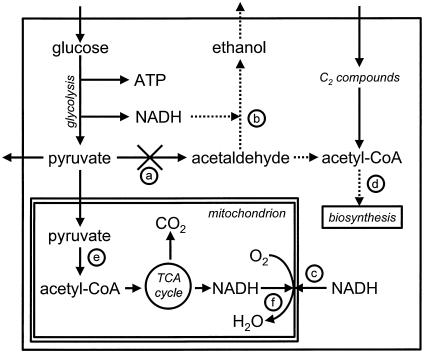
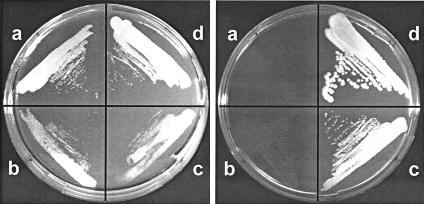
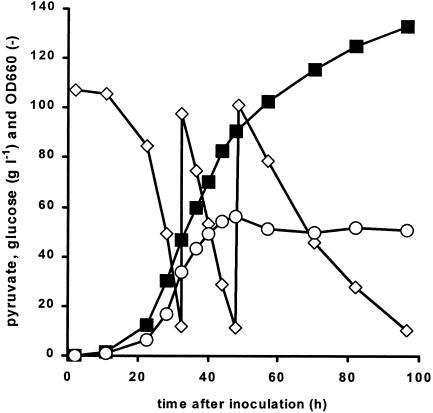
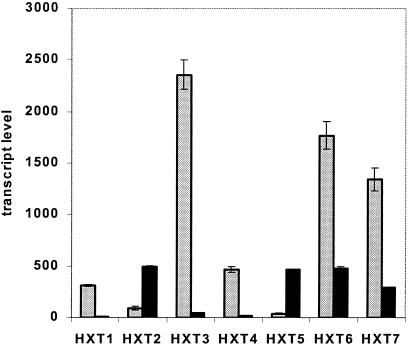
The absence of alcoholic fermentation makes pyruvate decarboxylase-negative (Pdc(-)) strains of Saccharomyces cerevisiae an interesting platform for further metabolic engineering of central metabolism. However, Pdc(-) S. cerevisiae strains have two growth defects: (i) growth on synthetic medium in glucose-limited chemostat cultures requires the addition of small amounts of ethanol or acetate and (ii) even in the presence of a C(2) compound, these strains cannot grow in batch cultures on synthetic medium with glucose. We used two subsequent phenotypic selection strategies to obtain a Pdc(-) strain without these growth defects. An acetate-independent Pdc(-) mutant was obtained via (otherwise) glucose-limited chemostat cultivation by progressively lowering the acetate content in the feed. Transcriptome analysis did not reveal the mechanisms behind the C(2) independence. Further selection for glucose tolerance in shake flasks resulted in a Pdc(-) S. cerevisiae mutant (TAM) that could grow in batch cultures ( micro (max) = 0.20 h(-1)) on synthetic medium, with glucose as the sole carbon source. Although the exact molecular mechanisms underlying the glucose-tolerant phenotype were not resolved, transcriptome analysis of the TAM strain revealed increased transcript levels of many glucose-repressible genes relative to the isogenic wild type in nitrogen-limited chemostat cultures with excess glucose. In pH-controlled aerobic batch cultures, the TAM strain produced large amounts of pyruvate. By repeated glucose feeding, a pyruvate concentration of 135 g liter(-1) was obtained, with a specific pyruvate production rate of 6 to 7 mmol g of biomass(-1) h(-1) during the exponential-growth phase and an overall yield of 0.54 g of pyruvate g of glucose(-1).
Figures
References
-
- Boer, V. M., J. H. de Winde, J. T. Pronk, and M. D. W. Piper. 2003. The genome-wide transcriptional responses of Saccharomyces cerevisiae grown on glucose in aerobic chemostat cultures limited for carbon, nitrogen, phosphorus, or sulfur. J. Biol. Chem. 278:3265-3274. - PubMed
-
- Diderich, J. A., L. M. Raamsdonk, A. Kuiper, A. L. Kruckeberg, M. J. Teixeira de Mattos, and K. van Dam. 2002. Effects of a hexokinase II deletion on the dynamics of glycolysis in continuous cultures of Saccharomyces cerevisiae. FEMS Yeast Res. 2:165-172. - PubMed
Publication types
MeSH terms
Substances
LinkOut - more resources
Full Text Sources
Other Literature Sources
Molecular Biology Databases
Miscellaneous
