Systemic and mucosal responses to oral administration of excretory and secretory antigens from Giardia intestinalis
- PMID: 14715563
- PMCID: PMC321332
- DOI: 10.1128/cdli.11.1.152-160.2004
Systemic and mucosal responses to oral administration of excretory and secretory antigens from Giardia intestinalis
Abstract
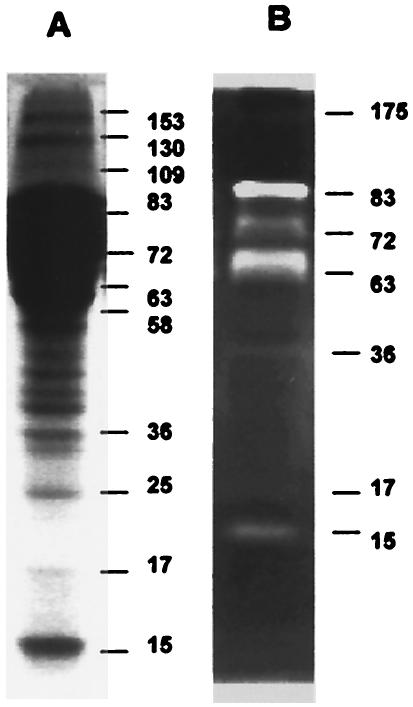
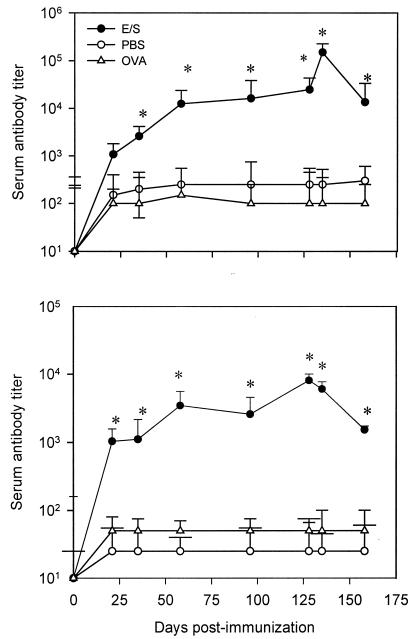
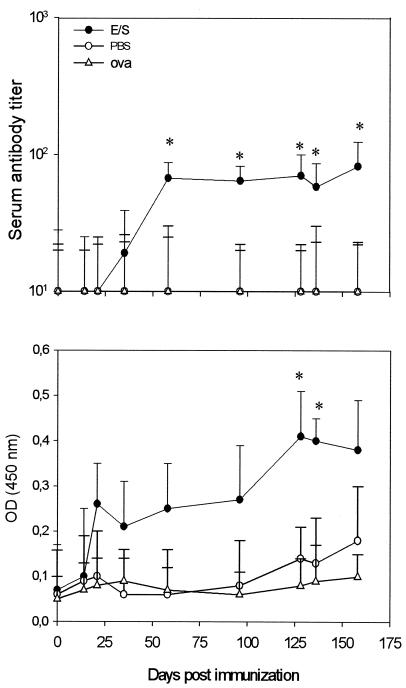
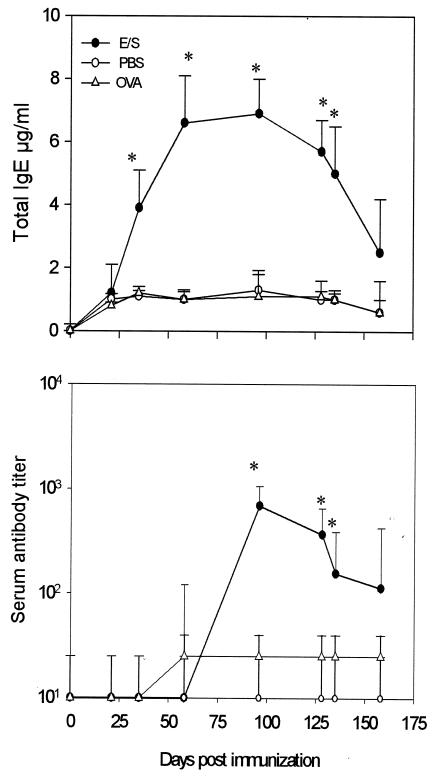
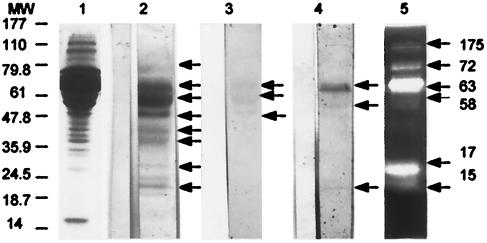
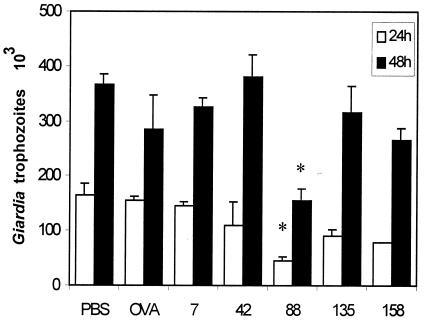
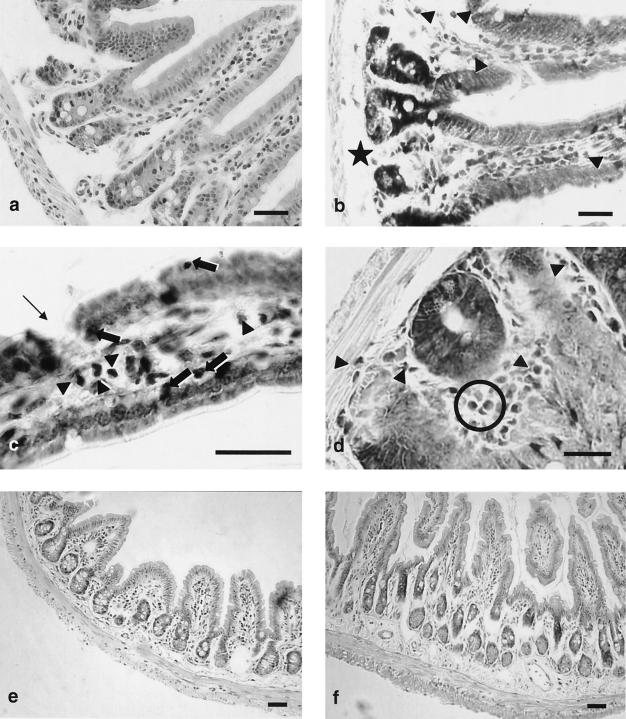
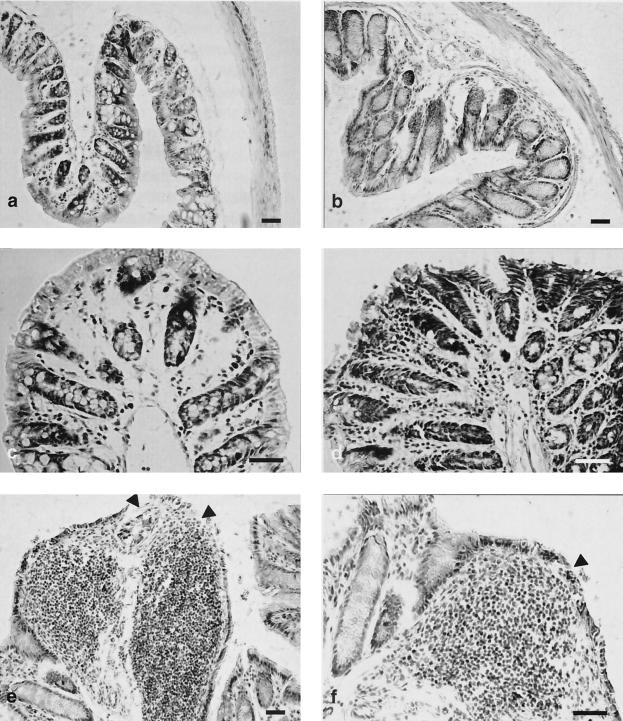
Giardia, a flagellated protozoan that infects the upper small intestine of its vertebrate host, is the most common parasitic protist responsible for diarrhea worldwide. Molecules released by the parasite, particularly excretory and secretory antigens, seemed to be associated with pathogenesis as well as with the expression of Giardia virulence. In the present work, we examined the effect of oral administration of Giardia intestinalis excretory and secretory antigens on systemic and local antibody response as well as on mucosal injuries in BALB/c mice. Significant titers of serum-specific immunoglobulin G1 (IgG1) and specific IgG2a were observed. Systemic and mucosal specific IgA antibodies were also recorded. A transient production of serum-specific IgE antibody and high total IgE levels were also detected, suggesting the presence in excretory and secretory proteins of factors promoting a specific IgE response. The sera of excretory and secretory antigen-treated mice recognized proteins of 50 and 58 kDa as well as electrophoretic bands of 15, 63, and 72 kDa that could support a proteinase activity. The in vitro exposure of G. intestinalis trophozoites to heat-inactivated sera from mice orally inoculated with excretory and secretory antigens induced a decrease of growth, revealing a complement-independent inhibitory activity of specific serum antibodies. Furthermore, histological evaluation performed on the small and large intestines revealed moderate to acute histological changes comparable to those observed in natural or experimental Giardia infection characterized by eosinophilic infiltration, hypercellularity, and enterocytic desquamation. The present results suggested that Giardia excretory and secretory antigens stimulate a preferential Th2 response, which is probably involved in the intestinal alterations associated with giardiasis.
Figures
References
-
- Artis, D., N. E. Humphreys, C. S. Potten, N. Wagner, W. Muller, J. R. McDermott, R. K. Grencis, and K. J. Else. 2000. Beta7 integrin-deficient mice: delayed leukocyte recruitment and attenuated protective immunity in the small intestine during enteric helminth infection. Eur. J. Immunol. 3:1656-1664. - PubMed
-
- Buret, A., D. G. Gall, P. N. Nation, and M. E. Olson. 1990. Intestinal protozoa and epithelial cell kinetics, structure and function. Parasitol. Today 6:375-380. - PubMed
Publication types
MeSH terms
Substances
LinkOut - more resources
Full Text Sources
Miscellaneous