Pancolonic indigo carmine dye spraying for the detection of dysplasia in ulcerative colitis
- PMID: 14724160
- PMCID: PMC1774934
- DOI: 10.1136/gut.2003.016386
Pancolonic indigo carmine dye spraying for the detection of dysplasia in ulcerative colitis
Abstract
Background and aims: Colonoscopic surveillance for cancer in longstanding extensive ulcerative colitis relies heavily on non-targeted mucosal biopsies. Chromoendoscopy can aid detection of subtle mucosal abnormalities. We hypothesised that routine pancolonic indigo carmine dye spraying would improve the macroscopic detection of dysplasia and reduce the dependence on non-targeted biopsies.
Patients and methods: One hundred patients with longstanding extensive ulcerative colitis attending for colonoscopic surveillance underwent "back to back" colonoscopies. During the first examination, visible abnormalities were biopsied, and quadrantic non-targeted biopsies were taken every 10 cm. Pancolonic indigo carmine (0.1%) was used during the second colonoscopic examination, and any additional visible abnormalities were biopsied.
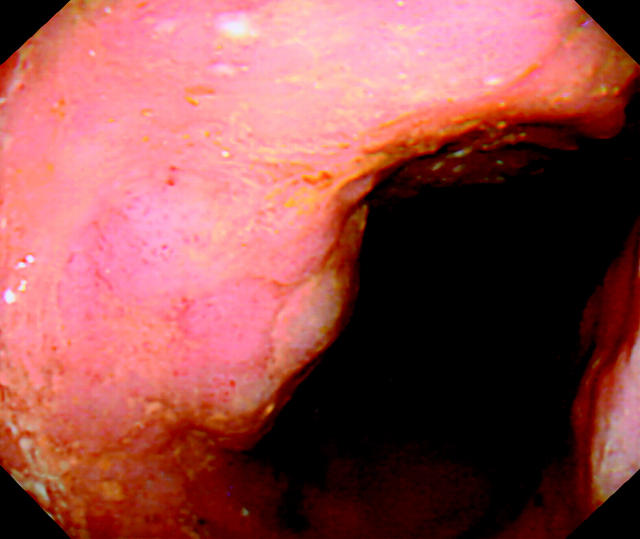
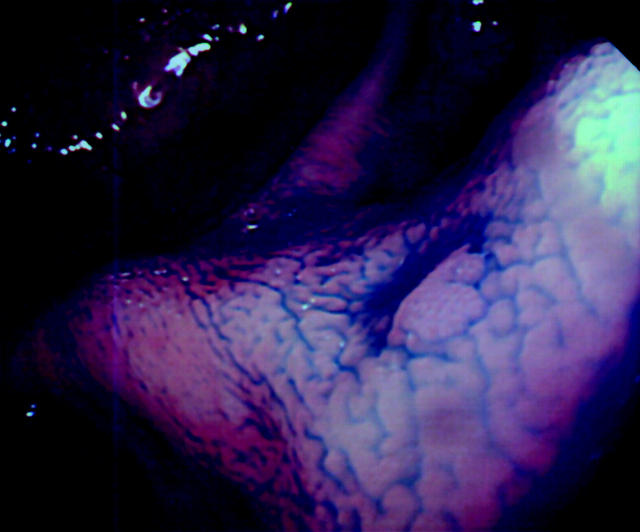
Results: Median extubation times for the first and second colonoscopies were 11 and 10 minutes, respectively. The non-targeted biopsy protocol detected no dysplasia in 2904 biopsies. Forty three mucosal abnormalities (20 patients) were detected during the pre-dye spray colonoscopy of which two (two patients) were dysplastic: both were considered to be dysplasia associated lesions/masses. A total of 114 additional abnormalities (55 patients) were detected following dye spraying, of which seven (five patients) were dysplastic: all were considered to be adenomas. There was a strong trend towards statistically increased dysplasia detection following dye spraying (p = 0.06, paired exact test). The targeted biopsy protocol detected dysplasia in significantly more patients than the non-targeted protocol (p = 0.02, paired exact test).
Conclusions: No dysplasia was detected in 2904 non-targeted biopsies. In comparison, a targeted biopsy protocol with pancolonic chromoendoscopy required fewer biopsies (157) yet detected nine dysplastic lesions, seven of which were only visible after indigo carmine application. Careful mucosal examination aided by pancolonic chromoendoscopy and targeted biopsies of suspicious lesions may be a more effective surveillance methodology than taking multiple non-targeted biopsies.
Figures
Comment in
-
Surveillance colonoscopy in ulcerative colitis: magnifying chromoendoscopy in the spotlight.Gut. 2004 Feb;53(2):165-7. doi: 10.1136/gut.2003.026351. Gut. 2004. PMID: 14724144 Free PMC article. No abstract available.
-
To dye or not to dye? That is beyond question! Optimising surveillance colonoscopy is indispensable for detecting dysplasia in ulcerative colitis.Gut. 2004 Nov;53(11):1722. Gut. 2004. PMID: 15479703 Free PMC article. No abstract available.
-
Acetic acid spray in colonoscopy: an alternative to chromoendoscopy.Gut. 2005 Feb;54(2):313. Gut. 2005. PMID: 15647207 Free PMC article. No abstract available.
References
-
- Crohn BB, Rosenberg H. The sigmoidoscopy picture of chronic ulcerative colitis (non-specific). Am J Med Sci 1925;170:220–8.
-
- Hulten L, Kewenter J, Ahren C. Precancer and carcinoma in chronic ulcerative colitis. A histopathological and clinical investigation. Scand J Gastroenterol 1972;7:663–9. - PubMed
-
- The role of colonoscopy in the management of patients with inflammatory bowel disease. American Society for Gastrointestinal Endoscopy. Gastrointest Endosc 1998;48:689–90. - PubMed
Publication types
MeSH terms
Substances
LinkOut - more resources
Full Text Sources
Medical