Outbreak of severe acute respiratory syndrome in a tertiary hospital in Singapore, linked to an index patient with atypical presentation: epidemiological study
- PMID: 14726369
- PMCID: PMC318482
- DOI: 10.1136/bmj.37939.465729.44
Outbreak of severe acute respiratory syndrome in a tertiary hospital in Singapore, linked to an index patient with atypical presentation: epidemiological study
Abstract
Objective: To describe an outbreak of severe acute respiratory syndrome (SARS) in a tertiary hospital in Singapore, linked to an index patient with atypical presentation, and the lessons learnt from it.
Design: Descriptive study.
Setting: A tertiary hospital in Singapore.
Participants: Patients, healthcare workers, and visitors who contracted SARS in Singapore General Hospital.
Main outcome measures: Probable SARS as defined by the World Health Organization.
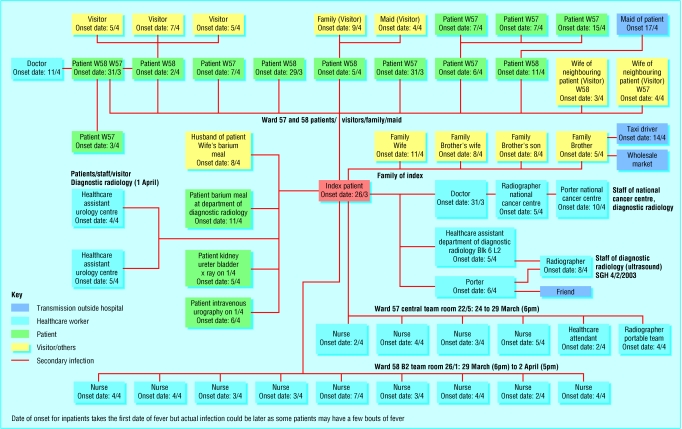
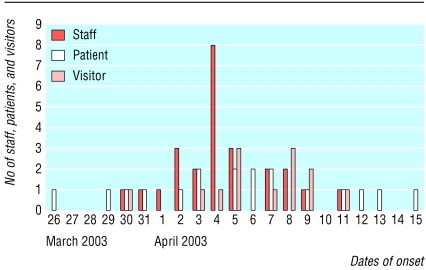
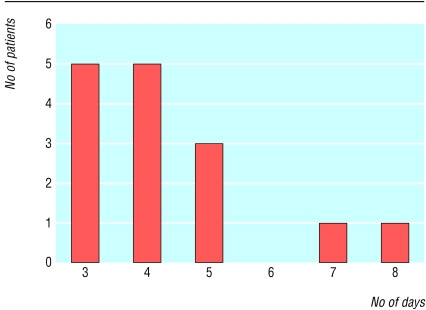
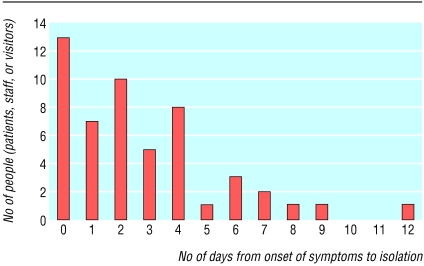
Results: The index patient presented with gastrointestinal bleeding, initially without changes to his chest radiograph. Altogether 24 healthcare workers, 15 patients, and 12 family members and visitors were infected. The incubation period ranged from three to eight days. Only 13 patients were isolated on their dates of onset.
Conclusions: Atypical presentation of SARS infection must be taken into consideration when managing patients with a history of contact with SARS patients. The main gap in the containment strategy in this outbreak was the failure to identify the index patient as someone who had been discharged from a ward in another hospital that managed probable SARS cases. Strict infection control measures, a good surveillance system, early introduction of isolation procedures, and vigilant healthcare professionals are essential for controlling outbreaks.
Figures
References
-
- Ministry of Health. Severe acute respiratory syndrome. Press releases. http://app.moh.gov.sg/sars/news/updates.asp (accessed 30 Dec 2003).
-
- Centers for Disease Control and Prevention. Updated interim surveillance case definition for severe acute respiratory syndrome (SARS)—United States, April 29, 2003. MMWR Morb Mortal Wkly Rep 2003;52(17): 391-3. - PubMed
-
- World Health Organization, Disease Outbreaks Reported. WHO issues emergency travel advisory: severe acute respiratory distress syndrome (SARS) spreads worldwide. http://www.who.int/csr/don/2003_03_15/en/ (accessed 5 Jan 2004).
-
- Centers for Disease Control and Prevention. Preliminary clinical description of severe acute respiratory syndrome. MMWR Morb Mortal Wkly Rep 2003;52(12): 255-6. - PubMed
Publication types
MeSH terms
LinkOut - more resources
Full Text Sources
Miscellaneous