


COX-2 expression is associated with an aggressive phenotype in ductal carcinoma in situ
- PMID: 14735188
- PMCID: PMC2409574
- DOI: 10.1038/sj.bjc.6601534
COX-2 expression is associated with an aggressive phenotype in ductal carcinoma in situ
Abstract
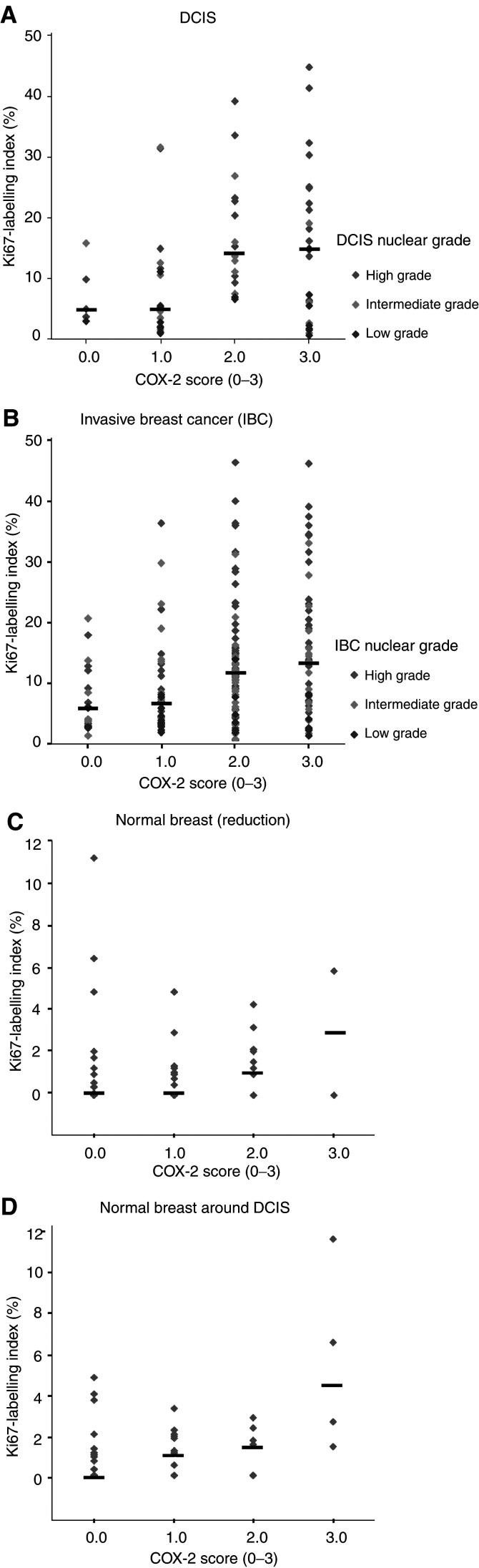
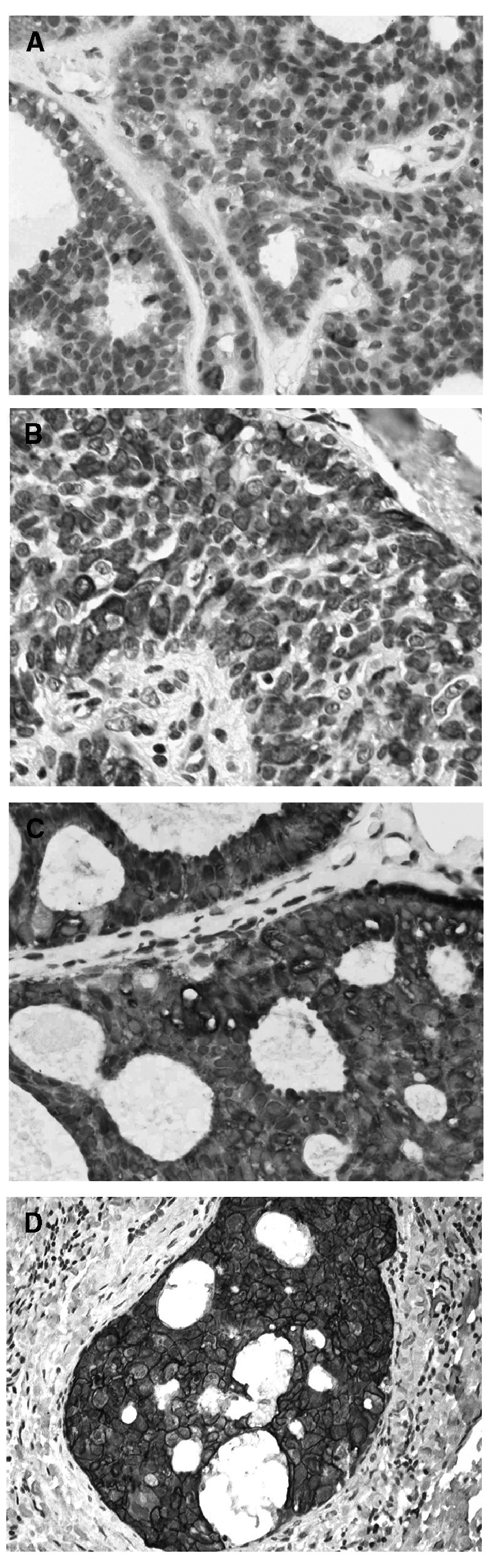
Cyclooxygenase type-2 (COX-2) is overexpressed in malignant tumours including breast cancers, though the mechanism of upregulation is unclear. This study aimed to determine COX-2 expression in ductal carcinoma in situ (DCIS) in comparison to invasive breast cancer (IBC) and normal breast, and also to investigate the relationship of COX-2 expression with HER-2 expression, oestrogen receptor (ER), tumour grade and cellular proliferation (Ki67) in DCIS. Cyclooxygenase type-2, HER-2, ER and Ki67 expression were determined by immunohistochemistry on paraffin tissue sections of DCIS (n=187), IBC (n=65) and normal breast reduction tissue (n=60). Cyclooxygenase type-2 expression in DCIS (67%, P<0.001) and IBC (63%, P<0.001) was significantly greater than in normal breast (23%). There was no difference in COX-2 expression level between DCIS and IBC (P=0.87) or between normal breast from reduction mammoplasty tissue and normal breast ducts around DCIS (22%, P=0.29). In DCIS, COX-2 expression was associated with higher cellular proliferation rates (P<0.0001), nuclear grade (P=0.003), with ER negativity (P=0.003) and with HER-2 positivity (P<0.0001). Cyclooxygenase type-2 expression is upregulated in in situ breast cancer and is associated with surrogate markers of an aggressive DCIS phenotype including nonoestrogen-regulated signalling pathways. Cyclooxygenase type-2 inhibition may potentially prevent the development of ER-positive and ER-negative breast cancers.
Figures

References
-
- Allred DC, O'Connell P, Fuqua SA (1993) Biomarkers in early breast neoplasia. J Cell Biochem 17G(Suppl): 125–131 - PubMed
-
- Alshafie GA, Abou-Issa HM, Seibert K, Harris RE (2000) Chemotherapeutic evaluation of Celecoxib, a cyclooxygenase-2 inhibitor, in a rat mammary tumor model. Oncol Rep 7: 1377–1381 - PubMed
-
- Birner P, Oberhuber G, Stani J, Reithofer C, Samonigg H, Hausmaninger H, Kubista E, Kwasny W, Kandioler-Eckersberger D, Gnant M, Jakesz R (2001) Evaluation of the United States Food and Drug Administration – approved scoring and test system of HER-2 protein expression in breast cancer. Clin Cancer Res 7: 1669–1675 - PubMed
-
- Bobrow LG, Happerfield LC, Gregory WM, Millis RR (1995) Ductal carcinoma in situ: assessment of necrosis and nuclear morphology and their association with biological markers. J Pathol 176: 333–341 - PubMed
-
- Boland GP, Chan KC, Knox WF, Roberts SA, Bundred NJ (2003a) Value of the Van Nuys Prognostic Index in prediction of recurrence of ductal carcinoma in situ after breast-conserving surgery. Br J Surg 90: 426–432 - PubMed
Publication types
MeSH terms
Substances
LinkOut - more resources
Full Text Sources
Other Literature Sources
Medical
Research Materials
Miscellaneous
