


Distribution and shifting trends of bacterial keratitis in north China (1989-98)
- PMID: 14736761
- PMCID: PMC1771985
- DOI: 10.1136/bjo.2002.011205
Distribution and shifting trends of bacterial keratitis in north China (1989-98)
Abstract
Aims: To study the distribution and shifting trends of bacterial keratitis.
Methods: The data of 2220 corneal isolates from 1 January 1989 to 31 December 1998 were reviewed retrospectively.
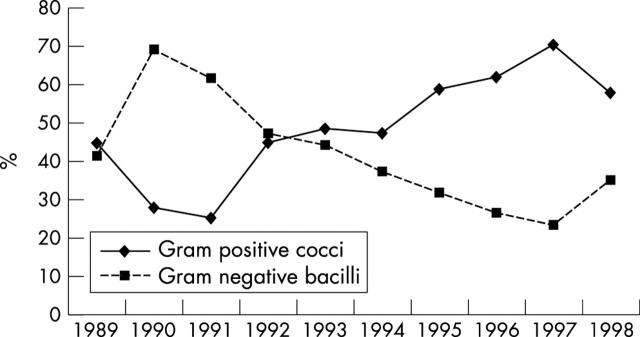
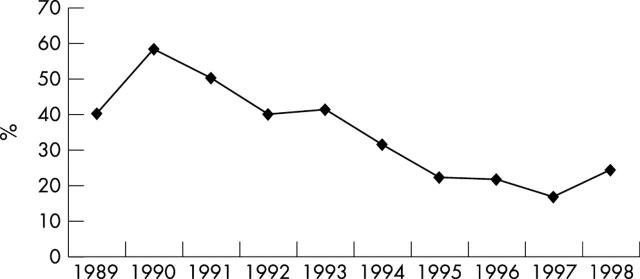
Results: Positive culture was recovered in 490 isolates. Gram positive cocci and Gram negative bacilli represented 51% and 39.4%, respectively. Pseudomonas aeruginosa was the most common pathogen (32.2%). A gradual increase in the percentage of Gram positive cocci coupled with a decrease of Gram negative bacilli.
Conclusion: Pseudomonas aeruginosa and coaculase negative Staphylococcus were the most common pathogens in bacterial keratitis in north China.
Figures
References
-
- Wilhelmus KR. Bacterial keratitis. In: Pepose JS, Holland GN, Wilhelmus KR, eds. Ocular Infection & Immunity. USA: Patterson AS, 1996:973.
-
- Alexandrakis G, Alfonso EC, Miller D, et al. Shifting trends in bacterial keratitis in south Florida and emerging resistance to Fluoroquinolones. Ophthalmology 2000;107:1497–1502. - PubMed
MeSH terms
LinkOut - more resources
Full Text Sources
