Posterior capsule opacification after implantation of a hydrogel intraocular lens
- PMID: 14736768
- PMCID: PMC1771981
- DOI: 10.1136/bjo.2003.023580
Posterior capsule opacification after implantation of a hydrogel intraocular lens
Abstract
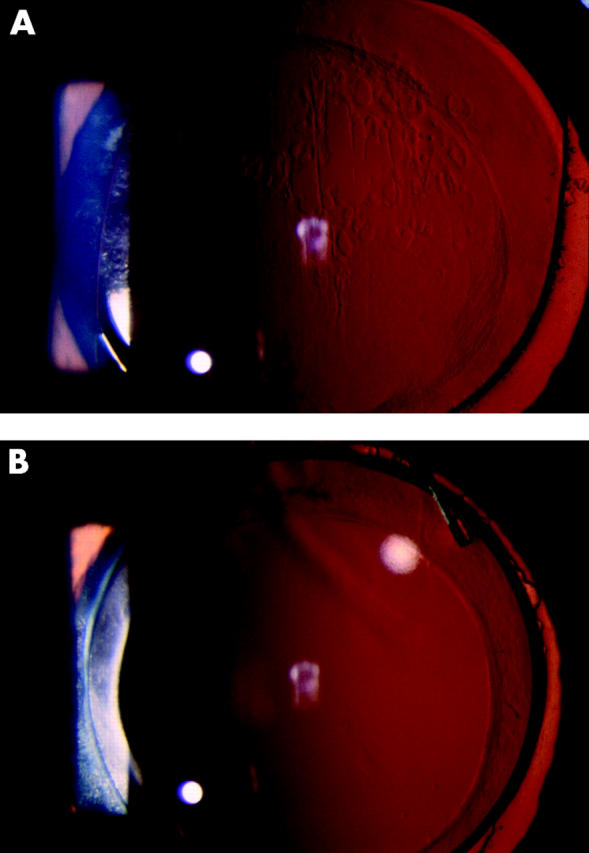
Aim: To compare the degree of posterior capsule opacification (PCO) in eyes with a hydrophilic hydrogel intraocular lens (IOL) with that in eyes with a hydrophobic acrylic IOL.
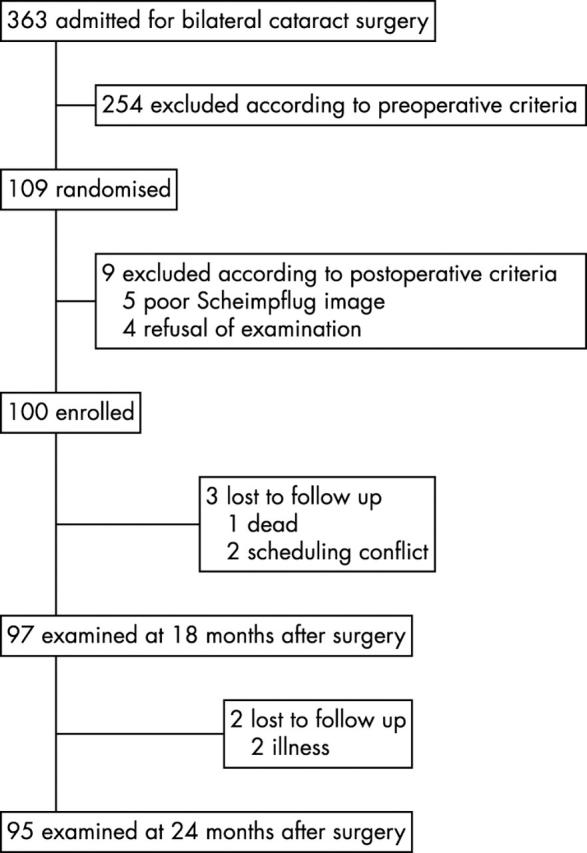
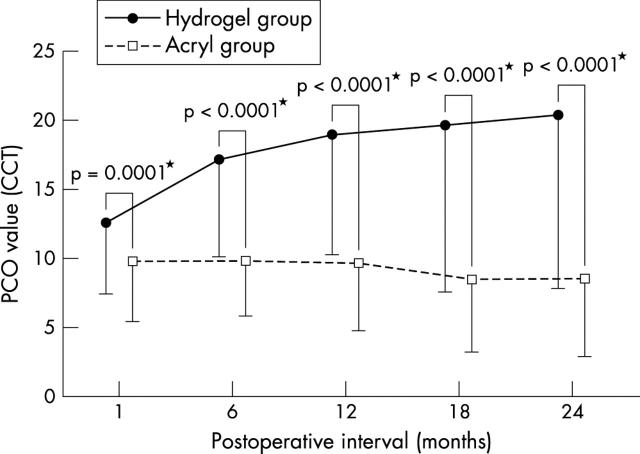
Methods: Ninety five patients underwent a hydrogel IOL implantation in one eye and an acrylic IOL implantation in the opposite eye. The PCO value of these patients was measured using the Scheimpflug videophotography system at 1, 6, 12, 18, and 24 months postoperatively. The rate of neodymium:YAG (Nd:YAG) laser posterior capsulotomy and visual acuity were also evaluated.
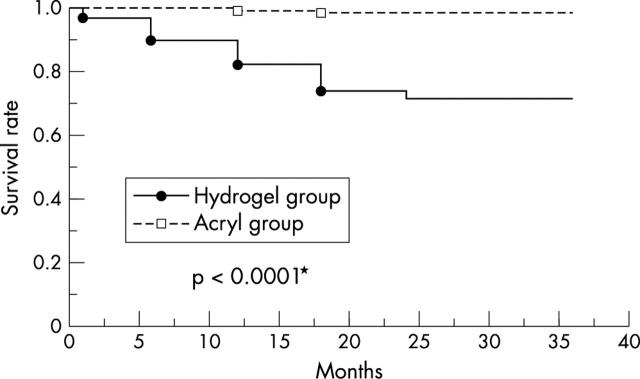
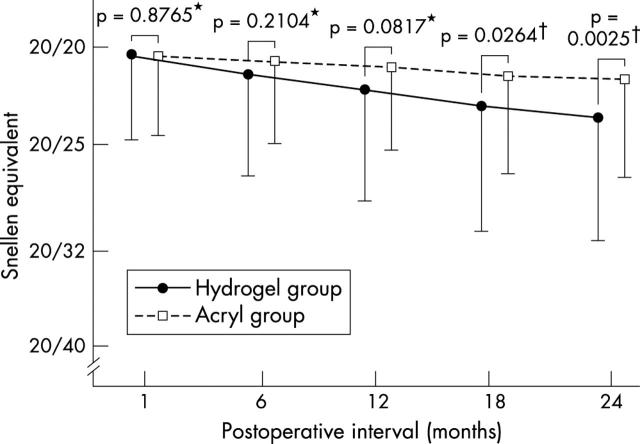
Results: The mean PCO value in the hydrogel group increased significantly (p<0.0001), while that in the acrylic group did not show significant change. The PCO value in the hydrogel group was significantly greater than that in the acrylic group throughout the follow up period. Kaplan-Meier survival analysis determined that the Nd:YAG capsulotomy rate in the hydrogel group was significantly higher than that in the acrylic group (p<0.0001). Mean visual acuity in the hydrogel group decreased significantly with time (p<0.0001), and became significantly worse than that in the acrylic group at 18 and 24 months postoperatively.
Conclusion: Posterior capsule opacification in eyes with a hydrophilic hydrogel IOL is significantly more extensive than that in eyes with a hydrophobic acrylic IOL, and results in a significant impairment of visual acuity.
Figures
References
-
- Cunnan CM, Tarbaux NM, Knight PM. Surface properties of intraocular lens materials and their influence on in vitro cell adhesion. J Cataract Refract Surg 1991;17:767–73. - PubMed
-
- Lenis K, Philipson B. Lens epithelial growth on the anterior surface of hydrogel IOLs: an in vitro study. Acta Ophthalmol Scand 1998;76:184–7. - PubMed
-
- Hollick EJ, Spalton DJ, Ursell PG. Surface cytologic features on intraocular lenses: can increased biocompatibility have disadvantages? Arch Ophthalmol 1999;117:872–8. - PubMed
-
- Koch MU, Kalicharan D, van der Want JJL. Lens epithelial cell layer formation related to hydrogel foldable intraocular lenses. J Cataract Refract Surg 1999;25:1637–40. - PubMed
-
- Goarnisson S, Hennekes R. Medium term results of HEMA intraocular lenses (hydroview®). Bull Soc Belge Ophtalmol 1999;272:63–8. - PubMed
Publication types
MeSH terms
Substances
LinkOut - more resources
Full Text Sources
Other Literature Sources
Medical