


The effects of binge alcohol exposure on bone resorption and biomechanical and structural properties are offset by concurrent bisphosphonate treatment
- PMID: 14745317
- PMCID: PMC3071740
- DOI: 10.1097/01.ALC.0000108661.41560.BF
The effects of binge alcohol exposure on bone resorption and biomechanical and structural properties are offset by concurrent bisphosphonate treatment
Abstract
Background: Chronic alcohol consumption reduces bone mass and strength, increasing fracture risk for alcohol abusers. Mechanisms underlying this vulnerability involve modulation of bone remodeling. Direct effects of alcohol on bone formation have been documented; those on bone resorption are less well studied. Skeletal effects of exposure to high blood alcohol concentrations (BAC's) attained during binge drinking have not been studied. We examined the effects of repeated binge-like alcohol treatment on bone resorption, bone mineral density and vertebral compressive strength in adult male rats treated with the aminobisphosphonate, risedronate.
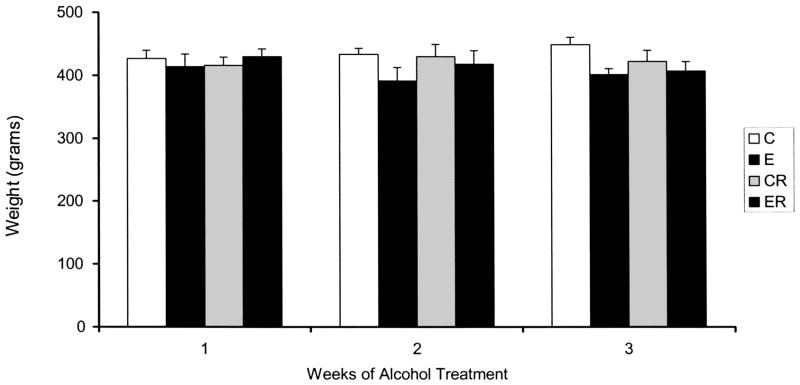
Methods: A binge alcohol exposure model was developed using intraperitoneal (IP) injection to administer a 20% (vol/vol) alcohol/saline solution (3 g/kg, 1X/day) on four consecutive days for 1, 2 or 3 weeks in 400 g rats, with and without weekly risedronate treatment (0.5 mg/kg, 1X/week). Total serum deoxypyridinoline (Dpd) a crosslink of bone type collagen released during resorption was measured by ELISA. Bone mineral density (BMD) was measured using peripheral quantitative computed tomography (pQCT). Vertebral compressive strength was determined using an Instron materials testing machine. Trabecular integrity was analyzed by computer-aided trabecular analysis system (TAS).
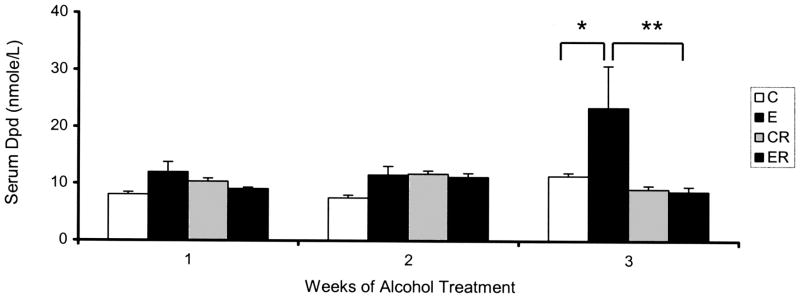
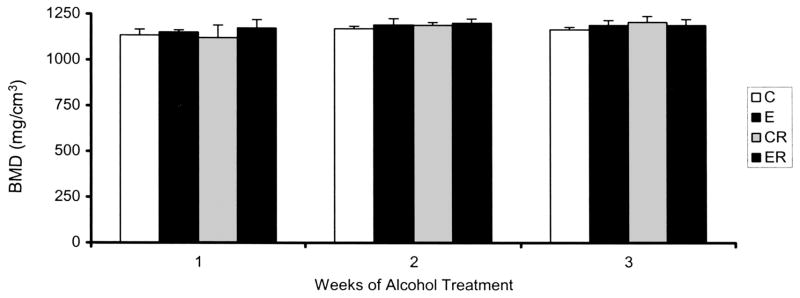
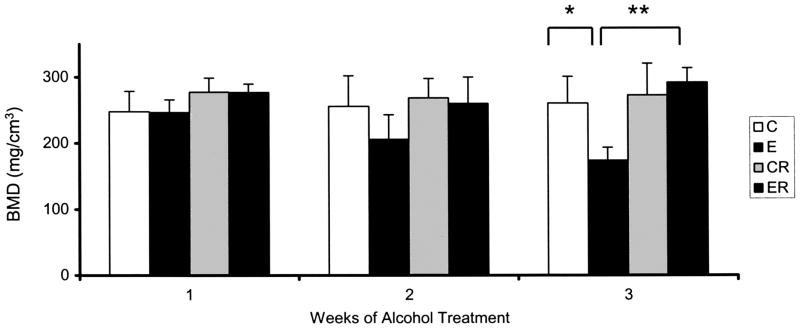
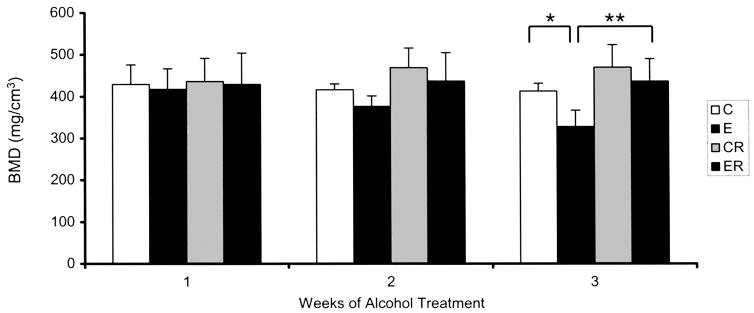
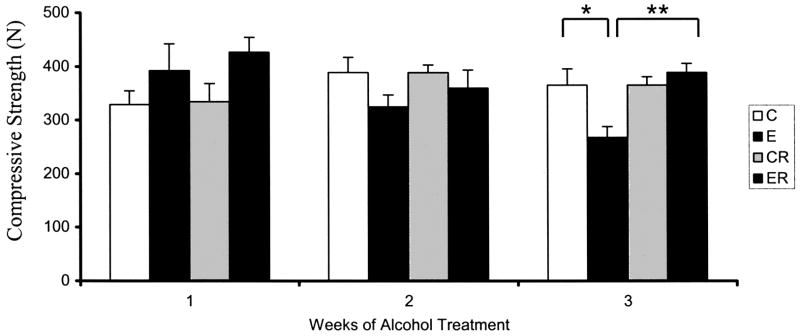
Results: Peak BAC's averaged 308.5 +/- 12 mg/dL; average BAC was 258.6 +/- 28.7 mg/dL at time of euthanasia. No significant effects of treatment were observed after 1 or 2 weeks of binge alcohol exposure. At 3 weeks of alcohol treatment serum Dpd was significantly increased (205%, p < 0.05) over controls. Bone mineral density (BMD) in cancellous bone of distal femur and lumbar spine were significantly decreased (34% and 21% respectively, p < 0.01) after 3 weeks of binge treatment. Vertebral (L4) compressive strength (maximum load sustained before failure) also decreased (27%, p < 0.05) after 3 binge alcohol cycles. Risedronate maintained the Dpd level (p < 0.01), BMD (p < 0.001) and vertebral structural biomechanical properties (p < 0.01) of binge-treated rats at control levels (E vs ER). Indices of trabecular architectural integrity [Trabecular bone volume/tissue volume (BV/TV), bone area (BAR) and trabecular separation (Tb.Sp)] analyzed at week 3 showed (BV/TV) and (BAR) were significantly reduced in alcohol-binged rats (p < 0.01), while (Tb.Sp) was significantly increased (p < 0.01). Risedronate also maintained the trabecular architectural indices of binge-treated rats at control levels (E versus ER, p < 0.01).
Conclusions: In adult male rats, BAC's reflective of those attained during alcoholic binge drinking may affect the skeleton in part by stimulating bone resorption, an effect mitigated by risedronate.
Figures
References
-
- Angus RM, Sambrook PN, Pocock NA. Dietary intake and bone mineral density. Osteopr Int. 1988;1:265–277. - PubMed
-
- Bilke DD, Genant HK, Cann C, Recker RR, Halloran BP, Strewler GJ. Bone disease in alcohol abuse. Ann Inter Med. 1985;103:42–48. - PubMed
-
- Cartlidge D, Redmond AD. Alcohol and conscious level. Biomed Pharmacother. 1990;44:205–208. - PubMed
-
- Chavassieux P, Serre CM, Vergnaud P, Delmas PD, Meunier PJ. In vitro evaluation of dose-effects of ethanol on human osteoblastic cells. Bone and Mineral. 1993;22:95–103. - PubMed
-
- Cheung RC-Y, Gray C, Boyde A, Jones SJ. Effects of ethanol on bone cells in vitro resulting in increased resorption. Bone. 1995;16(1):143–147. - PubMed
Publication types
MeSH terms
Substances
Grants and funding
LinkOut - more resources
Full Text Sources
