


African swine fever virus multigene family 360 and 530 genes affect host interferon response
- PMID: 14747550
- PMCID: PMC369441
- DOI: 10.1128/jvi.78.4.1858-1864.2004
African swine fever virus multigene family 360 and 530 genes affect host interferon response
Abstract
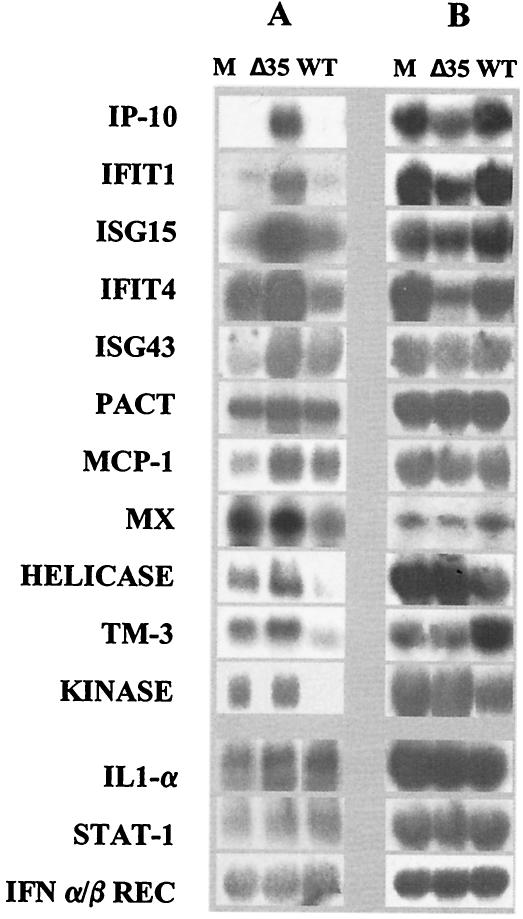
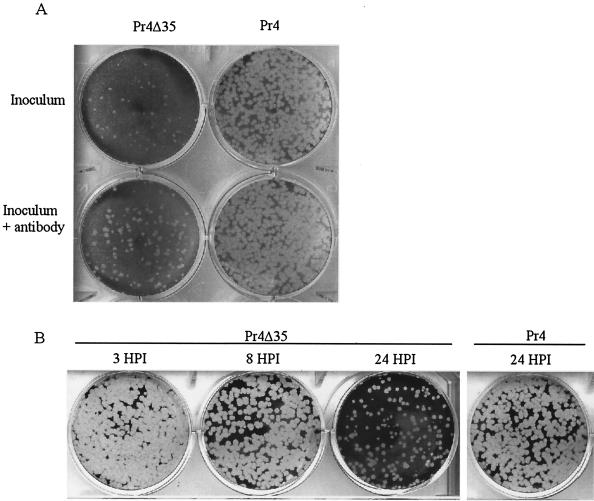
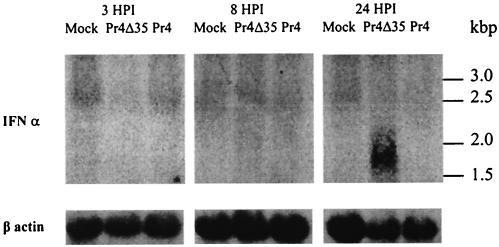
African swine fever virus (ASFV) multigene family 360 and 530 (MGF360/530) genes affect viral growth in macrophage cell cultures and virulence in pigs (L. Zsak, Z. Lu, T. G. Burrage, J. G. Neilan, G. F. Kutish, D. M. Moore, and D. L. Rock, J. Virol. 75:3066-3076, 2001). The mechanism by which these novel genes affect virus-host interactions is unknown. To define MGF360/530 gene function, we compared macrophage transcriptional responses following infection with parental ASFV (Pr4) and an MGF360/530 deletion mutant (Pr4 Delta 35). A swine cDNA microarray containing 7,712 macrophage cDNA clones was used to compare the transcriptional profiles of swine macrophages infected with Pr4 and Pr4 Delta 35 at 3 and 6 h postinfection (hpi). While at 3 hpi most (7,564) of the genes had similar expression levels in cells infected with either virus, 38 genes had significantly increased (>2.0-fold, P < 0.05) mRNA levels in Pr4 Delta 35-infected macrophages. Similar up-regulation of these genes was observed at 6 hpi. Viral infection was required for this induced transcriptional response. Most Pr Delta 35 up-regulated genes were part of a type I interferon (IFN) response or were genes that are normally induced by double-stranded RNA and/or viral infection. These included monocyte chemoattractant protein, transmembrane protein 3, tetratricopeptide repeat protein 1, a ubiquitin-like 17-kDa protein, ubiquitin-specific protease ISG43, an RNA helicase DEAD box protein, GTP-binding MX protein, the cytokine IP-10, and the PKR activator PACT. Differential expression of IFN early-response genes in Pr4 Delta 35 relative to Pr4 was confirmed by Northern blot analysis and real-time PCR. Analysis of IFN-alpha mRNA and secreted IFN-alpha levels at 3, 8, and 24 hpi revealed undetectable IFN-alpha in mock- and Pr4-infected macrophages but significant IFN-alpha levels at 24 hpi in Pr4 Delta 35-infected macrophages. The absence of IFN-alpha in Pr4-infected macrophages suggests that MGF360/530 genes either directly or indirectly suppress a type I IFN response. An inability to suppress host type I IFN responses may account for the growth defect of Pr4 Delta 35 in macrophages and its attenuation in swine.
Figures
References
-
- Afonso, C. L., L. Zsak, C. Carrillo, M. V. Borca, and D. L. Rock. 1998. African swine fever virus NL gene is not required for virus virulence. J. Gen. Virol. 79:2543-2547. - PubMed
-
- Altschul, S. F., W. Gish, W. Miller, E. W. Myers, and D. J. Lipman. 1990. Basic local alignment search tool. J. Mol. Biol. 215:403-410. - PubMed
-
- Asano, A., J. H. Ko, T. Morozumi, N. Hamashima, and T. Watanabe. 2002. Polymorphisms and the antiviral property of porcine mx1 protein. J. Vet. Med. Sci. 64:1085-1089. - PubMed
-
- Barnes, B., B. Lubyova, and P. M. Pitha. 2002. On the role of IRF in host defense. J. Interferon Cytokine Res. 22:59-71. - PubMed
-
- Barnes, B. J., P. A. Moore, and P. M. Pitha. 2001. Virus-specific activation of a novel interferon regulatory factor, IRF-5, results in the induction of distinct interferon alpha genes. J. Biol. Chem. 276:23382-23390. - PubMed
MeSH terms
Substances
LinkOut - more resources
Full Text Sources
Other Literature Sources
Research Materials
Miscellaneous
