


The human immunodeficiency virus type 1 ribosomal frameshifting site is an invariant sequence determinant and an important target for antiviral therapy
- PMID: 14747573
- PMCID: PMC369415
- DOI: 10.1128/jvi.78.4.2082-2087.2004
The human immunodeficiency virus type 1 ribosomal frameshifting site is an invariant sequence determinant and an important target for antiviral therapy
Abstract
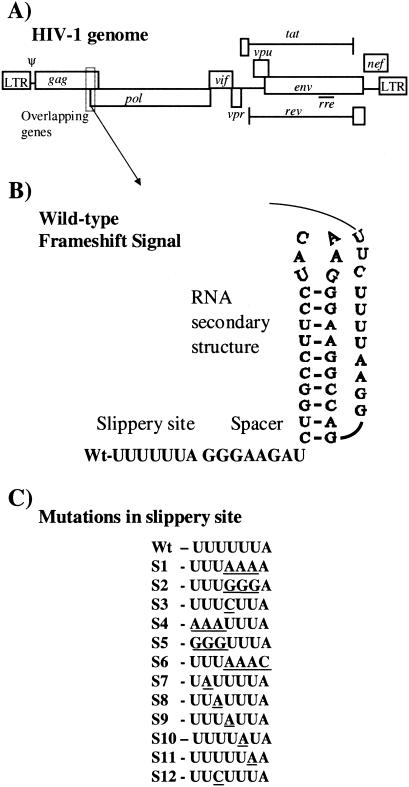
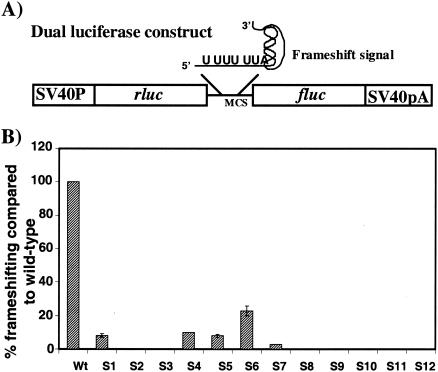
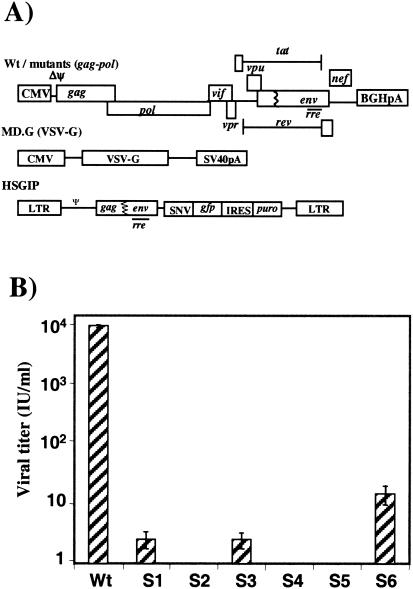
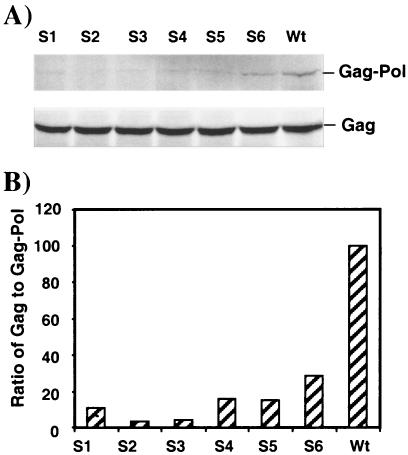
Human immunodeficiency virus type 1 (HIV-1) utilizes a distinctive form of gene regulation as part of its life cycle, termed programmed -1 ribosomal frameshifting, to produce the required ratio of the Gag and Gag-Pol polyproteins. We carried out a sequence comparison of 1,000 HIV-1 sequences at the slippery site (UUUUUUA) and found that the site is invariant, which is somewhat surprising for a virus known for its variability. This prompted us to prepare a series of mutations to examine their effect upon frameshifting and viral infectivity. Among the series of mutations were changes of the HIV-1 slippery site to those effectively utilized by other viruses, because such mutations would be anticipated to have a relatively mild effect upon frameshifting. The results demonstrate that any change to the slippery site reduced frameshifting levels and also dramatically inhibited infectivity. Because ribosomal frameshifting is essential for HIV-1 replication and it is surprisingly resistant to mutation, modulation of HIV-1 frameshifting efficiency potentially represents an important target for the development of novel antiviral therapeutics.
Figures
References
-
- Ausubel, F. M., R. Brent, R. E. Kingston, D. D. Moore, J. G. Seidman, J. A. Smith, and K. Struhl. 1992. Current protocols in molecular biology, vol. 2. John Wiley & Sons, Inc., New York, N.Y.
-
- Brierley, I. 1995. Ribosomal frameshifting viral RNAs. J. Gen. Virol. 76:1885-1892. - PubMed
Publication types
MeSH terms
Substances
Grants and funding
LinkOut - more resources
Full Text Sources
Other Literature Sources
Medical
