


The correspondence between equilibrium biphasic and triphasic material properties in mixture models of articular cartilage
- PMID: 14757459
- PMCID: PMC2819758
- DOI: 10.1016/s0021-9290(03)00252-5
The correspondence between equilibrium biphasic and triphasic material properties in mixture models of articular cartilage
Abstract
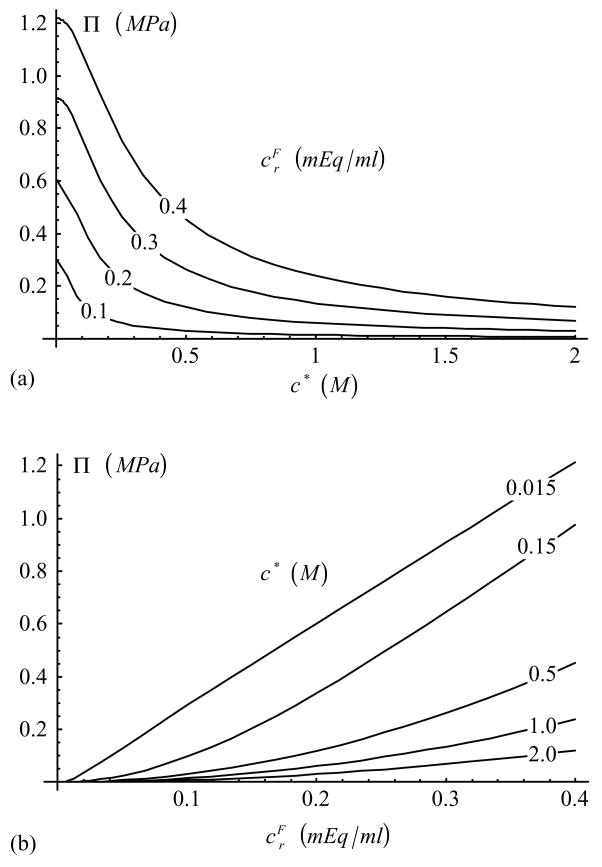
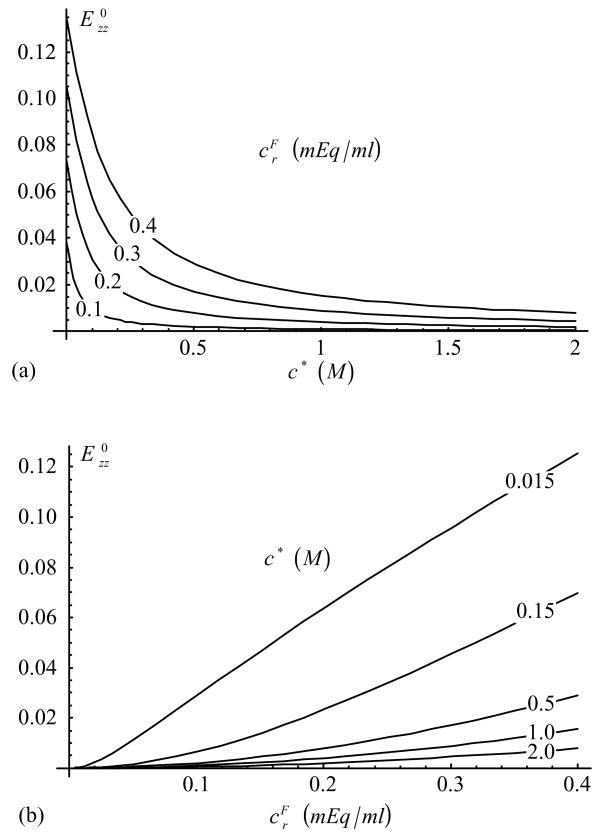
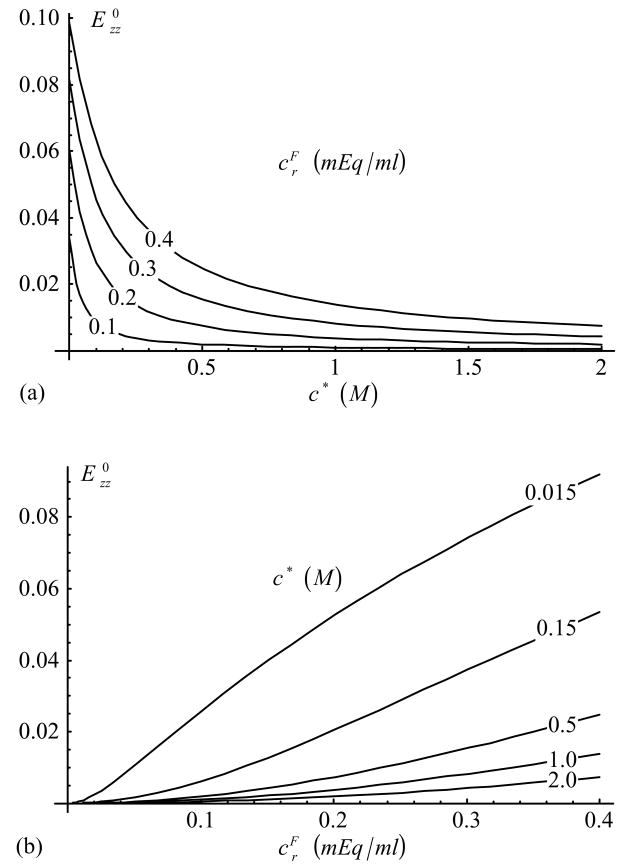
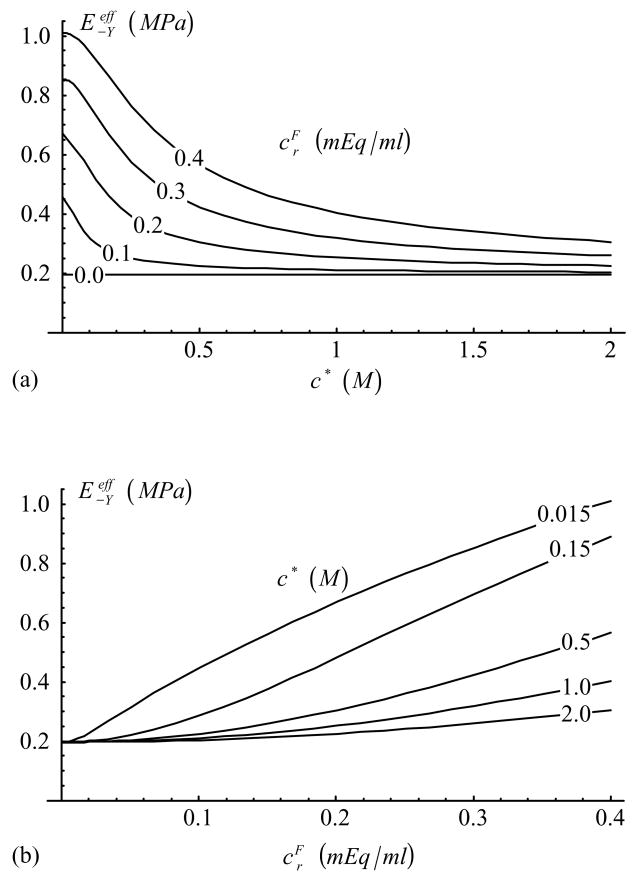
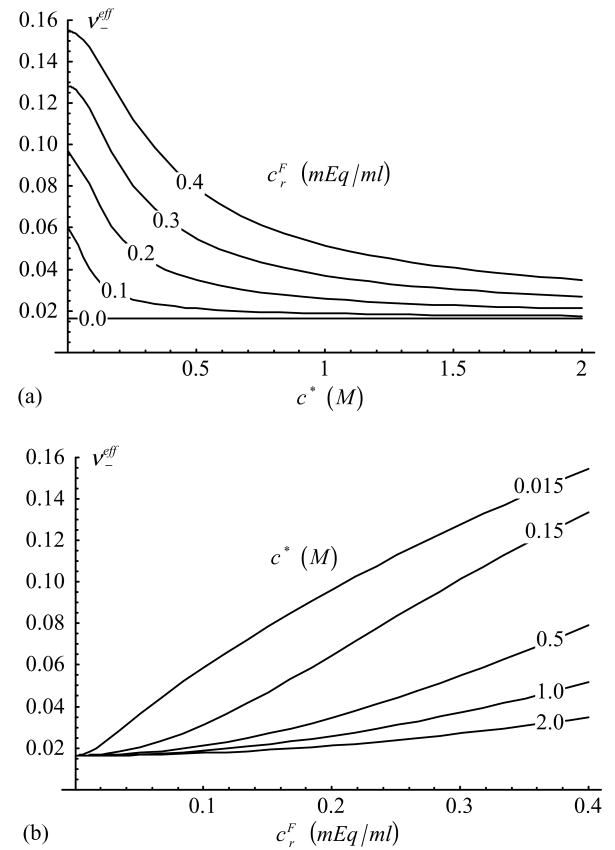
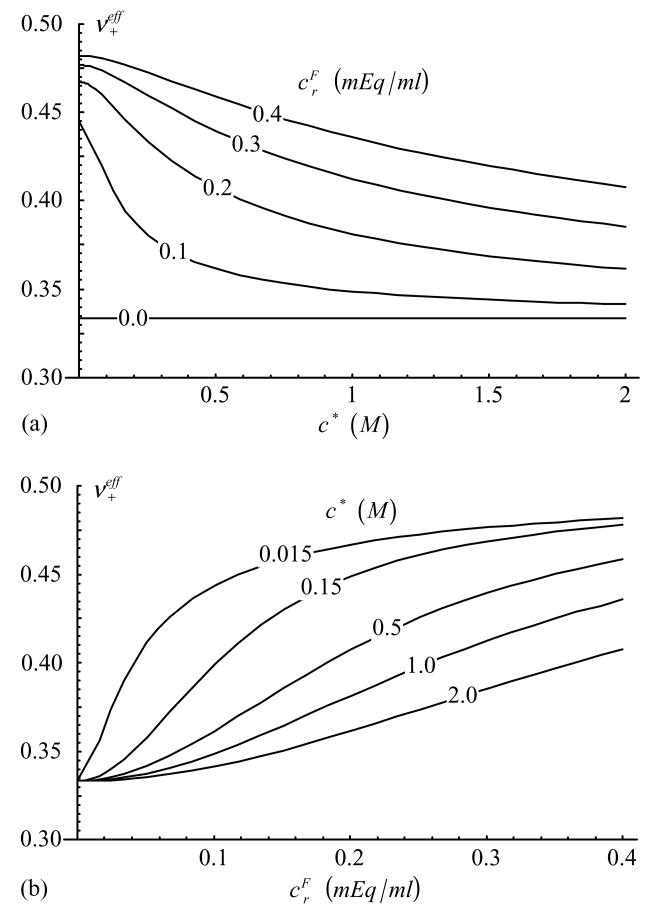
Mixture models have been successfully used to describe the response of articular cartilage to various loading conditions. Mow et al. (J. Biomech. Eng. 102 (1980) 73) formulated a biphasic mixture model of articular cartilage where the collagen-proteoglycan matrix is modeled as an intrinsically incompressible porous-permeable solid matrix, and the interstitial fluid is modeled as an incompressible fluid. Lai et al. (J. Biomech. Eng. 113 (1991) 245) proposed a triphasic model of articular cartilage as an extension of their biphasic theory, where negatively charged proteoglycans are modeled to be fixed to the solid matrix, and monovalent ions in the interstitial fluid are modeled as additional fluid phases. Since both models co-exist in the cartilage literature, it is useful to show how the measured properties of articular cartilage (the confined and unconfined compressive and tensile moduli, the compressive and tensile Poisson's ratios, and the shear modulus) relate to both theories. In this study, closed-form expressions are presented that relate biphasic and triphasic material properties in tension, compression and shear. These expressions are then compared to experimental findings in the literature to provide greater insight into the measured properties of articular cartilage as a function of bathing solutions salt concentrations and proteoglycan fixed-charge density.
Figures
References
-
- Ateshian GA, Soltz MA, Mauck RL, Basalo IM, Hung CT, Lai WM. The role of osmotic pressure and tension-compression nonlinearity in the frictional response of articular cartilage. Transport in Porous Media. 2003;50:5–33.
-
- Basser PJ, Schneiderman R, Bank RA, Wachtel E, Maroudas A. Mechanical properties of the collagen network in human articular cartilage as measured by osmotic stress technique. Arch Biochem Biophys. 1998;351:207–219. - PubMed
-
- Bursac P, McGrath CV, Eisenberg SR, Stamenovic D. A microstructural model of elastostatic properties of articular cartilage in confined compression. J Biomech Eng. 2000;122:347–353. - PubMed
-
- Bursac PM, Obitz TW, Eisenberg SR, Stamenovic D. Confined and unconfined stress relaxation of cartilage: appropriateness of a transversely isotropic analysis. J Biomech. 1999;32:1125–1130. - PubMed
-
- Buschmann MD, Grodzinsky AJ. A molecular model of proteoglycan-associated electrostatic forces in cartilage mechanics. J Biomech Eng. 1995;117:179–192. - PubMed
Publication types
MeSH terms
Substances
Grants and funding
LinkOut - more resources
Full Text Sources
Medical
