


Substantial impact of FDG PET imaging on the therapy decision in patients with early-stage Hodgkin's lymphoma
- PMID: 14760374
- PMCID: PMC2409608
- DOI: 10.1038/sj.bjc.6601561
Substantial impact of FDG PET imaging on the therapy decision in patients with early-stage Hodgkin's lymphoma
Abstract
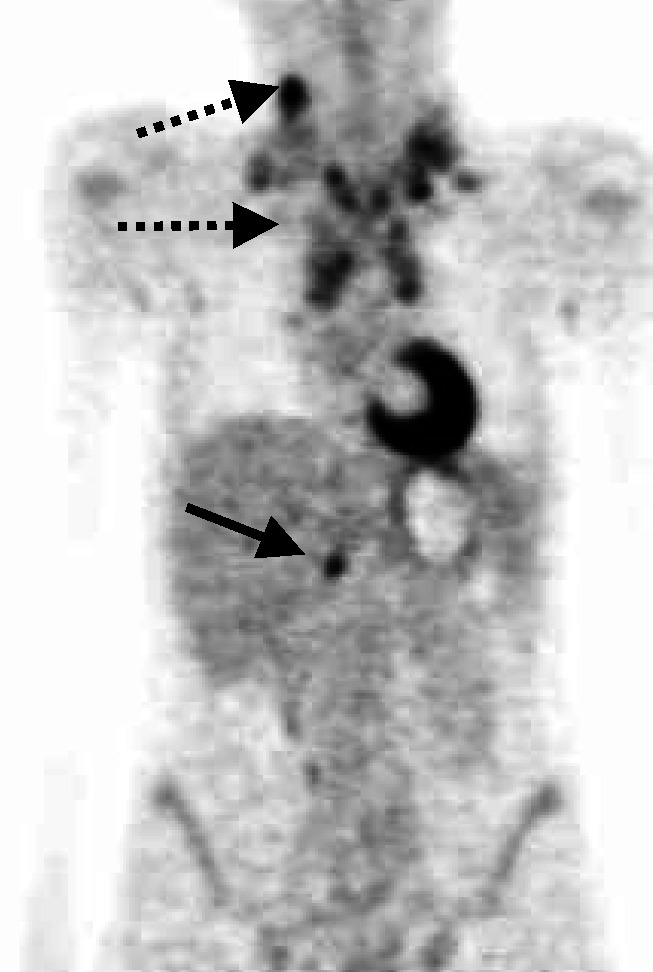
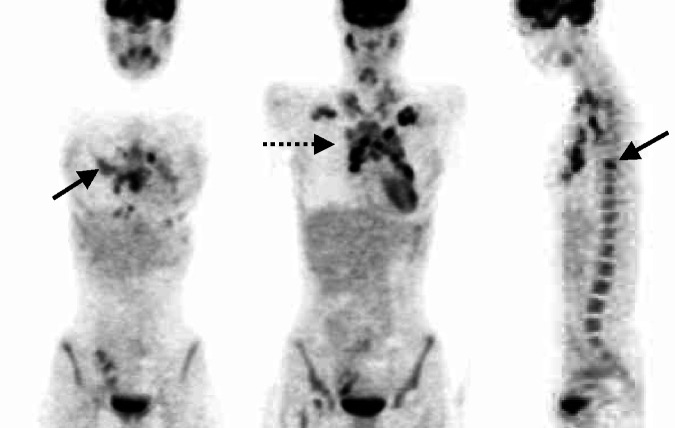
This prospective study assessed the impact of (18)F-fluorodeoxyglucose (FDG) positron emission tomography (PET) on the staging and possible consequential changes of treatment regimen in patients with Hodgkin's lymphoma (HL). A total of 88 consecutive patients with histologically verified Hodgkin's lymphoma underwent a PET scan in addition to conventional staging procedures. Treatment was based on the conventional staging only, and the results of the FDG-PET did not affect the treatment strategy. The evaluation focused on the suggested change in clinical stage according to the Ann Arbor classification and on the suggested change in treatment strategy rather than on a lesion-by-lesion analysis. Using all the methods performed as the standard of reference, (18)F-FDG-PET staging was concordant with conventional staging in 70 out of 88 patients (80%). (18)F-fluorodeoxyglucose positron emission tomography suggested a change to a different clinical stage in 18 patients (20%). Management would have been changed in 16 patients (18%): intensification of treatment in nine patients (10%) and minimisation of treatment in seven patients (8%). In the 44 patients with early disease (stage IA-IIB), treatment would have been intensified in nine out of 44 patients (20%). (18)F-fluorodeoxyglucose positron emission tomography is a relevant noninvasive method that supplements conventional staging procedures and should therefore be used routinely to stage Hodgkin's lymphoma, particularly in patients with an early stage.
Figures
References
-
- Bangerter M, Moog F, Buchmann I, Kotzerke J, Griesshammer M, Hafner M, Elsner K, Frickhofen N, Reske SN, Bergmann L (1998) Whole-body 2-[18F]-fluoro-2-deoxy-D-glucose positron emission tomography (FDG-PET) for accurate staging of Hodgkin's disease. Ann Oncol 9: 1117–1122 - PubMed
-
- Brunning RD, Bloomfield CD, McKenna RW, Peterson LA (1975) Bilateral trephine bone marrow biopsies in lymphoma and other neoplastic diseases. Ann Intern Med 82: 365–366 - PubMed
-
- Carbone PP, Kaplan HS, Musshoff K, Smithers DW, Tubiana M (1971) Report of the Committee on Hodgkin's Disease Staging Classification. Cancer Res 31: 1860–1861 - PubMed
-
- Carde P, Hagenbeek A, Hayat M, Monconduit M, Thomas J, Burgers MJ, Noordijk EM, Tanguy A, Meerwaldt JH, Le Fur R (1993) Clinical staging versus laparotomy and combined modality with MOPP versus ABVD in early-stage Hodgkin's disease: the H6 twin randomized trials from the European Organization for Research and Treatment of Cancer Lymphoma Cooperative Group. J Clin Oncol 11: 2258–2272 - PubMed
-
- Carr R, Barrington SF, Madan B, O'Doherty MJ, Saunders CA, van der Walt J, Timothy AR (1998) Detection of lymphoma in bone marrow by whole-body positron emission tomography. Blood 91: 3340–3346 - PubMed
Publication types
MeSH terms
Substances
LinkOut - more resources
Full Text Sources
Medical
