


Ezetimibe effectively reduces plasma plant sterols in patients with sitosterolemia
- PMID: 14769702
- PMCID: PMC1237008
- DOI: 10.1161/01.CIR.0000116766.31036.03
Ezetimibe effectively reduces plasma plant sterols in patients with sitosterolemia
Abstract
Background: Sitosterolemia is a recessively inherited disorder that results from mutations in either ABCG5 or G8 proteins, with hyperabsorption of dietary sterols and decreased hepatic excretion of plant sterols and cholesterol. As a consequence of markedly elevated plasma and tissue sitosterol and campesterol levels, premature atherosclerosis develops.
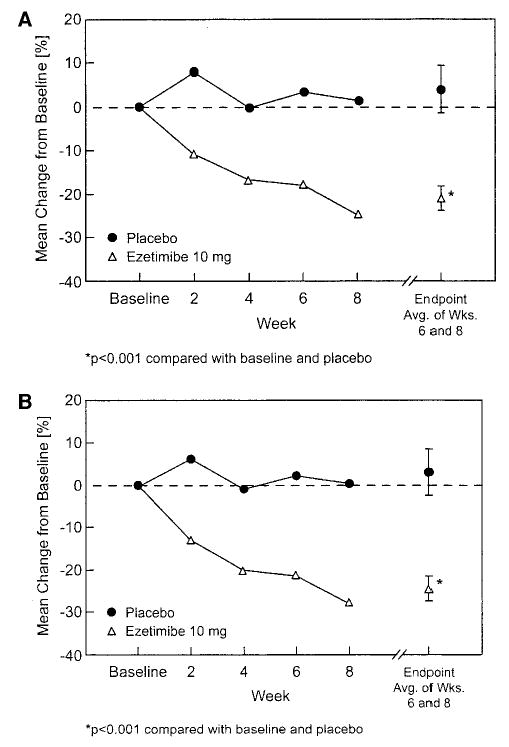
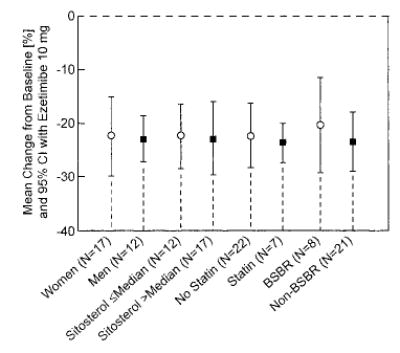
Methods and results: In this multicenter, double-blind, randomized, placebo-controlled study, we examined whether treatment with ezetimibe, an inhibitor of cholesterol absorption, reduces plant sterol levels in patients with sitosterolemia. After a 3-week placebo run-in, 37 patients were randomized to receive placebo (n=7) or ezetimibe 10 mg/d (n=30) for 8 weeks. Sitosterol concentrations decreased by 21% (P<0.001) in patients treated with ezetimibe compared with a nonsignificant 4% rise in those on placebo (between-group P<0.001). The reduction in sitosterol from baseline was progressive, with further decline observed at each subsequent biweekly visit. Campesterol also progressively declined, with a mean decrease after 8 weeks of 24% with ezetimibe and a mean increase of 3% with placebo treatment (between-group P<0.001). Reductions in plant sterol concentrations were similar irrespective of whether patients were undergoing concomitant treatment with resin or statin. Reductions in total sterols and apolipoprotein B were also observed. Ezetimibe was well tolerated, with no serious treatment-related adverse events or discontinuations due to adverse events being reported.
Conclusions: Ezetimibe produced significant and progressive reductions in plasma plant sterol concentrations in patients with sitosterolemia, consistent with the hypothesis that ezetimibe inhibits the intestinal absorption of plant sterols as well as cholesterol, leading to reductions in plasma concentrations.
Figures
References
-
- Salen G, Horak I, Rothkopf M, et al. Lethal atherosclerosis associated with abnormal plasma and tissue sterol composition in sitosterolemia with xanthomatosis. J Lipid Res. 1985;26:1126–1133. - PubMed
-
- Kolovou G, Voudris V, Drogari E, et al. Coronary bypass grafts in a young girl with sitosterolemia. Eur Heart J. 1996;17:965–966. - PubMed
-
- Salen G, Shefer S, Nguyen LB, et al. Sitosterolemia. J Lipid Res. 1992;33:945–955. - PubMed
-
- Björkhem I, Muri-Boberg K, Leitersdorf E. Inborn errors in bile acid biosynthesis and storage of sterols other than cholesterol. In: Scriver C, Beaudet A, Sly W, et al, eds. The Metabolic Bases of Inherited Disease. New York, NY: McGraw Hill; 2001:2961–2988.
-
- Berge KE, Tian H, Graf GA, et al. Accumulation of dietary cholesterol in sitosterolemia caused by mutations in adjacent ABC transporters. Science. 2000;290:1771–1775. - PubMed
Publication types
MeSH terms
Substances
Grants and funding
LinkOut - more resources
Full Text Sources
Other Literature Sources
Medical
Research Materials
