


Multiorgan dysfunction in infants with post-asphyxial hypoxic-ischaemic encephalopathy
- PMID: 14977901
- PMCID: PMC1756028
- DOI: 10.1136/adc.2002.023093
Multiorgan dysfunction in infants with post-asphyxial hypoxic-ischaemic encephalopathy
Abstract
Background: Multiorgan dysfunction (MOD) is one of four consensus based criteria for the diagnosis of intrapartum asphyxia. The theoretical concept behind MOD is the diving reflex (conservation of blood flow to vital organs at the cost of non-vital organs).
Objectives: To assess the patterns of involvement of each major organ/system and combinations of involvement in infants with post-asphyxial hypoxic-ischaemic encephalopathy (HIE), and to describe this in relation to long term outcome.
Design: Retrospective cohort study.
Setting: Regional tertiary neonatal intensive care unit at the Hospital for Sick Children, Toronto, Canada.
Patients: Term neonates with post-intrapartal asphyxial HIE assessed for kidney, cardiovascular system, lung, and liver function.
Outcome: Death and presence or absence of severe neurodevelopmental disability.
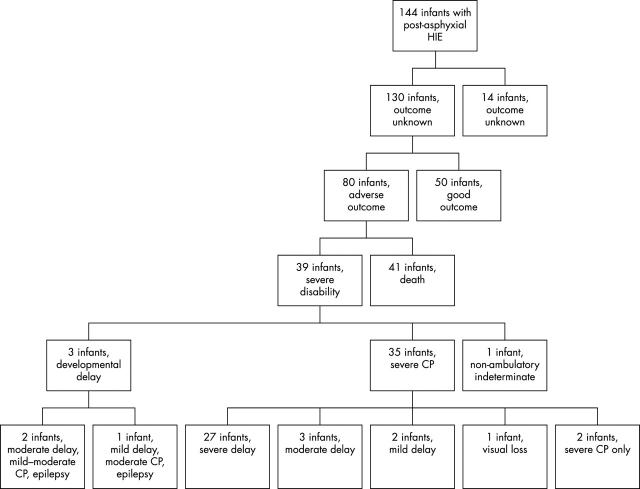
Results: Out of 130 of 144 eligible infants with outcome data, 80 (62%) had severe adverse outcome and 50 (38%) had good outcome. All infants had evidence of MOD (at least one organ dysfunction in addition to HIE). Renal, cardiovascular, pulmonary, and hepatic dysfunction was present in 58-88% of infants with good outcome and 64-86% of infants with adverse outcome.
Conclusions: MOD was present in all the infants with severe post-asphyxial HIE. However, there was no association between MOD and outcome in these infants. No relation between individual or combinations of organ involvements and long term outcomes was observed.
Figures
References
MeSH terms
LinkOut - more resources
Full Text Sources
