


Adherence of actinobacillus pleuropneumoniae serotype 1 to swine buccal epithelial cells involves fibronectin
- PMID: 14979433
- PMCID: PMC1142127
Adherence of actinobacillus pleuropneumoniae serotype 1 to swine buccal epithelial cells involves fibronectin
Abstract
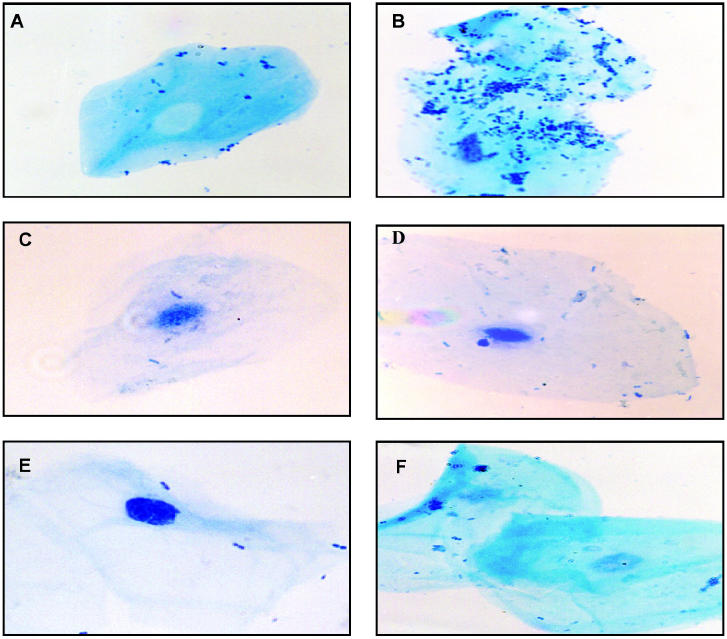
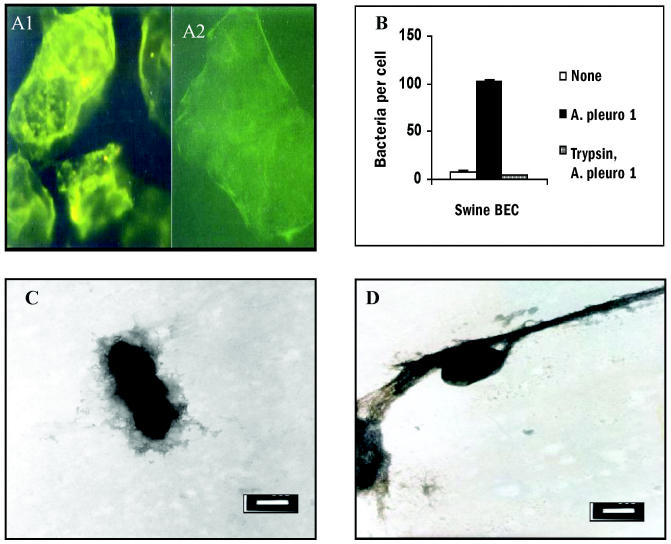
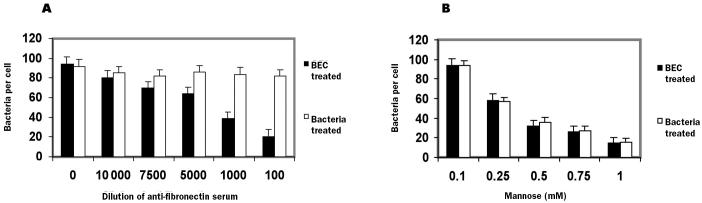
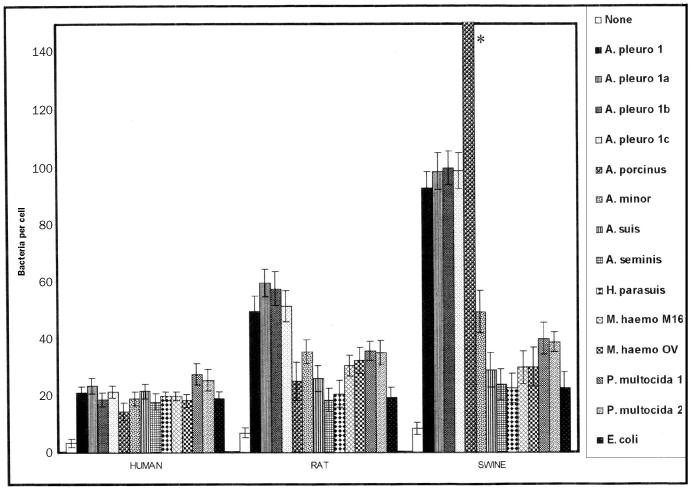
The swine pathogen Actinobacillus pleuropneumoniae serotype 1 was investigated for its ability to adhere to swine, rat, and human buccal epithelial cells (BEC). The highest number of bacteria adhered was to swine BEC. This binding ability was affected by heating, extreme pH, treatment with sodium dodecyl sulfate, ethylenediamine tetra-acetate, or periodate, and proteolysis, suggesting that cell-surface glycoproteins participate in adherence and that adherence is based mostly on ionic interactions. Mannose and swine fibronectin may play a direct role in this interaction. Convalescent-phase serum from naturally infected pigs inhibited the adhesion. There was a correlation between bacterial pathogenicity as well as host specificity and the capacity for adherence to swine BEC. Adhesion to swine BEC provides a convenient method to study in vitro the adherence of A. pleuropneumoniae and other pathogens of the pig respiratory tract.
Le potentiel d’adhérence du pathogène porcin Actinobacillus pleuropneumoniae sérotype 1 aux cellules épithéliales buccales (BEC) de porc, de rat et d’humain a été étudié. Le plus grand nombre de bactéries a été retrouvé sur les BEC de porc. Ce potentiel d’adhérence était affecté par la chaleur, les valeurs de pH extrêmes, un traitement au sulfate de dodecyl sodium, à l’éthylenediamine tétra-acétate, ou du périodate, et une protéolyse, ce qui suggère que les glycoprotéines de la surface cellulaire participent dans l’adhérence et que l’adhérence est fonction principalement des forces ioniques. Le mannose et la fibronectine d’origine porcine pourraient jouer un rôle direct dans cette interaction. Du sérum provenant de porcs convalescents infectés naturellement inhibait cette adhésion. Il y avait une corrélation entre la pathogénicité bactérienne de même que la spécificité d’hôte et la capacité à adhérer au BEC de porc. L’adhésion aux BEC porcines fournie une méthode pratique pour étudier l’adhérence in vitro d’A. pleuropneumoniae et des autres pathogènes du système respiratoire porcin.
(Traduit par Docteur Serge Messier)
Figures
References
-
- Beachey EH. Bacterial adherence: adhesin-receptor interactions mediating the attachment of bacteria to mucosal surfaces. J Infect Dis. 1981;143:325–344. - PubMed
-
- Johanson WG, Woods DE, Chaudhuri T. Association of respiratory tract colonization with adherence of gram-negative bacilli to epithelial cells. J Infect Dis. 1979;139:667–673. - PubMed
-
- Patti JM, Allen BL, McGavin MJ, Hook M. MSCRAMM-mediated adherence of microorganisms to host tissues. Annu Rev Microbiol. 1994;48:585–617. - PubMed
-
- Wann ER, Gurusiddappa S, Hook M. The fibronectin-binding MSCRAMM FnbpA of Staphylococcus aureus is a bifunctional protein that also binds to fibrinogen. J Biol Chem. 2000;275:13863–13871. - PubMed
-
- Haesebrouck F, Chiers K, VanOverbeke I, Ducatelle R. Actinobacillus pleuropneumoniae infections in pigs: the role of virulence factors in pathogenesis and protection. Vet Microbiol. 1997;58:239–249. - PubMed
Publication types
MeSH terms
Substances
LinkOut - more resources
Full Text Sources
Molecular Biology Databases