


Management of low-grade squamous intraepithelial lesions of the uterine cervix
- PMID: 14997192
- PMCID: PMC2409635
- DOI: 10.1038/sj.bjc.6601415
Management of low-grade squamous intraepithelial lesions of the uterine cervix
Abstract
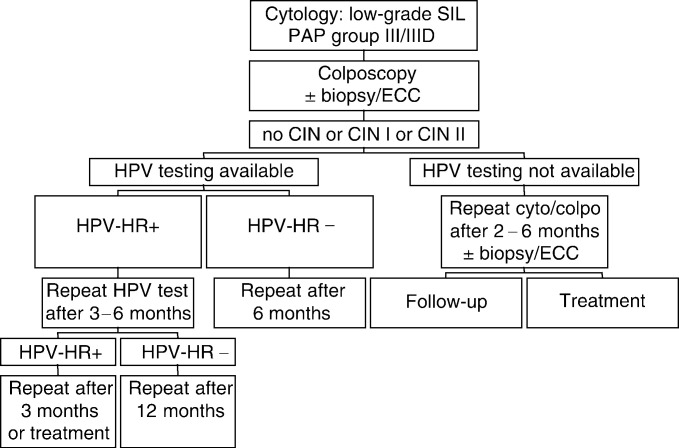
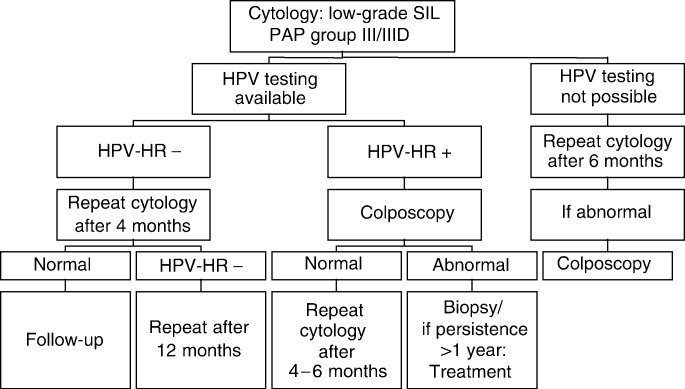
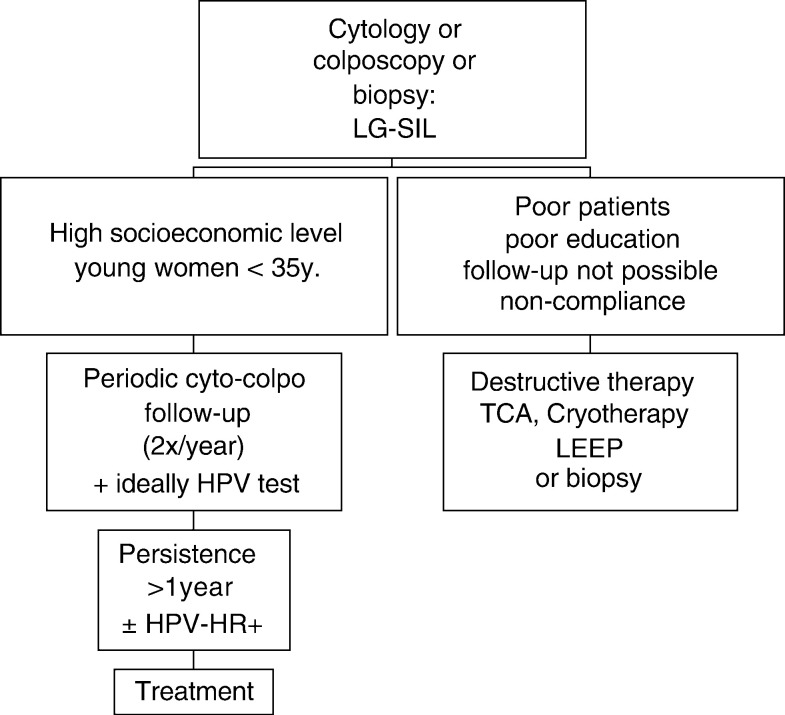
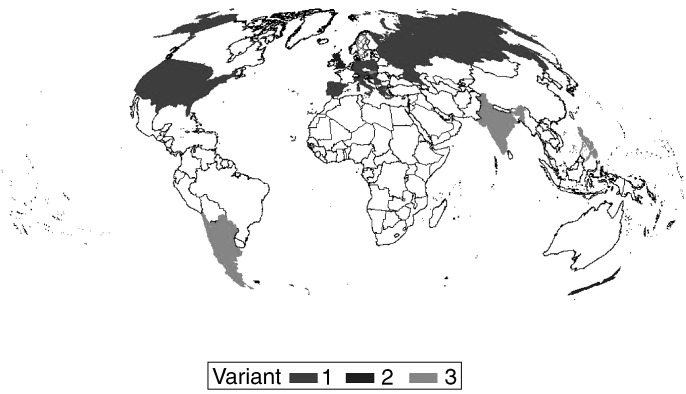
Strategies of management for low-grade squamous intraepithelial lesion (SIL) vary even on a national level. We evaluated the diversity of management algorithms. This should serve as a source to find a common basis for the management of low-grade SIL. A total of 38 representatives and specialists for colposcopy and cervical pathology were contacted to provide national guidelines, recommendations or consensus for the management of patients diagnosed with the cytologic diagnosis of low-grade SIL. In all, 23 addressees (60%) responded. The algorithms provided varied considerably. Three variants of algorithms could be defined. Variant 1 was proposed in 14 countries and recommended colposcopy immediately after cytologic diagnosis of low-grade SIL or at the same time the smear is taken. If available, HPV testing was recommended as a triage option in some countries. Variant 2 is used in three countries and colposcopy is only performed after a repeated abnormal cytologic result within a 6-month interval or after an optional test positive for high-risk HPV. Variant 3, as proposed in six countries, takes into account the socio-economic status of the patient: In patients with poor compliance, 'see and treat' management is recommended; in patients where compliance can be assured, follow-up is carried out by cytology and colposcopy. Global policy of management of patients with low-grade SIL can be summarised in three algorithms. Quality standards and outcome parameters must be defined in order to improve the management of women with low-grade SIL.
Figures
References
-
- Anonymous (1989) The 1988 Bethesda system for reporting cervical/vaginal cytological diagnoses. National Cancer Institute Workshop. JAMA 262: 931–934 - PubMed
-
- Arbyn M 2001. Triage of women with atypical or low-grade cytological abnormalities of the cervix by HPV testing. IPH/EPI – Report Nr. 2001-019
-
- Feoli-Fonseca JC, Oligny LL, Brochu P, Simard P, Falconi S, Yotov WV (2001) Human papillomavirus (HPV) study of 691 pathological specimens from Quebec by PCR-direct sequencing approach. J Med Virol 63: 284–292 - PubMed
-
- Holowaty P, Miller AB, Rohan T, To T (1999) Natural history of dysplasia of the uterine cervix. J Natl Cancer Inst 91: 252–258 - PubMed
-
- Klaes R, Benner A, Friedrich T, Ridder R, Herrington S, Jenkins D, Kurman RJ, Schmidt D, Stoler M, van Knebel Doeberitz M (2002) p16INK4a immunohistochemistry improves interobserver agreement in the diagnosis of cervical intraepithelial neoplasia. Am J Surg Pathol 26: 1389–1399 - PubMed
